

Taiwan Citizen Front (台灣公民陣線) and language rights advocates held a protest on Monday to condemn two Chinese Nationalist Party (KMT) lawmakers for what they called discriminatory actions against Hakka speakers.
Advocates from several organizations promoting Hoklo (commonly known as Taiwanese), Hakka and indigenous languages protested against KMT legislators Hsu Hsin-ying (徐欣瑩) and Hung Mong-kai (洪孟楷) outside the legislature in Taipei, saying their actions during a meeting of the legislature’s Internal Administration Committee last week were inappropriate.
Hsu convened the session to deliberate on the Ministry of Education’s Hoklo policies, and Hakka Affairs Council Minister Ku Hsiu-fei (古秀妃) addressed the proceeding in Hakka.
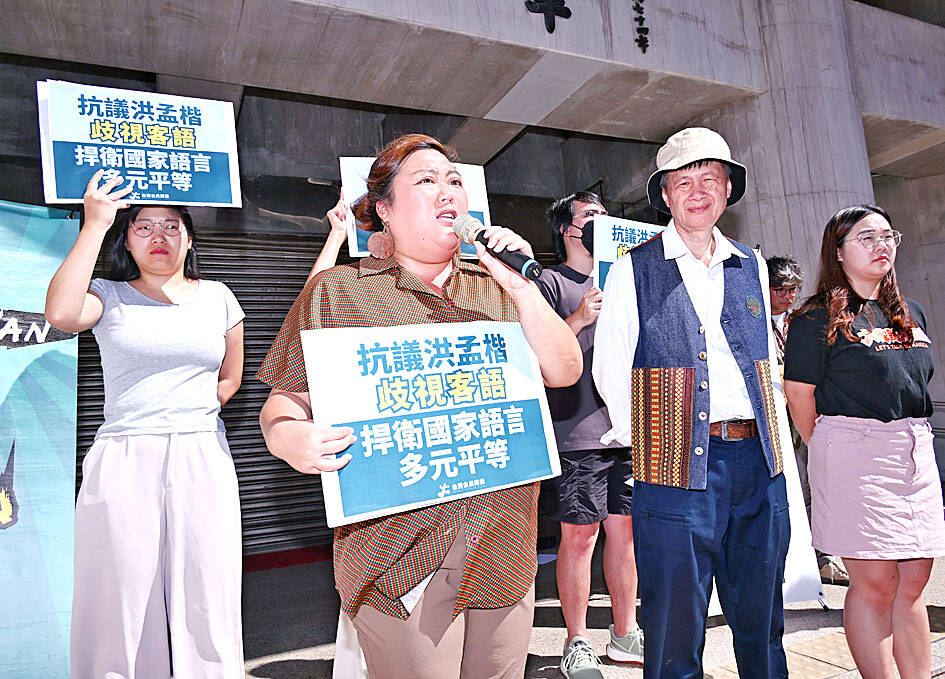
Photo: Fang Pin-chao, Taipei Times
“Ku responded to Hung’s questions in Hakka, then Hung told her that he does not understand Hakka. He refused to put on the headphones which would provide him with simultaneous translation. Then Hsu, as the session convener, told Ku to only speak in Mandarin Chinese,” Taiwan Citizen Front member Lo Yi (羅宜) said.
Lo and other advocates accused the KMT legislators of “language discrimination” and preventing Ku from speaking her mother tongue.
“It was a deliberate act to insult speakers of other languages, denying their right to not use Mandarin Chinese. In doing so, the KMT legislators are attempting to suppress Taiwan’s local languages,” Lo said.
Through the many decades of authoritarian one-party rule under Martial Law, the then-KMT regime imposed a policy of “Mandarin Chinese only” on all citizens, Lo said.
The then-KMT regime levied fines and made students carry humiliating signs when they spoke other local languages in school to punish them, Lo said.
Only over the past few years have there been efforts to elevate the status of Taiwan’s local languages, and the passage of the Development of National Languages Act (國家語言發展法) granted equal status to all “natural languages” used by ethnic groups in Taiwan, he said.
The act gave these languages’ speakers the right to use them freely, he said.
The KMT lawmakers are contravening the laws on Taiwan’s local languages, he said.
The lawmakers have adopted the past authoritarian government’s arrogance and elitist and discriminatory mindset, attacking members of other ethnic groups for speaking their mother tongues, he said.
“As a Hakka person, I was very disappointed to see the KMT legislators demanding that Ku not speak Hakka and answer the questions in Mandarin Chinese,” Kiu-Pit Studio director Lin Chun-ching (林裙靜) said. “Hsu also has a Hakka background, and it is unbelievable that she told Ku not to speak the language.”

‘FRIENDSHIP FLEET’: A CGA official is scheduled to meet with the president of the Pacific nation, while one of the ships is to host a banquet and National Day event Two Coast Guard Administration (CGA) patrol vessels have docked at Malakal Harbor in Palau as part of an expedition exercise and diplomatic visit, during which a senior official is expected to meet with Palauan President Surangel Whipps Jr, the agency said yesterday. The two vessels, the 4,000-tonne-class Chiayi and the 1,000-tonne-class Penghu, set sail for Palau from Taiwan last week and arrived on Tuesday at Malakal Harbor, the CGA’s Fleet Branch said in a statement. The journey marks the second time the CGA has dispatched a “friendship fleet” to another country, after it sent its first-ever goodwill fleet, comprising the Hualien and
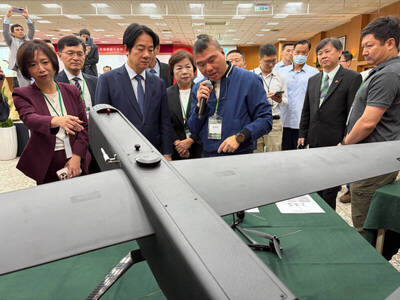
Two executives of drone supplier Jiin Ming Industry Co (錦明實業) have been detained and held incommunicado over the company's alleged use of prohibited China-made chips and camera lenses in drones supplied under recent military contracts, the Taoyuan District Prosecutors' Office said today. In a statement, prosecutors said they raided the offices of Jiin Ming — headquartered in Taoyuan — as well as those of its subsidiaries and its suppliers on Thursday last week. The raids followed a report that the company had breached its procurement contracts by putting the prohibited components into drones delivered to the military. During the raids, prosecutors summoned
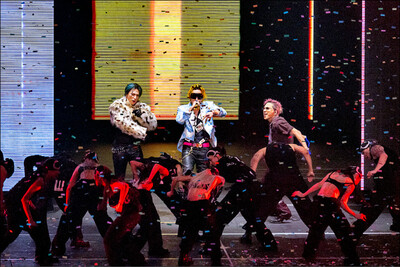
South Korean boy band BigBang drew 120,000 fans to three concerts at Taipei Dome from Friday through yesterday, as the band thanked them for their support over their 20-year career. The Taipei Dome concerts were part of BigBang's "2026-2027 World Tour XX: Cosmos." Friday's concert was BigBang's first performance in Taiwan in 11 years. During the encore, group leader G-Dragon (GD) shouted "I love you" in Chinese and said he was especially happy to perform in Taiwan with bandmates Taeyang and Daesung. "Taipei, I'm very grateful to you all," GD said in Chinese, asking fans to wait for the band's return. Daesung thanked
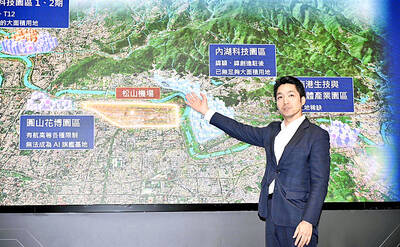
DETAILED PLAN NEEDED: Relocating the airport would affect not just travelers, but also undermine national defense and emergency medical services, a legislator said Taipei Mayor Chiang Wan-an (蔣萬安) yesterday proposed relocating Taipei International Airport (Songshan airport) and turning the site into an artificial intelligence (AI) park, drawing opposition from politicians across party lines. Chiang’s plan would turn the 300 hectares into an AI park featuring tech clusters, residential communities and green space. The industrial cluster would host 200 domestic enterprises, generate NT$12 trillion (US$376.47 billion) in output, and accommodate 65,000 jobs and 35,000 residents, he said. Cabinet spokeswoman Michelle Lee (李慧芝) said the Executive Yuan was surprised by the announcement, as the Taipei City Government did not discuss the proposal with the central government before making


 RSS
RSS