


An 86-year-old Taiwan-born Japanese man is to receive a certificate of thanks from the Hualien County Government today for helping the county rebuild after the April 3 earthquake.
Shoji Yasutomi is a wansei, the Japanese term used to describe people who were born or grew up in Taiwan and are descendants of Japanese immigrants who came to Taiwan during the Japanese colonial era.
He had donated ¥1 million (US$6,706) to the county government to help rebuilding efforts after the April 3 earthquake.
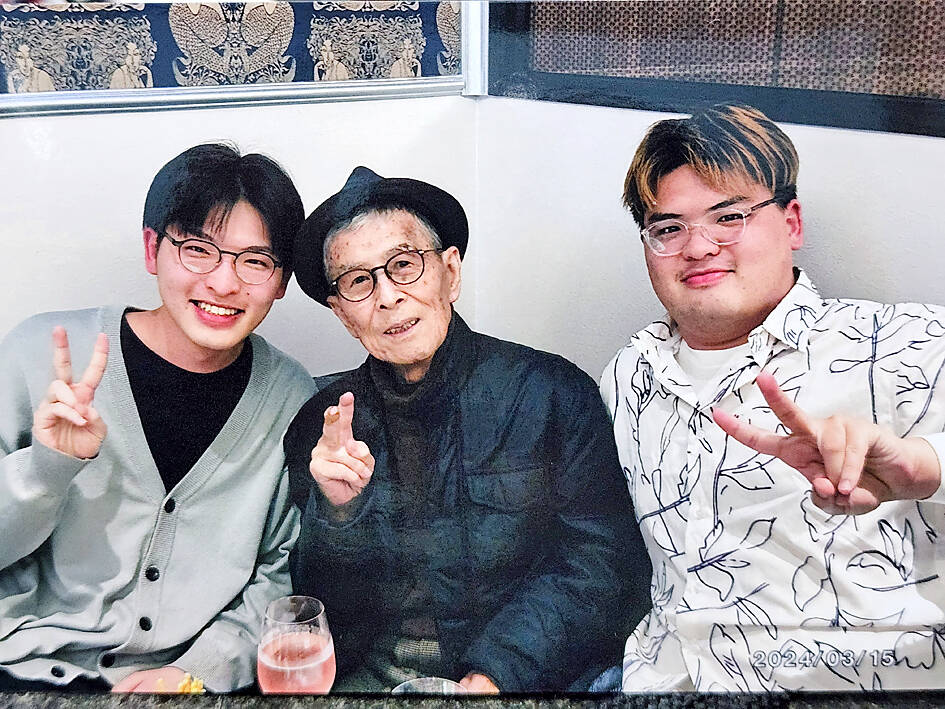
Photo: Hua Meng-ching, Taipei Times
Yasutomi arrived in Taiwan on Saturday and would be visiting Ebisu Confectionery, the shop his grandmother had founded.
His visit is also being documented and recorded by a dedicated crew from Japanese broadcaster NHK.
Yasutomi was born in Hualien County’s Jiye Village (吉野), and his grandparents had founded the confection shop in 1899. The shop was later passed on to Taiwanese pastry chef Chang Fang (張房), who is the grandfather of the current owner, Chang Shun-pin (張舜彬).
The Yasutomi family originated from Tokushima Prefecture and had been one of the first wave of Japanese to arrive in Taiwan during the Japanese colonial period, Chang Shun-pin said.
The family started the shop, because they longed for the traditional Japanese wagashi confectionery during their stay in Taiwan, Chang Shun-pin said.
Although the Chang family took over the shop after the Yasutomi family returned to Japan, they still treasured its history, Chang Shun-pin said, adding that they still use wrapping paper imported from Japan and a pennant marking the store winning a competition.
The pennant had the official seal of the then-Japanese governor of Taiwan, he said, adding the store also won the award during the “Taiwan Exposition: In Commemoration of the First Forty Years of Colonial Rule” in 1935.
Yasutomi had only been seven years old when his family returned to Japan, Chang Shun-pin said, adding that when his grandfather and father were still alive, there were regular visits from Japanese visiting the Chang family.
Chang Shun-pin said he had visited the Yasutomi family in Japan in March, during which Yasutomi said he was contemplating visiting the county in the fall.
When the earthquake struck on April 3, Yasutomi offered to donate ¥1 million, Chang Shun-pin said. However, he had persuaded him to make the donation to the county government instead, as the Chang family residence had not suffered significant damage during the earthquake.
Yasutomi donated the money to the county government and had specified that the funds go towards restoring Cingsiu Temple, which his family had often visited during his childhood in Hualien.
Taiwanese paleontologists have discovered fossil evidence that pythons up to 4m long inhabited Taiwan during the Pleistocene epoch, reporting their findings in the international scientific journal Historical Biology. National Taiwan University (NTU) Institute of Ecology and Evolutionary Biology associate professor Tsai Cheng-hsiu (蔡政修) led the team that discovered the largest snake fossil ever found in Taiwan. The single trunk vertebra was discovered in Tainan at the Chiting Formation, dated to between 400,000 and 800,000 years ago in the Middle Pleistocene, the paper said. The area also produced Taiwan’s first avian fossil, as well as crocodile, mammoth, saber-toothed cat and rhinoceros fossils, it said. Discoveries

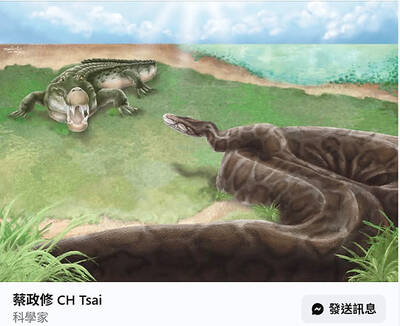
Taiwanese paleontologists have discovered fossil evidence that pythons up to 4m long inhabited Taiwan during the Pleistocene epoch, reporting their findings in the international scientific journal Historical Biology. National Taiwan University (NTU) Institute of Ecology and Evolutionary Biology associate professor Tsai Cheng-hsiu (蔡政修) led the team that discovered the largest snake fossil ever found in Taiwan. A single trunk vertebra was discovered in Tainan at the Chiting Formation, dated to between 800,000 to 400,000 years ago in the Middle Pleistocene, the paper said. The area also produced Taiwan’s first avian fossil, as well as crocodile, mammoth, sabre-toothed cat and rhinoceros fossils, it said. Discoveries
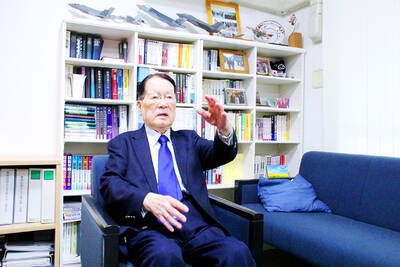
Whether Japan would help defend Taiwan in case of a cross-strait conflict would depend on the US and the extent to which Japan would be allowed to act under the US-Japan Security Treaty, former Japanese minister of defense Satoshi Morimoto said. As China has not given up on the idea of invading Taiwan by force, to what extent Japan could support US military action would hinge on Washington’s intention and its negotiation with Tokyo, Morimoto said in an interview with the Liberty Times (sister paper of the Taipei Times) yesterday. There has to be sufficient mutual recognition of how Japan could provide
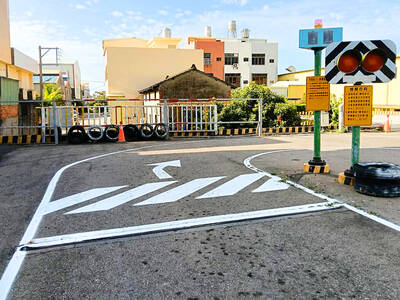
UPDATED TEST: The new rules aim to assess drivers’ awareness of risky behaviors and how they respond under certain circumstances, the Highway Bureau said Driver’s license applicants who fail to yield to pedestrians at intersections or to check blind spots, or omit pointing-and-calling procedures would fail the driving test, the Highway Bureau said yesterday. The change is set to be implemented at the end of the month, and is part of the bureau’s reform of the driving portion of the test, which has been criticized for failing to assess whether drivers can operate vehicles safely. Sedan drivers would be tested regarding yielding to pedestrians and turning their heads to check blind spots, while drivers of large vehicles would be tested on their familiarity with pointing-and-calling


 RSS
RSS