


Michelin this year selected 126 restaurants and street food stalls in Taipei, Taichung, Tainan and Kaohsiung for its Bib Gourmand list, with 16 of them chosen for the first time, the French culinary publication said yesterday.
As per tradition, the list was announced before this year’s complete Michelin selection for Taiwan is unveiled on Tuesday next week.
The Bib Gourmand list includes 126 eateries in the four special municipalities, down from 139 last year, with 43 in Taipei, 27 in Taichung, 31 in Tainan and 25 in Kaohsiung.
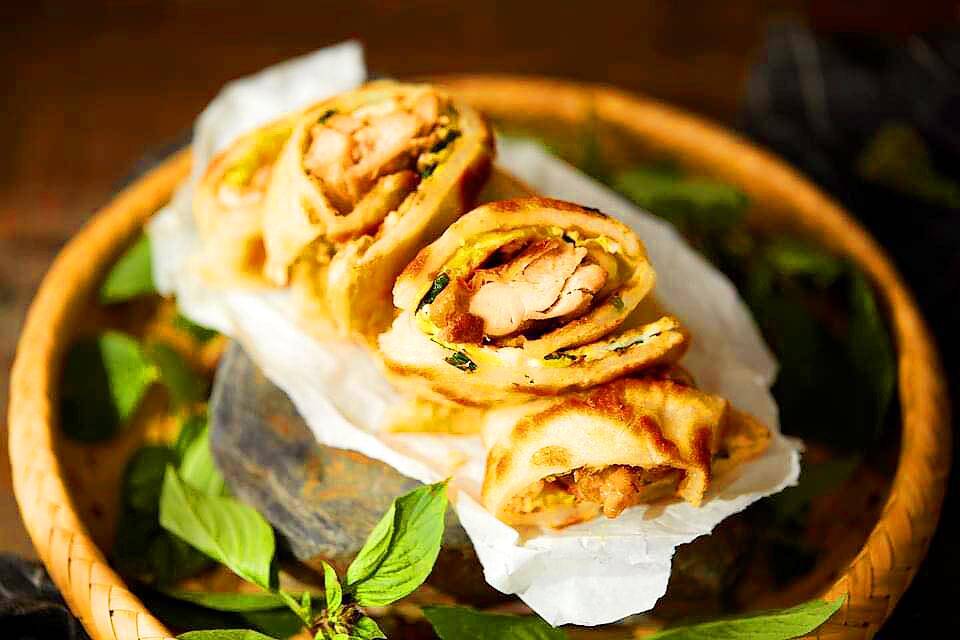
Photo: screen grab from Soft Power’s Facebook page
Among them, 16 were chosen for the first time — six in Taipei, two in Taichung, three in Tainan and five in Kaohsiung.
More than half of newly awarded establishments produce Taiwanese specialties and small local treats, such as rolled egg crepes, thick duck soup and pork belly steamed buns, also known as guo bao (割包).
Last year, 26 establishments were chosen for the first time.
“In a destination where delicacies, street food and small eats have always been a major part of the local lifestyle, we believe our Bib Gourmand selection is one of the best ways to explore Taiwan and its incredibly rich culinary scene,” Michelin Guide international director Gwendal Poullennec said in a statement.
“Our Bib Gourmand recommendations are not only made for international travelers looking to explore authentic food heritage, but also for local gourmets seeking affordable yet delicious experiences,” Poullennec said.
This year’s Bib Gourmand selection is “a nice collection of restaurants and street food stalls that combines the most traditional eats together with some international tastes,” he added.
Michelin inspectors also recommended eight culinary treats from the newly selected eateries that impressed them: braised pork rice from Huang Chi Lu Rou Fan (黃記魯肉飯) and taro rice noodles from Soup Noodle House (麵鋪) in Taipei; shio koji-marinated corn-fed chicken from Li Xiao Lou (裡小樓) in Taichung; and Tainan-bred shrimp, homemade sambal sauce and peeled chili peppers from Bue Mi.Lab (麥謎食驗室), stir-fried pork neck with green onions from Eat to Fat (添厚), and stir-fried chicken thighs with aged ginger from Mai Yen Shun (賣?順) in Tainan.
Tourism Administration Director-General Chou Yung-hui (周永暉) told the Liberty Times (the Taipei Times’ sister newspaper) that the agency was happy with the number of eateries chosen this year.
“They used international standards to evaluate Taiwanese snacks. Some popular restaurants might not be selected this time, but that should not discourage them from continuing to present high-quality food,” Chou said. “We hope more Taiwanese eateries can be added each year, and the Michelin Guide can expand its food reviews to include restaurants in other localities.”

FUKUOKA SITUATION: Japanese media reported that the pathogen is expected to be identified by the summer, while the CDC downplayed the idea that it was hMPV A “mysterious cold-like illness” reported in Japan’s Fukuoka Prefecture does not seem to be a new disease, but Japanese authorities have been asked about the situation, the Centers for Disease Control (CDC) said yesterday. The Fukuoka Prefectural Medical Association on Wednesday told a news conference that a “mystery cold” that has become a hot topic on social media is “highly likely to be caused by some kind of viral infection,” Japan’s KBC News reported. “Many people are experiencing symptoms starting with a sore throat, followed by a runny nose, phlegm and a severe cough,” KBC News reported, citing association officials. Health authorities are

Nvidia Corp CEO Jensen Huang (黃仁勳) arrived in Taiwan yesterday ahead of upcoming AI and technology events, saying he plans to meet with clients and Taiwan Semiconductor Manufacturing Co Chairman C.C. Wei (魏哲家) during his visit. After landing at Taipei Songshan Airport, Huang posed for photos with fans and handed out Yakult drinks to reporters and supporters waiting at the scene, saying he has “a lot to do” during the trip. Asked about reports that Nvidia’s planned headquarters site in Taipei’s Beitou Shilin Technology Park could break ground on May 27, Huang said that if the company holds an event, he would

Carrefour Taiwan is to begin using a new name from the start of July, but it cannot divulge the name until then, the chairman of the supermarket chain's parent company said today. President Chain Store Co chairman Lo Chih-hsien (羅智先) was asked by reporters after a shareholders' meeting to confirm whether the company has settled on a new name for the supermarket brand. In March, the government-registered name of two Carrefour Taiwan branches was quietly changed to "Le Chia Kang" (樂家康) in Chinese, raising speculation that has been selected as the name. Lo said that because of local regulations and contractual obligations, the

The Philippines would likely be involved in any conflict over Taiwan due to its proximity to the democracy claimed by China, President Ferdinand Marcos Jr said, reiterating a stance that risks angering Beijing. “In the Philippines, we do not have a choice because Taiwan is so close to the Philippines and we have almost 200,000 Filipino nationals living and working in Taiwan,” Marcos said in an interview with Japanese media in Manila on Monday. The Philippine leader’s comments come ahead of a state visit to Japan next week, where he is to meet with Japanese Prime Minister Sanae Takaichi to discuss security


 RSS
RSS