


Taichung police on Tuesday issued a warning about a growing trend of young people being blackmailed after being convinced on online dating and video chat sites to strip naked.
Taichung police officials said that since the start of this year, they have handled 718 cases involving the use of online sexual content for alleged exploitation and blackmail, adding that male victims accounted for more than half of the cases, with the majority being young adults or teenagers.
One recent case involved a male college student identified as A-siang (阿祥) who got to know a woman on a dating site, police said.

Photo: screen grab from a video released by the Taichung Police Department
They connected on Facebook and the woman suggesting making a video call, which A-siang agreed to, police said.
While chatting, the woman stripped naked and performed some “sexual behaviors,” police said.
A-siang was persuaded to strip and do the same thing, but the online chat session was abruptly shut down and the woman later issued a threat, demanding money from him or else she would circulate the video of their chat, police said.
“We are seeing more of these cases, featuring a combination of sexual content, video chats, romance scams and blackmail for money. This new form of ‘online sex talk’ which tricks people into stripping naked has become a nightmare for young males,” said Yang Chun-ming (楊俊明) of Taichung City Police’s Women and Children Protection Division.
Offenses Against Sexual Privacy and Synthetic Sexual Videos in the Criminal Code’s Chapter 28-1 came into effect in February last year, and Taichung police had handled 804 related cases as of the end of last year, with victims being male in 58 percent of the cases, Yang said.
He mentioned another case involving a male high-school student, identified as Siao-yu (小宇), who got to know a girl on Instagram with the pseudonym Mei Mei (美美). They got pretty close after chatting online for a while, although they did not meet in person.
Siao-yu agreed to Mei Mei’s suggestion to make an online video call while he was naked, but later Mei Mei sent him a screen grab from the chat showing his face and naked body, Yang said.
She then demanded that Siao-yu wire her NT$60,000, or she would distribute the video to all his Instagram friends, Yang said.
Siao-yu had no money to pay and was afraid, so he told his parents what happened, Yang said.
The parents filed a complaint and requested the police to carry out an investigation, citing alleged breaches of the Child and Youth Sexual Exploitation Prevention Act (兒童及少年性剝削防制條例), as well as blackmailing and offenses against privacy, Yang said.
“However, we have encountered victims who were too ashamed or afraid that they didn’t dare to ask parents, teachers or police for help,” Yang said. “Some of these people were blackmailed repeatedly and some could not bear the pressure, then committed suicide.”
To raise awareness, Yang’s police division produced an educational video to warn the public about these “online sex chat” scams, urging young people to be careful and know how to protect their privacy, he said, adding that if people ever fall for these scams, the best response is to go to the police.
For people who are targeted by such scams, the Taichung police stressed four points:
“Keep calm,” “preserve all evidence,” “upgrade your privacy protection settings on your social media accounts” and “report the case to the police.”
“When police receive a report, they can initiate an investigation and protect the victim’s identity after they file a request to delete the sexual content in question,” Yang said.
Online dating and romantic chat sites are full of traps, Yang said.
People must know how to protect their privacy and should never click on suspicious links or scan unknown QR codes as these are common ways used in identity theft, he added.

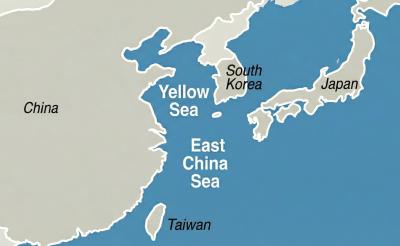
China has reserved offshore airspace in the Yellow Sea and East China Sea from March 27 to May 6, issuing alerts usually used to warn of military exercises, although no such exercises have been announced, the Wall Street Journal (WSJ) reported yesterday. Reserving such a large area for 40 days without explanation is an “unusual step,” as military exercises normally only last a few days, the paper said. These alerts, known as Notice to Air Missions (Notams), “are intended to inform pilots and aviation authorities of temporary airspace hazards or restrictions,” the article said. The airspace reserved in the alert is
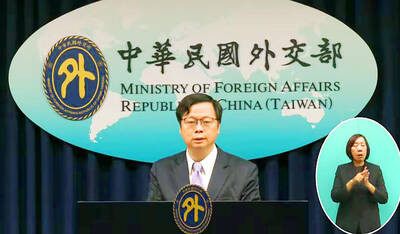
NAMING SPAT: The foreign ministry called on Denmark to propose an acceptable solution to the erroneous nationality used for Taiwanese on residence permits Taiwan has revoked some privileges for Danish diplomatic staff over a Danish permit that lists “Taiwan” as “China,” Eric Huang (黃鈞耀), head of the Ministry of Foreign Affairs’ Department of European Affairs, told a news conference in Taipei yesterday. Reporters asked Huang whether the Danish government had responded to the ministry’s request that it correct the nationality on Danish residence permits of Taiwanese, which has been listed as “China” since 2024. Taiwan’s representative office in Denmark continues to communicate with the Danish government, and the ministry has revoked some privileges previously granted to Danish representatives in Taiwan and would continue to review

More than 6,000 Taiwanese students have participated in exchange programs in China over the past two years, despite the Mainland Affairs Council’s (MAC) “orange light” travel advisory, government records showed. The MAC’s publicly available registry showed that Taiwanese college and university students who went on exchange programs across the Strait numbered 3,592 and 2,966 people respectively. The National Immigration Agency data revealed that 2,296 and 2,551 Chinese students visited Taiwan for study in the same two years. A review of the Web sites of publicly-run universities and colleges showed that Taiwanese higher education institutions continued to recruit students for Chinese educational programs without

A bipartisan group of US senators has introduced a bill to enhance cooperation with Taiwan on drone development and to reduce reliance on supply chains linked to China. The proposed Blue Skies for Taiwan Act of 2026 was introduced by Republican US senators Ted Cruz and John Curtis, and Democratic US senators Jeff Merkley and Andy Kim. The legislation seeks to ease constraints on Taiwan-US cooperation in uncrewed aerial systems (UAS), including dependence on China-sourced components, limited access to capital and regulatory barriers under US export controls, a news release issued by Cruz on Wednesday said. The bill would establish a "Blue UAS


 RSS
RSS