


The government is planning to invest NT$150 billion (US$4.63 billion) in start-ups annually for five years to create 20,000 jobs within five years and become a start-up exporting nation within the next decade, Premier Cho Jung-tai (卓榮泰) said on Friday.
The Executive Yuan is also budgeting NT$11.7 billion for the first year of the third edition of the Asia Silicon Valley policy, which is expected to run from next year to 2028.
The National Development Council is also expected to allocate NT$12.5 billion for next fiscal year, bringing government investments in private start-ups to about NT$25 billion, the Executive Yuan said.
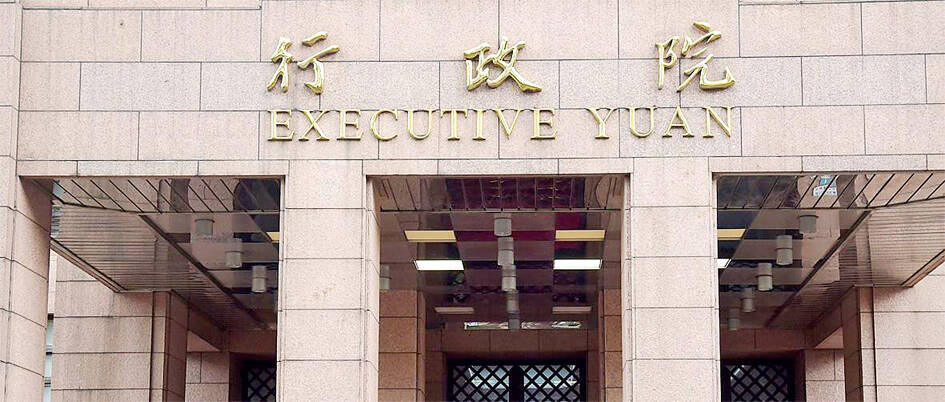
Photo: CNA
The Asia Silicon Valley initiative was launched in 2016, with a second edition announced in 2021, while the current edition, based on President William Lai’s (賴清德) innovative entrepreneurship tropical ecology policy, was approved on Friday.
The third edition of the policy is a four-year program based on two central themes: exports of Internet of Things (IoT) products and doubling investment in start-up companies, with a focus on artificial intelligence, 5G networks and satellite technology.
An Executive Yuan official, speaking on condition of anonymity, yesterday said that the policy aims to assist Taiwanese start-ups in establishing a global presence, adding that the government has established sites in Tokyo and Silicon Valley, California, and funds in Southeast Asia.
This would facilitate Taiwanese industries’ efforts in digitization and adoption of the net zero concept, the source said.
The policy encourages insurance companies to invest in start-up companies and promotes the relaxation of regulations on angel investments, they said.
The Executive Yuan is to amend laws to create greater incentives to encourage corporate investment in start-ups, they said.
The government is mulling amendments to Article 23-2 of the Statute for Industrial Innovation (產業創新條例) and relaxing regulations from two to five years.
At present, Article 23-2 states that individuals making cash investments of up to NT$1 million in high-risk start-ups — meaning they have existed for less than two years — and obtaining stock in these companies can, within two years of securing stock ownership, file for a tax reduction of up to 50 percent or NT$3 million of their general income for up to two years.
The amendment is expected to be reviewed next year, the source said.
The source said that the project hopes to foster enough start-ups to account for 5.2 percent of the global IoT market’s value, the source said.
The source also said that the goal was for the companies to develop 300 intelligent solutions, 100 of which would be exported overseas, and to establish three overseas start-up “colonies.”
The policy’s goal is to attract US$5 billion in funding and achieve 100 “exits” for start-up companies, they said.
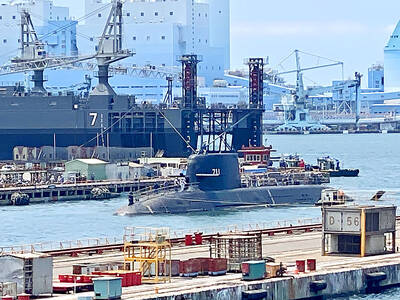
AGING: While Japan has 22 submarines, Taiwan only operates four, two of which were commissioned by the US in 1945 and 1946, and transferred to Taiwan in 1973 Taiwan would need at least 12 submarines to reach modern fleet capabilities, CSBC Corp, Taiwan chairman Chen Cheng-hung (陳政宏) said in an interview broadcast on Friday, citing a US assessment. CSBC is testing the nation’s first indigenous defense submarine, the Hai Kun (海鯤, Narwhal), which is scheduled to be delivered to the navy next month or in July. The Hai Kun has completed torpedo-firing tests and is scheduled to undergo overnight sea trials, Chen said on an SET TV military affairs program. Taiwan would require at least 12 submarines to establish a modern submarine force after assessing the nation’s operational environment and defense

A white king snake that frightened passengers and caused a stir on a Taipei MRT train on Friday evening has been claimed by its owner, who would be fined, Taipei Rapid Transit Corp (TRTC) said yesterday. A person on Threads posted that he thought he was lucky to find an empty row of seats on Friday after boarding a train on the Bannan (Blue) Line, only to spot a white snake with black stripes after sitting down. Startled, he jumped up, he wrote, describing the encounter as “terrifying.” “Taipei’s rat control plan: Release snakes on the metro,” one person wrote in reply, referring
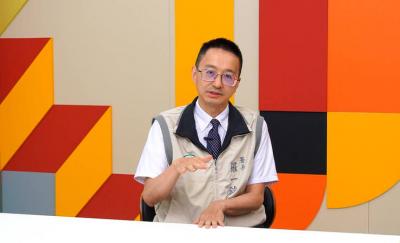
Taiwan’s two cases of hantavirus so far this year are on par with previous years’ case numbers, and the government is coordinating rat extermination work, so there should not be any outbreaks, Centers for Disease Control (CDC) Director-General Philip Lo (羅一鈞) said today in an interview with the Liberty Times (the Taipei Times’ sister newspaper). An increase in rat sightings in Taipei and New Taipei City has raised concerns about the spread of hantavirus, as rats can carry the disease. In January, a man in his 70s who lived in Taipei’s Daan District (大安) tested positive posthumously for hantavirus, Taiwan’s
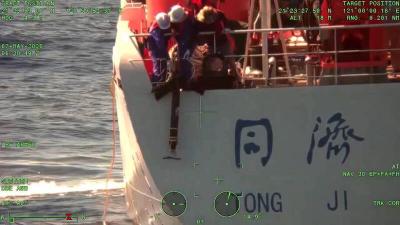
The coast guard today said that it had disrupted "illegal" operations by a Chinese research ship in waters close to the nation and driven it away, part of what Taipei sees a provocative pattern of China's stepped up maritime activities. The coast guard said that it on Thursday last week detected the Chinese ship Tongji (同濟號), which was commissioned only last year, 29 nautical miles (54km) southeast of the southern tip of Taiwan, although just outside restricted waters. The ship was observed lowering ropes into the water, suspected to be the deployment of scientific instruments for "illegal" survey operations, and the coast


 RSS
RSS