


Freedom of speech in the virtual world and in giant social media platforms in the digital era is in need of further discussions, experts said at a forum held in Taipei on Friday.
Freedom of speech should not be the knee-jerk worry that stops governments from taking actions to curb information manipulation, National Taiwan University Graduate Institute of Journalism director Hung Chen-ling (洪貞玲) said.
She made the comment when asked about how Taiwan should respond to Chinese platforms such as TikTok, which are popular among young Taiwanese, but have been found to operate in China’s interests by groups that combat disinformation such as Taiwan AI Labs and Doublethink Lab.
While banning them might incur criticisms of freedom of speech infringement, before using this to justify not doing so, “we first have to get to the bottom of how the contemporary informational environment operates,” Hung said.
“The freedom of speech question is no longer simply about protecting it in order to fight an authoritarian government like before. What we are facing in our era is a situation where our freedom of speech is directed by and is at the mercy of giant platforms and business interests,” she said.
“When a democracy is constantly threatened by a neighboring authoritarian country through information manipulation [on digital platforms], the talk of freedom of speech needs to be done in a new light to see how a democracy’s freedom of speech and national security can be protected,” Hung said.
She said the government should have the courage to do more, citing the US’ bill as an example, which is forcing ByteDance, the owner of TikTok, to divest its US assets or face a total ban.
The ultimate goal of freedom of speech is to protect human rights, Taiwan AI Labs content executive officer Hwang Chao-hwei (黃兆徽) said.
“In a virtual world, we have to ask whether this human is real or fake. Fake humans should not be granted rights,” Hwang said.
When one person can control and manipulate hundreds of accounts to sway online discussions, “it is also against the spirit of freedom of speech,” she said.
Hwang said she does not support using laws to regulate content, but that what is needed is structural regulation; meaning, transparency must be demanded “in the platforms’ money flow, algorithms, and where their adverts come from.”
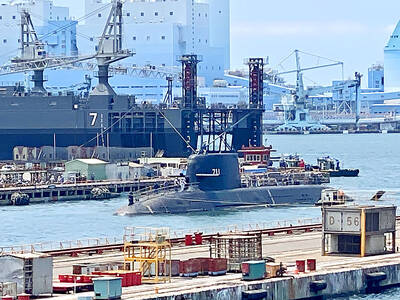
AGING: While Japan has 22 submarines, Taiwan only operates four, two of which were commissioned by the US in 1945 and 1946, and transferred to Taiwan in 1973 Taiwan would need at least 12 submarines to reach modern fleet capabilities, CSBC Corp, Taiwan chairman Chen Cheng-hung (陳政宏) said in an interview broadcast on Friday, citing a US assessment. CSBC is testing the nation’s first indigenous defense submarine, the Hai Kun (海鯤, Narwhal), which is scheduled to be delivered to the navy next month or in July. The Hai Kun has completed torpedo-firing tests and is scheduled to undergo overnight sea trials, Chen said on an SET TV military affairs program. Taiwan would require at least 12 submarines to establish a modern submarine force after assessing the nation’s operational environment and defense

A white king snake that frightened passengers and caused a stir on a Taipei MRT train on Friday evening has been claimed by its owner, who would be fined, Taipei Rapid Transit Corp (TRTC) said yesterday. A person on Threads posted that he thought he was lucky to find an empty row of seats on Friday after boarding a train on the Bannan (Blue) Line, only to spot a white snake with black stripes after sitting down. Startled, he jumped up, he wrote, describing the encounter as “terrifying.” “Taipei’s rat control plan: Release snakes on the metro,” one person wrote in reply, referring
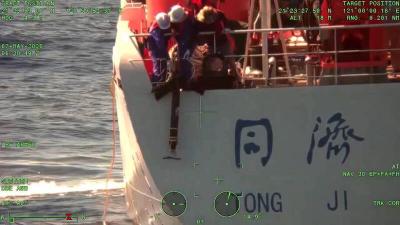
The coast guard today said that it had disrupted "illegal" operations by a Chinese research ship in waters close to the nation and driven it away, part of what Taipei sees a provocative pattern of China's stepped up maritime activities. The coast guard said that it on Thursday last week detected the Chinese ship Tongji (同濟號), which was commissioned only last year, 29 nautical miles (54km) southeast of the southern tip of Taiwan, although just outside restricted waters. The ship was observed lowering ropes into the water, suspected to be the deployment of scientific instruments for "illegal" survey operations, and the coast
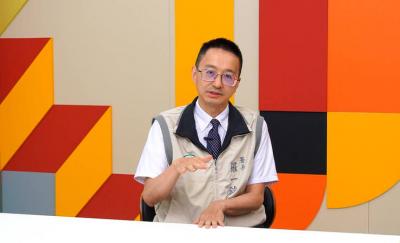
Taiwan’s two cases of hantavirus so far this year are on par with previous years’ case numbers, and the government is coordinating rat extermination work, so there should not be any outbreaks, Centers for Disease Control (CDC) Director-General Philip Lo (羅一鈞) said today in an interview with the Liberty Times (the Taipei Times’ sister newspaper). An increase in rat sightings in Taipei and New Taipei City has raised concerns about the spread of hantavirus, as rats can carry the disease. In January, a man in his 70s who lived in Taipei’s Daan District (大安) tested positive posthumously for hantavirus, Taiwan’s


 RSS
RSS