


The Centers for Disease Control (CDC) is to strengthen latent tuberculosis (TB) screening and treatment programs aimed at eradicating the disease by 2035, it said yesterday at an event held ahead of World TB Day tomorrow.
Last year, the incidence of TB in Taiwan was 28 new cases per 100,000 people, down 62 percent from 73 new cases per 100,000 people in 2005, Deputy Minister of Health and Welfare Chou Jih-haw (周志浩) told the event at Taipei Railway Station.
Health officials are urged to be vigilant in managing people known to be infected with TB, be thorough in conducting contact tracing and give particular attention to detecting suspected latent TB infections, he said.

Photo: CNA
The community spread of TB is best contained before the infected person shows symptoms, Chou said.
About 6,000 new TB cases are reported in the nation each year, CDC Deputy Director-General Tseng Shu-huai (曾淑慧) said.
The CDC is rolling out a TB screening program in collaboration with hospitals for high-risk groups, including people with poorly managed diabetes and chronic obstructive pulmonary disease, or who are undergoing dialysis, she said.
The program aims to screen 15,000 people by the end of the year, Tseng said.
During the height of the TB pandemic, the disease was known to kill up to seven people every day in Europe and the Americas, a situation not remedied until Robert Koch on March 24, 1882, discovered Mycobacterium tuberculosis, the germ that causes TB, she said.
Entertainer Chiang Tsu-ping (江祖平), who the CDC named as spokesperson for TB prevention, said that she had thought TB was an extinct disease from the history books, not an epidemic actively threatening the well-being of Taiwanese.
People in contact with a known TB case are urged to get screened as soon as possible to protect themselves and their loved ones, she said.
Latent TB infections have a 5 to 10 percent chance of becoming symptomatic, especially during periods of compromised immunity, Taiwan Society of Tuberculosis and Lung Diseases chairman Wang Jann-yuan (王振源) said.
People should keep their homes well-aerated and lead a healthy lifestyle, while those diagnosed with TB should seek medical attention immediately, Wang said, adding that treatment can reduce infectiousness within two weeks.

GOOD DIPLOMACY: The KMT has maintained close contact with representative offices in Taiwan and had extended an invitation to Russia as well, the KMT said The Chinese Nationalist Party (KMT) would “appropriately handle” the fallout from an invitation it had extended to Russia’s representative to Taipei to attend its international banquet last month, KMT Chairman Eric Chu (朱立倫) said yesterday. US and EU representatives in Taiwan boycotted the event, and only later agreed to attend after the KMT rescinded its invitation to the Russian representative. The KMT has maintained long-term close contact with all representative offices and embassies in Taiwan, and had extended the invitation as a practice of good diplomacy, Chu said. “Some EU countries have expressed their opinions of Russia, and the KMT respects that,” he
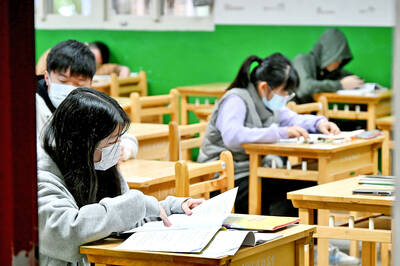
CHANGES: After-school tutoring periods, extracurricular activities during vacations or after-school study periods must not be used to teach new material, the ministry said The Ministry of Education yesterday announced new rules that would ban giving tests to most elementary and junior-high school students during morning study and afternoon rest periods. The amendments to regulations governing public education at elementary schools and junior high schools are to be implemented on Aug. 1. The revised rules stipulate that schools are forbidden to use after-school tutoring periods, extracurricular activities during summer or winter vacation or after-school study periods to teach new course material. In addition, schools would be prohibited from giving tests or exams to students in grades one to eight during morning study and afternoon break periods, the

AMENDMENT: Contact with certain individuals in China, Hong Kong and Macau must be reported, and failure to comply could result in a prison sentence, the proposal stated The Chinese Nationalist Party (KMT) and the Taiwan People’s Party (TPP) yesterday voted against a proposed bill by Democratic Progressive Party (DPP) lawmakers that would require elected officials to seek approval before visiting China. DPP Legislator Puma Shen’s (沈伯洋) proposed amendments to the Act Governing Relations Between the People of the Taiwan Area and the Mainland Area (臺灣地區與大陸地區人民關係條例), stipulate that contact with certain individuals in China, Hong Kong and Macau should be reported, while failure to comply would be punishable by prison sentences of up to three years, alongside a fine of NT$10 million (US$309,041). Fifty-six voted with the TPP in opposition
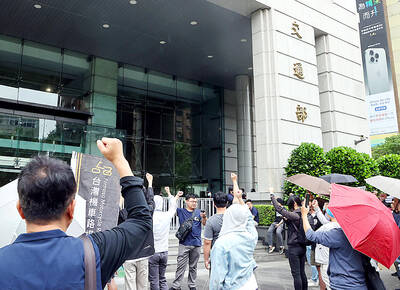
Advocates of the rights of motorcycle and scooter riders yesterday protested in front of the Ministry of Transportation and Communications in Taipei, making three demands. They were joined by 30 passenger vehicles, which surrounded the ministry to make three demands related to traffic regulations — that motorcycles and scooters above 250cc be allowed on highways, that all motorcycles and scooters be allowed on inside lanes, and that driver and rider training programs be reformed. The ministry said that it has no plans to allow motorcycles on national highways for the time being, and said that motorcycles would be allowed on the inner


 RSS
RSS