


Taiwanese film director Lien Chien-hung (練建宏) on Sunday won the Most Promising Talent Award at the 19th Osaka Asian Film Festival.
The award is given to the artist who jurors “believe will play an important role in the Asian film world in the future,” information on the festival’s Web site says.
Lien’s film, Salli (莎莉), also won the ABC TV Award, which is bestowed by the Asahi Television Broadcasting Corp for the most entertaining film. The movie is also to be shown by the network.
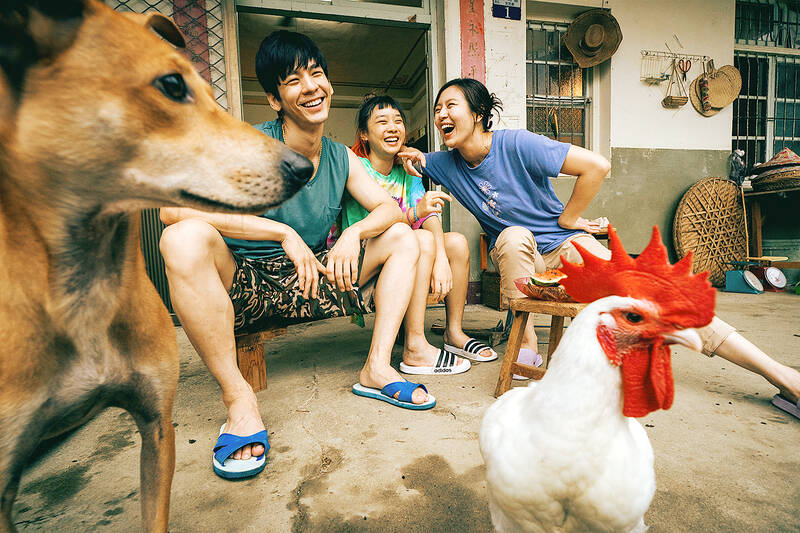
Photo courtesy of the Osaka Asian Film Festival
The film follows a 38-year-old woman who starts an online romance using the pseudonym “Salli” with a Frenchman. As people around her start to suspect she could be the victim of an online romance scam, she sets out on a trip to Paris in a bid to find love and herself.
The Taiwanese film Trouble Girl (小曉), directed by Chin Chia-hua (靳家驊), was also nominated for the “Grand Prix” award, which is given for best picture.
The Ministry of Culture cooperated with the festival and held “Taiwan: Movies on the Move 2024,” during which four Taiwanese feature films — including Salli and Trouble Girl — two short films and a digitally remastered version of The Winter of 1905 (一九零五的冬天), a Hong Kong movie co-written by Edward Yang (楊德昌), were shown.
All Taiwanese film screenings attracted nearly full houses, the festival’s organizers said.
This year, 63 films from 24 countries and regions were invited to the event that ran from March 1 to Sunday, they said.
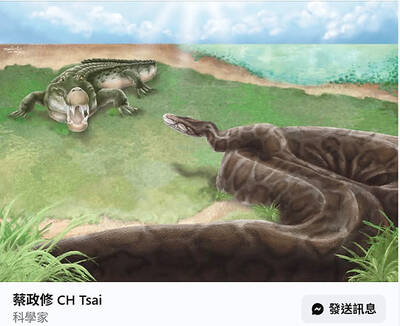
Taiwanese paleontologists have discovered fossil evidence that pythons up to 4m long inhabited Taiwan during the Pleistocene epoch, reporting their findings in the international scientific journal Historical Biology. National Taiwan University (NTU) Institute of Ecology and Evolutionary Biology associate professor Tsai Cheng-hsiu (蔡政修) led the team that discovered the largest snake fossil ever found in Taiwan. The single trunk vertebra was discovered in Tainan at the Chiting Formation, dated to between 400,000 and 800,000 years ago in the Middle Pleistocene, the paper said. The area also produced Taiwan’s first avian fossil, as well as crocodile, mammoth, saber-toothed cat and rhinoceros fossils, it said. Discoveries
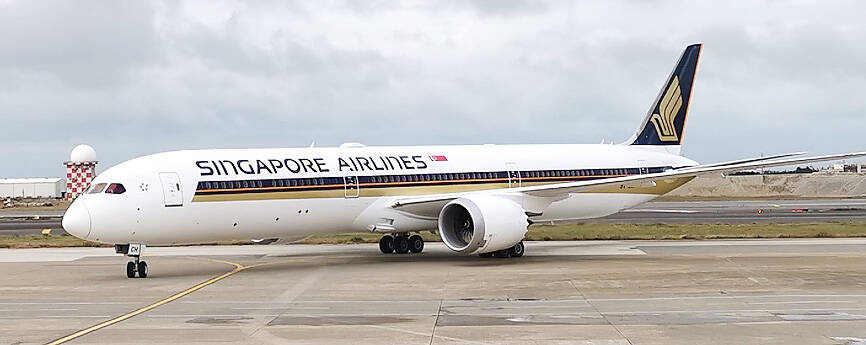
INCREASED CAPACITY: The flights on Mondays, Wednesdays, Fridays and Sundays would leave Singapore in the morning and Taipei in the afternoon Singapore Airlines is adding four supplementary flights to Taipei per week until May to meet increased tourist and business travel demand, the carrier said on Friday. The addition would raise the number of weekly flights it operates to Taipei to 18, Singapore Airlines Taiwan general manager Timothy Ouyang (歐陽漢源) said. The airline has recorded a steady rise in tourist and business travel to and from Taipei, and aims to provide more flexible travel arrangements for passengers, said Ouyang, who assumed the post in July last year. From now until Saturday next week, four additional flights would depart from Singapore on Monday, Wednesday, Friday

WATCH FOR HITCHHIKERS: The CDC warned those returning home from Japan to be alert for any contagious diseases that might have come back with them People who have returned from Japan following the World Baseball Classic (WBC) games during the weekend are recommended to watch for symptoms of infectious gastroenteritis, flu and measles for two weeks, the Centers for Disease Control (CDC) said. Flu viruses remain the most common respiratory pathogen in Taiwan in the past four weeks and the influenza B virus accounted for 55.7 percent of the tested cases, exceeding the percentage of influenza A (H3N2) infections and becoming the local dominant strain, CDC Epidemic Intelligence Center Deputy Director Lee Chia-lin (李佳琳) said at a news conference on Tuesday. There were 82,187 hospital visits for

Alumni from Japan’s Kyoto Tachibana Senior High School marching band, widely known as the “Orange Devils,” staged a flash mob performance at the Grand Hotel in Taipei yesterday to thank Taiwan for its support after the Great East Japan Earthquake. The show, performed on the earthquake’s 15th anniversary, drew more than 100 spectators, some of whom arrived two hours before the show to secure a good viewing spot. The 26-member group played selections from “High School Musical,” “Beauty and the Beast,” and their signature piece “Sing Sing Sing” and shouted “I love


 RSS
RSS