

India Taipei Association Director-General Manharsinh Laxmanbhai Yadav expressed optimism regarding cooperation between Taiwan and India after the signing of a memorandum of understanding (MOU) introducing Indian migrant workers to Taiwan.
The MOU, which was signed last month, stipulates that Taipei would set the number of migrant workers and types of industries, with implementation details to be decided in future talks, the Ministry of Labor said previously.
The MOU “holds the potential to address Taiwan’s labor shortage” and contributes to the growth and sustainability of Taiwanese industries, Yadav said.
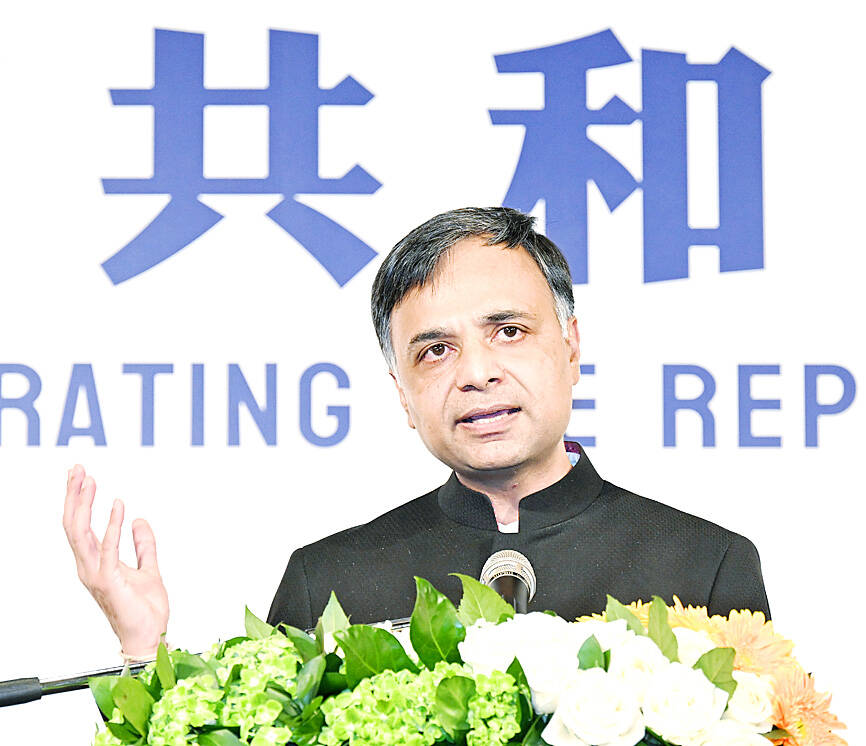
Photo: Fang Pin-chao, Taipei Times
India has skilled and professional workers who would be able to contribute to the technological and knowledge-based sectors in Taiwan, he said, adding that the synergistic effect resulting from the cooperation would form a “formidable force in addressing contemporary challenges and driving economic growth.”
The sentiment echoed that of Minister of Foreign Affairs Joseph Wu (吳釗燮), who told India’s NewsX last week that there are “very positive relations ahead for our bilateral relations,” praising Indian workers as “very well-skilled and very hardworking.”
The head of India’s de facto embassy in Taiwan also identified several of the association’s priorities to foster ties between
India and Taiwan, including supply chain collaboration, which could leverage India’s manufacturing strengths and Taiwan’s technological expertise to enhance efficiency, optimize production and facilitate trade.
The partnership could help promote mutual growth and innovation, making Taiwan and India “trusted sources for the supply of technology goods to democracies across the world,” he said.
India also looks to bolster cooperation with Taiwan in the semiconductor industry through investment and technology sharing, as well as closer ties in research, development and production, he said.
Taiwan welcomes Indian students and engineers who come to Taiwan for higher education or training, Wu told NewsX.
There are about 2,700 Indian skilled workers or engineers and about 500 postdoctoral researchers working in Taiwan, who would become the driving force in India’s semiconductor production, he said.
The nation also encourages and provides assistance to the Taiwanese semiconductor industry to develop and invest in India, he said.
“I have a lot of confidence that Taiwan-India cooperation for the future of semiconductor production in India is going to be very fruitful,” he said.
Attracting Taiwanese investment is another focus of the association, especially in green energy, space programs, digitization, electronics manufacturing, digital trade and other high-tech industries, Yadav said.
In addition to economic ties, the association is to hold a number of cultural events this year to deepen Taiwanese’s understanding of Indian culture and foster people-to-people ties, he said.
The events would also serve as platforms for Taiwanese to exchange with Indian communities in Taiwan, he added.
Commenting on Taiwan’s presidential and legislative elections held on Jan. 13, Yadav praised the nation’s dedication to democracy, which he said is shared by India.
“The smooth and peaceful transfer of power in Taiwan is a testament to the maturity and resilience of its well-established democracy,” he said.
He expressed congratulations to the newly elected leaders as well as all those who dedicated their efforts to the “crucial exercise of democratic rights.”
The elections underlined the “shared commitment to democratic values” between Taiwan and India, which is to hold its general election later this year.
Both nations’ “substantial commitment to advancing democratic practices globally” is also evident in the endeavors in the Association of Asian Election Authorities, of which India was elected chair for 2022 to this year, he said.
“I firmly believe that by fostering closer collaboration among like-minded partners, we can collectively advance these principles and contribute to building a more peaceful world,” Yadav said.

Minister of Sports Lee Yang (李洋) today said the Chinese Taipei Basketball Association (CTBA) has been urged not to undermine Taiwan’s credibility in international competitions, after a Taiwanese team advanced to the semi-finals of the 45th William Jones Cup over the Philippines last week due to a controversial new rule guaranteeing a semi-final place to the host team. The Republic of China Blue team advanced to the semi-finals after winning just one game in the group round due to a “host guarantee” spot, overtaking the Philippines, who held a 5-1 record ahead of the semi-finals. The Blue team finished the tournament
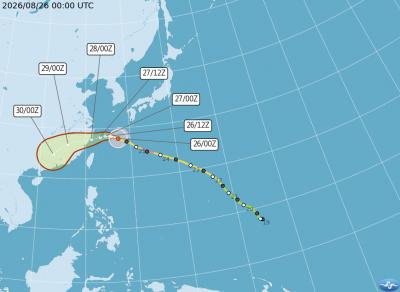
A sea warning for Typhoon Saudel, which has shifted to a more northerly track as it nears Taiwan, is expected early tomorrow, the Central Weather Administration (CWA) said today. As of this morning, Saudel was about 650km east-northeast of Taipei, moving west-northwest at 12kph with maximum sustained winds of 162kph, CWA data showed. Although Saudel remains a moderate typhoon, it has weakened and is expected to weaken further as it nears Taiwan due to unfavorable atmospheric and ocean conditions, CWA forecaster Lin Po-tung (林伯東) said. The storm is forecast to make its closest approach to Taiwan tomorrow and on Friday, Lin added. According to
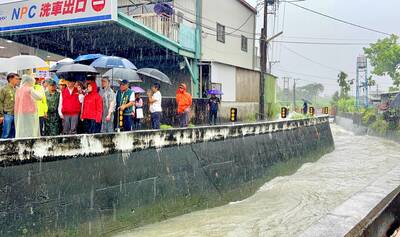
SEA WARNING EXPECTED: As atmospheric conditions are unfavorable for its development, the storm’s intensity is continuing to weaken, a CWA official said Typhoon Saudel is continuing to weaken and shift its path northward, with a sea warning expected to be issued this evening, the Central Weather Administration (CWA) said yesterday. The agency did not rule out issuing a land warning for outlying Lienchiang County (Matsu) tomorrow morning, although all storm warnings could be lifted by Friday night. Saudel is expected to be closest to Taiwan from tomorrow night to Friday, bringing localized heavy rain to northern and southern Taiwan, as well as central mountainous areas, the agency said. As of 2pm yesterday, the center of moderate Typhoon Saudel was about 890km east-northeast
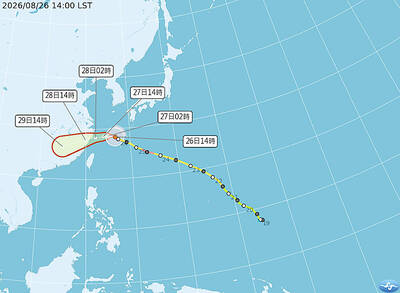
MODERATE TYPHOON: Localized heavy rain is forecast to hit central and southern Taiwan, the CWA said, adding that the storm would likely move away on Saturday A sea warning for Typhoon Saudel, which shifted to a more northerly track as it approached Taiwan, is likely early today, the Central Weather Administration (CWA) said yesterday. As of 2pm yesterday, the center of typhoon was about 630km northeast of Taipei, moving west-northwest at 14kph with maximum wind gusts of up to 162kph, CWA data showed. Saudel is a moderate typhoon and is expected to weaken as it nears Taiwan due to atmospheric and ocean conditions, CWA forecaster Lin Po-tung (林伯東) said. A sea warning indicates hazardous typhoon conditions in waters surrounding Taiwan within 24 hours, Lin said. The storm is forecast to


 RSS
RSS