


The National Communications Commission (NCC) yesterday fined Homeplus Digital NT$14.4 million (US$459,403) for failure to turn over material to a probe into the company’s sale of shares to SET TV.
The fine comprises a NT$1.2 million penalty on each of the operator’s 12 network systems, the NCC said.
In September last year, New Power Party legislators Chen Jiau-hua (陳椒華), Chiu Hsien-chih (邱顯智) and Claire Wang (王婉諭), its chairwoman, said that the deal inked by Homeplus and SET TV contravened NCC regulations.
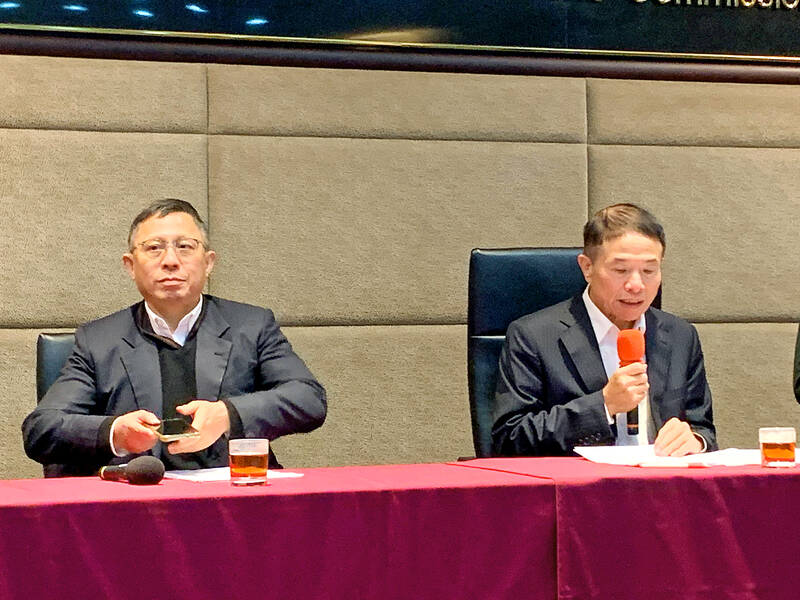
Photo: Ting Yi, Taipei Times
The deal, which breached a pledge by Homeplus to bar investors from exercising direct control over content on news channels, gave SET TV a 27 percent stake in the multi-system operator, the lawmakers said.
Two months later, the NCC said that the corporations had skirted trade regulations governing broadcasters, but did not impose any penalties, prompting criticism from lawmakers across the political divide.
The NCC yesterday said that the ruling last year was a fact-finding exercise and that Homeplus had been fined for not complying with an investigation as stipulated by Article 72 of the Cable Radio and Television Act (有線廣播電視法).
Hong Shun Group, which manages Homeplus, must sell the stock to an alternative buyer by May 31 and obtain NCC authorization by Aug. 31, it said.
Failure to comply would result in a penalty of NT$5,000 to NT$300,000 that could be repeated until the stock is sold, NCC Vice Chairman and spokesman Wong Po-tsung (翁柏宗) said.
Additionally, Hong Shun was ordered to declare its corporate structure and the identity of the investment group’s owner, he said.
With regard to SET TV, NCC Chief Secretary Huang Wen-che (黃文哲) said that the commission would open a separate inquiry into the TV network for possible regulatory breaches.
The second probe’s findings would inform the NCC’s handling of SET TV’s licensing applications and evaluations, Huang said.
In a dissenting opinion, NCC commissioners Lin Lih-yun (林麗雲) and Wang Wei-ching (王維菁) said that SET TV had on multiple occasions withheld information from regulators in a bid to conceal its monopolistic activities.
The NCC should revisit its decisions regarding channel assignments and license renewals of SET TV-owned channels in light of new evidence regarding its actions, Lin and Wang said.
Laws governing television broadcasters should be amended to empower the NCC to stop monopolistic acquisitions from occurring instead of relying on case-by-case pledges, they said, adding that penalties should be increased.
Separately, the NCC warned Mirror TV over an election commentary program it aired without regulatory approval in contravention of articles 15 and 61 of the Satellite Broadcasting Act (衛星廣播電視法).
Mirror TV’s unauthorized program, which took a slot reserved for news reports, was a political talk show by pundits that did not qualify as news, the NCC said.
Further infractions by the channel would result in a fine of NT$100,000 to NT$1 million, it said.

The military has spotted two Chinese warships operating in waters near Penghu County in the Taiwan Strait and sent its own naval and air forces to monitor the vessels, the Ministry of National Defense (MND) said. Beijing sends warships and warplanes into the waters and skies around Taiwan on an almost daily basis, drawing condemnation from Taipei. While the ministry offers daily updates on the locations of Chinese military aircraft, it only rarely gives details of where Chinese warships are operating, generally only when it detects aircraft carriers, as happened last week. A Chinese destroyer and a frigate entered waters to the southwest
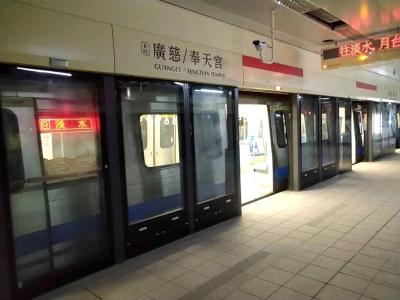
The eastern extension of the Taipei MRT Red Line could begin operations as early as late June, the Taipei Department of Rapid Transit Systems said yesterday. Taipei Rapid Transit Corp said it is considering offering one month of free rides on the new section to mark its opening. Construction progress on the 1.4km extension, which is to run from the current terminal Xiangshan Station to a new eastern terminal, Guangci/Fengtian Temple Station, was 90.6 percent complete by the end of last month, the department said in a report to the Taipei City Council's Transportation Committee. While construction began in October 2016 with an
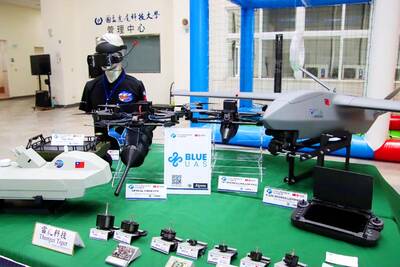
NON-RED SUPPLY: Boosting the nation’s drone industry is becoming increasingly urgent as China’s UAV dominance could become an issue in a crisis, an analyst said Taiwan’s drone exports to Europe grew 41.7-fold from 2024 to last year, with demand from Ukraine’s fight against Russian aggression the most likely driver of growth, a study showed. The Institute for Democracy, Society and Emerging Technology (DSET) in a statement on Wednesday said it found that many of Taiwan’s uncrewed aerial vehicle (UAV) sales were from Poland and the Czech Republic. These countries likely transferred the drones to Ukraine to aid it in its fight against the Russian invasion that started in 2022, it said. Despite the gains, Taiwan is not the dominant drone exporter to these markets, ranking second and fourth

Japanese Prime Minister Sanae Takaichi’s comment last year on Tokyo’s potential reaction to a Taiwan-China conflict has forced Beijing to rewrite its invasion plans, a retired Japanese general said. Takaichi told the Diet on Nov. 7 last year that a Chinese naval blockade or military attack on Taiwan could constitute a “survival-threatening situation” for Japan, potentially allowing Tokyo to exercise its right to collective self-defense. Former Japan Ground Self-Defense Force general Kiyofumi Ogawa said in a recent speech that the remark has been interpreted as meaning Japan could intervene in the early stages of a Taiwan Strait conflict, undermining China’s previous assumptions


 RSS
RSS