

New Taipei City Mayor Hou You-yi’s (侯友宜) lack of flexibility and aggressiveness in speaking was one of the reasons the Chinese Nationalist Party (KMT) lost in the presidential election, his running mate, Jaw Shaw-kong (趙少康), said yesterday.
Jaw returned to hosting political shows on Broadcasting Corp of China and TVBS after their loss in Saturday’s election.
“Our poll results showed that we had been trailing by about 3 percent, but the final result showed we had lost by about 6 percent,” Jaw said on his talk show TVBS Situation Room. “Instead of urging supporters to engage in strategic voting, the KMT asked them to concentrate their votes, which clearly failed to lead to desirable outcomes.”

Photo courtesy of Jaw Shaw-kong
Jaw credited the success of the Taiwan People’s Party (TPP) in the presidential election to its use of the Internet.
“Through its intensive online campaign, the TPP continued to build momentum, telling people that their polls showed that their approval rating was ranked either No.1 or No. 2. Many people would have voted for us if they had not been convinced that TPP presidential candidate Ko Wen-je (柯文哲) had a better chance to succeed than Hou,” he said.
Meanwhile, KMT polls showed that the Democratic Progressive Party’s (DPP) approval ratings rose during the 10 days leading up to the elections, Jaw said.
“As the ruling party, the DPP has many resources at its disposal. It can use the justice system to interrogate borough wardens,” he said.
Jaw attributed Hou’s steadiness and sense of justice to his law enforcement background, but such characteristics could also be a disadvantage when it comes to elections, he said.
“Rarely do you see police officers and police chiefs who are quick and agile in speaking. However, I must say that Hou was doing much better than others because of his experiences as New Taipei City mayor,” Jaw said.
As a challenger in the presidential election, Hou must not give his opponents a break and should have been ready to launch surprise attacks every day.
“You tend to overthink and become conservative once you become a local government official. Hou tends to believe in what he heard from experts and think tanks. However, running for president is different from giving an academic presentation,” he said.
Jaw also wrote on Facebook that the KMT and TPP should work together in the legislature to keep the DPP in check.
In Saturday’s legislative elections, the DPP won 51 seats in the 113-seat legislature, the KMT garnered 52 and the TPP eight. Another two seats were won by independents aligned with the KMT.
“The KMT did not garner 50 percent of the seats, and it cannot pass any bill or budget plans even if it could muster 54 votes at the legislature. There would be 62 votes if all opposition lawmakers work together, and it would be a force that the DPP must reckon with,” he wrote.
The election of the legislative speaker on Feb. 1 could be the first chance for the KMT and TPP to work together, Jaw said.
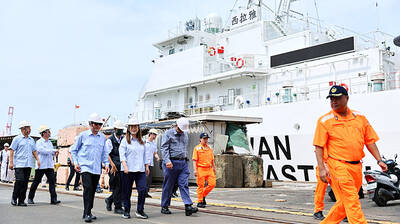
Ocean Affairs Council (OAC) Minister Kuan Bi-ling (管碧玲) on Wednesday said decommissioned coast guard vessels were given to the Philippines to enhance regional rescue capacity and would not affect Taiwanese fishers’ rights and benefits. Kuan made the remarks after confirmation on Tuesday that a 500-tonne Coast Guard Administration (CGA) patrol and rescue vessel would be given to the Philippine Coast Guard. The donation ceremony was reportedly done in Manila, but whether the vessel — previously numbered “CG123” and named Kinmen (金門) — has been handed over has yet to be confirmed. China’s Taiwan Affairs Office (TAO) on Wednesday criticized the donation for “taking
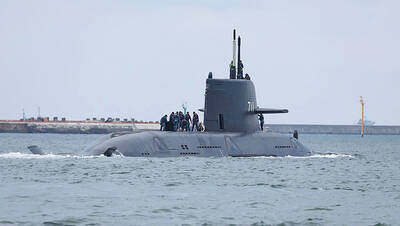
UPDATE: The submarine would need to undergo combined systems testing and crew training for navy personnel before it is ready for mission, an expert said Taiwan’s first domestically built submarine, the Hai Kun (Narwhal, 海鯤), could be delivered to the navy as early as next month, military expert and Taiwan Association for Security and Development chairman Chi Tung-yun (紀東昀) said yesterday. The submarine was yesterday morning observed departing for its 21st sea trial and its 15th submerged test. The vessel missed the initial delivery deadline of November last year due to “testing delays,” its primary contractor, shipbuilder CSBC Corp, Taiwan, said in June. The contractor also cited “political pressure from China” in procuring critical equipment. All testing operations are in the final stages, with the
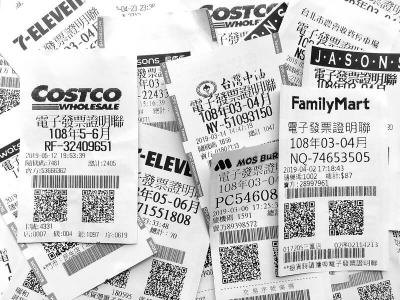
Six NT$10 million (US$315,527) special prizes and seven NT$2 million grand prizes in Taiwan's May-June uniform invoice lottery remained unclaimed as of today, including one NT$10 million winner who spent only NT$10 on an Uber Eats delivery order, the Ministry of Finance said. The ministry said the 13 winners need to claim their prizes by Nov. 5. The eight-digit serial number that won the NT$10 million special prize for May-June was 38548029, with 18 winning receipts in total. The NT$2 million grand prize number was 10138845, of which there were 22 winning receipts, the ministry said. In addition to the receipt issued for an
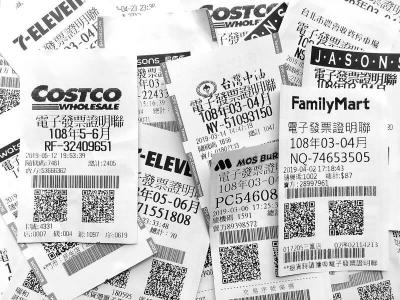
The Ministry of Finance today announced the winning numbers for the July-August uniform invoice lottery. The winning number for the NT$10 million (US$314,663) special prize is 89996565, while the winning number for the NT$2 million grand prize is 91098182. Three numbers were drawn for the NT$200,000 first prize: 54348835, 44991397 and 06595111. Those with receipts matching the last seven digits of any of the first-prize numbers can claim the NT$40,000 second prize, while those matching the last six digits qualify for the NT$10,000 third prize. Those whose receipts match the last five digits of the first-prize numbers are eligible for the NT$4,000 fourth prize,


 RSS
RSS