

Taiwan AI Labs on Wednesday said it found evidence of a systematic attempt to disseminate content accusing the government of attempting to influence the election with an emergency alert about a Chinese satellite launch sent out on Tuesday.
More than 900 articles were published online about the alert, which was pushed to phones nationwide on Tuesday afternoon, the organization said.
The alert was about a Chinese satellite that crossed over Taiwan’s southwest airspace on its way into orbit.

Photo: Tien Yu-hua, Taipei Times
The Ministry of National Defense later apologized for the English translation included in the message, which erroneously said it was a missile.
After the alert was sent, social media platforms — especially Facebook — were flooded with posts from accounts that bear the hallmarks of coordinated influence operations, Taiwan AI Labs founder Ethan Tu (杜奕瑾) told a forum on cognitive warfare observations.
These accounts mainly criticized the government’s cross-strait policy, with the aim of exacerbating polarization by using extreme language to break down rational discussion and foment distrust in the government and media, Tu said.
Online influence operations and Chinese official media have tended to diverge in their messaging, but starting from last week as election day approaches, they have become more entwined, he said.
From Dec. 30 to Saturday last week, Taiwan AI Labs said it had detected a surge in AI-generated videos claiming evidence of political scandals, which were systematically disseminated online.
Certain topics such as Medigen vaccine procurement were pushed by Chinese official media and quickly picked up by online influence operations to expand their reach, the group said.
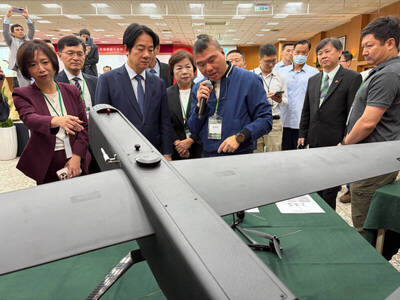
Two executives of drone supplier Jiin Ming Industry Co (錦明實業) have been detained and held incommunicado over the company's alleged use of prohibited China-made chips and camera lenses in drones supplied under recent military contracts, the Taoyuan District Prosecutors' Office said today. In a statement, prosecutors said they raided the offices of Jiin Ming — headquartered in Taoyuan — as well as those of its subsidiaries and its suppliers on Thursday last week. The raids followed a report that the company had breached its procurement contracts by putting the prohibited components into drones delivered to the military. During the raids, prosecutors summoned
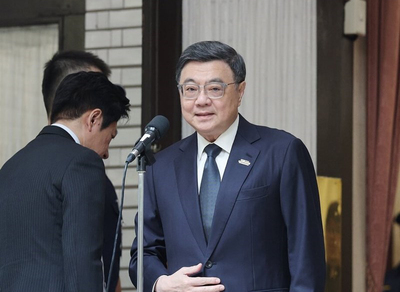
The government would continue monitoring online rumors that a pneumonic plague outbreak has spread from Russia into China and could enhance existing quarantine measures, Premier Cho Jung-tai (卓榮泰) said today. During a legislative meeting, Democratic Progressive Party Legislator Wang Ting-yu (王定宇) said rumors were circulating that the disease had spread across several Chinese provinces. He asked Cho whether the government was prepared to prevent the disease from spreading to Taiwan, given the frequent exchanges between Taiwan and China, and how concerned the government was about the alleged outbreak. The Ministry of Health and Welfare implemented border quarantine measures after briefing the Executive Yuan

South Korean boy band BigBang drew 120,000 fans to three concerts at Taipei Dome from Friday through yesterday, as the band thanked them for their support over their 20-year career. The Taipei Dome concerts were part of BigBang's "2026-2027 World Tour XX: Cosmos." Friday's concert was BigBang's first performance in Taiwan in 11 years. During the encore, group leader G-Dragon (GD) shouted "I love you" in Chinese and said he was especially happy to perform in Taiwan with bandmates Taeyang and Daesung. "Taipei, I'm very grateful to you all," GD said in Chinese, asking fans to wait for the band's return. Daesung thanked
A Chinese People's Liberation Army (PLA) Navy aircraft carrier group was being monitored after entering the western Pacific, the Ministry of National Defense said today, after Beijing yesterday criticized Taiwan for using a water cannon against a Chinese fishing boat near the Pratas Islands (Dongsha Islands, 東沙群島). A Chinese naval task group led by the aircraft carrier Liaoning (遼寧) yesterday sailed to the western Pacific for training, Chinese state-run Xinhua news agency quoted the PLA Navy as saying. “The drill is part of the annual routine training plan aimed at testing and improving the troops’ combat readiness and enhancing their ability to


 RSS
RSS