


Development and testing of the XT112 rifle, which is set to replace the existing models used by Taiwan’s military, would be completed this year, the Ministry of National Defense’s Armaments Bureau said on Friday at the 2023 Taipei Aerospace & Defense Industry Exhibition.
The entirely domestically developed and built rifle features numerous improvements over the T91 and T65K2 models, said Lieutenant Lee Chien-ting (李建霆), who is involved in the research and development of the rifle at the bureau.
The barrel of the XT112 rifle is thicker than the T91 and T65K2 models, resulting in the XT112’s improved accuracy. The XT112 shoots groupings of 9.8cm from a range of 100m compared with the T91’s groupings of 14.5cm at 100m, Lee said.

Photo courtesy of the GACC
In addition, the selector lever, the magazine release button and cocking handle latch are on both sides of the XT112 to allow easy access regardless of the user’s dominant hand, whereas on the previous models, they are only on one side, he said.
The rail mount is built to international specifications to allow greater freedom for mounting accessories such as grenade launchers, sights, and laser aiming modules, which can now be mounted all along the rail depending on the user’s needs, while on previous models these accessories could only be mounted on fixed positions, he said.
The foregrip contains a retractable bipod that snaps into place when needed, helping with firing from at low postures, he said.
The magazine has a see-through case that allows the user to check the ammunition level at a quick glance and is made of a composite plastic material, making it more durable and less prone to jamming compared with the aluminum magazine on the T91 or T65K2, he said.
The tip of the steel flash suppressor comes with indentations, meaning it can be used as a melee weapon and a wire cutter, Lee said, adding that while such flash suppressors are only on previous rifle models by request, they would be standard on the XT112s.
The XT112s are expected to undergo operational testing this year and if they pass would gradually replace rifle models in use across military services, Lee said.

Nipah virus infection is to be officially listed as a category 5 notifiable infectious disease in Taiwan in March, while clinical treatment guidelines are being formulated, the Centers for Disease Control (CDC) said yesterday. With Nipah infections being reported in other countries and considering its relatively high fatality rate, the centers on Jan. 16 announced that it would be listed as a notifiable infectious disease to bolster the nation’s systematic early warning system and increase public awareness, the CDC said. Bangladesh reported four fatal cases last year in separate districts, with three linked to raw date palm sap consumption, CDC Epidemic Intelligence

Two Taiwanese prosecutors were questioned by Chinese security personnel at their hotel during a trip to China’s Henan Province this month, the Mainland Affairs Council (MAC) said yesterday. The officers had personal information on the prosecutors, including “when they were assigned to their posts, their work locations and job titles,” MAC Deputy Minister and spokesman Liang Wen-chieh (梁文傑) said. On top of asking about their agencies and positions, the officers also questioned the prosecutors about the Cross-Strait Joint Crime-Fighting and Judicial Mutual Assistance Agreement, a pact that serves as the framework for Taiwan-China cooperation on combating crime and providing judicial assistance, Liang
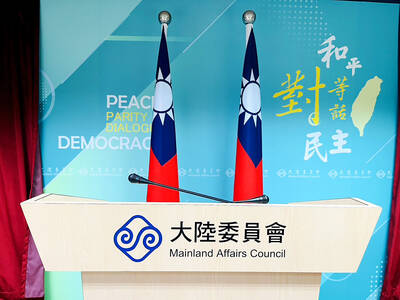
Reports of Taiwanese going missing, being detained or interrogated, or having their personal liberties restricted in China increased about fourfold annually last year, the Mainland Affairs Council (MAC) said yesterday. Last year, 221 Taiwanese who traveled to China were reported missing, were detained and interrogated, or otherwise had their personal freedom restricted, up from 55 the previous year, the council said. Reopening group tours to China would be risky, as it would leave travelers with no way to seek help through official channels after Beijing shut down dialogue between the associations tasked with handling cross-strait tourism, the MAC said. Taipei’s Taiwan Strait Tourism

SHIFT: Taiwan is evolving from a transit stop into a tourist destination, with more international travelers willing to spend on tours, dining and cultural activities Taiwan rose three places in the World Tourism Barometer to 36th globally in 2024, with international tourism revenue of US$10.028 billion, the Tourism Administration said on Monday. The UN Tourism Organization publication said that its focus has switched from whether a country has returned to pre-COVID-19 levels of tourism to the amount spent by a tourist during an overseas trip. The nation last year welcomed 8.57 million international tourists, about 9 percent more than in 2024, with most tourists coming from Japan, South Korea, and Hong Kong and Macau, all of which accounted for at least 1 million tourists each. During the first


 RSS
RSS