


Taiwanese and Polish geologists this month deployed the first Taiwan-made uncrewed surface vehicle (USV) during an expedition in Kaffioyra on the Norwegian archipelago of Svalbard in the Arctic Ocean to study underwater environments.
The USV scanned the terrain at the bottom of glacial lakes and fjords in Kaffioyra during the scientific mission from Aug. 4 to Sunday to study the effects of glacial loss.
The USV’s main component was invented by associate professor Lu Cheng-hao (呂政豪) and his team from National Penghu University of Science and Technology’s Coastal Observation and Autonomous Surface-vehicle Technology joint lab, the university said in a statement.
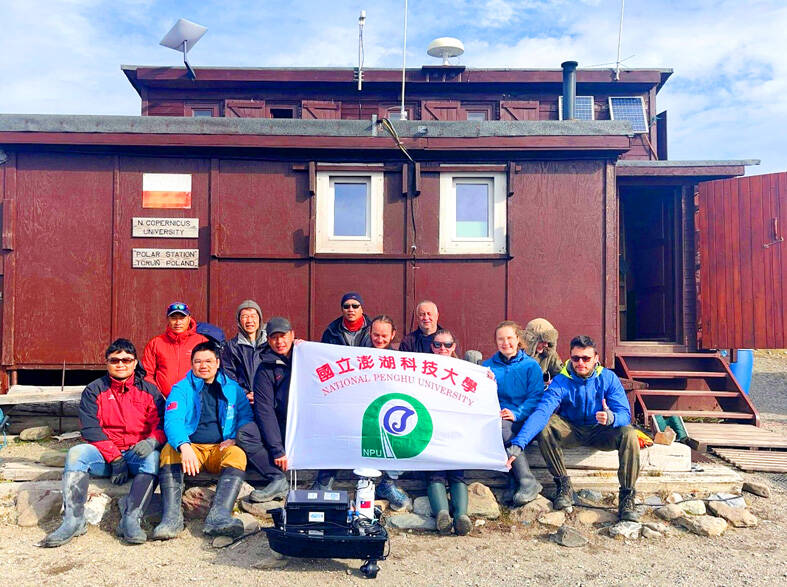
Photo: CNA
The craft’s communication system, electric engine and artificial intelligence-powered control system, which keeps it from colliding with obstacles, were worked on by College of Marine Resources and Engineering professor Chuang Ming-lin (莊明霖), other researchers and a tech company, the university said.
Other Taiwanese scientists on the mission worked on other projects related to climate change and its effect on the arctic, the statement said.
Kuo Chen-hao (郭陳澔), a professor in National Taiwan University’s Department of Geosciences, used the Starlink satellite system to study data linking earthquakes, melting ice and permafrost, and temperature changes, the statement said.
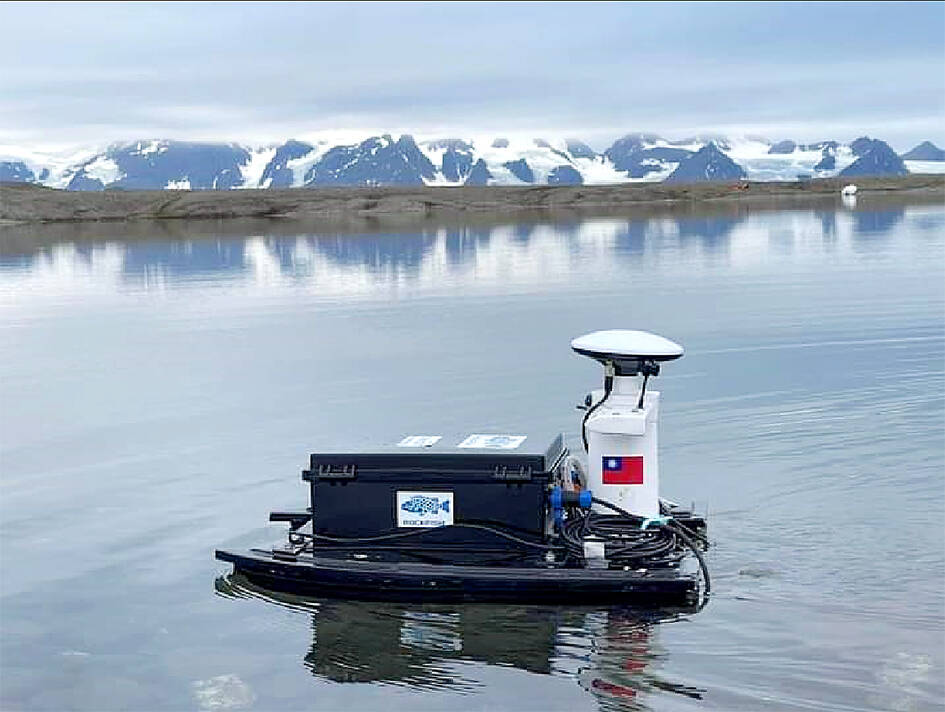
Photo courtesy of National Penghu University of Science and Technology
Lin Li-hung (林立虹), also a professor in the Department of Geosciences, took a piece of ice from the glacier to study the chemicals in it and carbon dioxide emissions from the melting permafrost, it said.
Professor Liou Ya-hsuan (劉雅瑄), a colleague of Kuo and Lin, studied the concentration of micro-plastics in the arctic, the statement said.
Slawomir Jack Giletycz, an assistant professor in National Central University’s Department of Earth Sciences, deployed a medium-sized drone with high-resolution cameras to observe the terrain and geological structures of the area, it said.
This team was the fifth from Taiwan to visit Svalbard since the first was sent by National Central University in 2021.
There were two expeditions last year and another this month.
National Central University, the National Academy of Marine Research and Poland’s Nicolaus Copernicus University in June established the Taiwan Polar Institute to facilitate scientific studies of polar regions, the Taoyuan-based university said in a separate statement on Monday.
It is headed by Ni Chuen-fa (倪春發), a professor in National Central University’s Graduate Institute of Applied Geology, while Chien Hwa (錢樺), a professor in its Graduate Institute of Science of Hydrological and Oceanic Sciences, is its deputy director, it said.
Jack Slawomir Giletycz, a Polish researcher and associate professor in National Central University’s Department of Earth Sciences is to head the TaiArctic, Taiwan’s first permanent polar research workstation, which was set up in Svalbard in June last year, it said.
In addition to the research in the arctic circle, Ni said that the Taiwan Polar Institute would help in Taiwan’s contribution to the search for solutions to global warming.
Taiwan’s location in a subtropical zone means it is susceptible to extreme climate change and exploration of the arctic would hopefully shed light on the issue, he said.
“The Earth is a complex, interactive system,” he said, adding that space, the atmosphere, geology and human activity interact to shape the planet.
In other news from National Central University, researchers from its Department of Space Science and Engineering visited the north pole with hopes of establishing a ground receiving station for the “Flying Squirrel” IDEASSat.
The IDEASSat is a cube satellite developed by National Central University to research how plasma in the ionsphere affects radio waves from 5G networks.
The satellite was launched on a SpaceX rocket on Jan. 24, 2021.
The station could help improve reception from satellites in sun-synchronous or high-inclination orbits, opening a new frontier in space weather research, National Central University said.
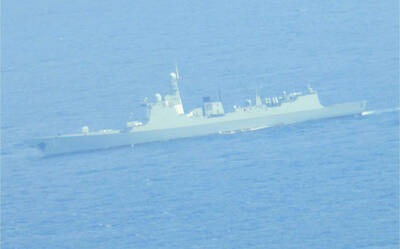
The military has spotted two Chinese warships operating in waters near Penghu County in the Taiwan Strait and sent its own naval and air forces to monitor the vessels, the Ministry of National Defense (MND) said. Beijing sends warships and warplanes into the waters and skies around Taiwan on an almost daily basis, drawing condemnation from Taipei. While the ministry offers daily updates on the locations of Chinese military aircraft, it only rarely gives details of where Chinese warships are operating, generally only when it detects aircraft carriers, as happened last week. A Chinese destroyer and a frigate entered waters to the southwest
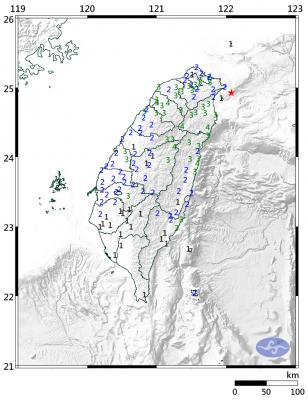
A magnitude 6.1 earthquake struck off the coast of Yilan County at 8:39pm tonight, the Central Weather Administration (CWA) said, with no immediate reports of damage or injuries. The epicenter was 38.7km east-northeast of Yilan County Hall at a focal depth of 98.3km, the CWA’s Seismological Center said. The quake’s maximum intensity, which gauges the actual physical effect of a seismic event, was a level 4 on Taiwan’s 7-tier intensity scale, the center said. That intensity level was recorded in Yilan County’s Nanao Township (南澳), Hsinchu County’s Guansi Township (關西), Nantou County’s Hehuanshan (合歡山) and Hualien County’s Yanliao (鹽寮). An intensity of 3 was

Japanese Prime Minister Sanae Takaichi’s comment last year on Tokyo’s potential reaction to a Taiwan-China conflict has forced Beijing to rewrite its invasion plans, a retired Japanese general said. Takaichi told the Diet on Nov. 7 last year that a Chinese naval blockade or military attack on Taiwan could constitute a “survival-threatening situation” for Japan, potentially allowing Tokyo to exercise its right to collective self-defense. Former Japan Ground Self-Defense Force general Kiyofumi Ogawa said in a recent speech that the remark has been interpreted as meaning Japan could intervene in the early stages of a Taiwan Strait conflict, undermining China’s previous assumptions
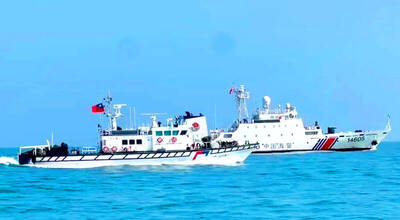
Instead of focusing solely on the threat of a full-scale military invasion, the US and its allies must prepare for a potential Chinese “quarantine” of Taiwan enforced through customs inspections, Stanford University Hoover fellow Eyck Freymann said in a Foreign Affairs article published on Wednesday. China could use various “gray zone” tactics in “reconfiguring the regional and ultimately the global economic order without a war,” said Freymann, who is also a nonresident research fellow at the US Naval War College. China might seize control of Taiwan’s links to the outside world by requiring all flights and ships entering or leaving Taiwan


 RSS
RSS