


Taipei city councilors yesterday asked the Control Yuan to probe possible breaches of the law by a so-called “music concert” headlined by Taiwan People’s Party Chairman Ko Wen-je (柯文哲) taking place today, saying it is an illegal fundraising scheme for his presidential election campaign and that it would also receive donations from abroad.
Billed the “KP Show,” the TPP chairman is to host music acts, entertainment, pep talks, auctions of his personal items at the Corner Max venue in Taipei, near the Songshan Cultural and Creative Park (松山文創園區).
Democratic Progressive Party Taipei City councilors Lin Yen-feng (林延鳳) and Yen Juo-fang (顏若芳) were joined by attorney Cheng Wen-ting (鄭文婷), the party’s candidate for a legislative seat in Keelung, at a news conference outside the Control Yuan in Taipei.

Photo: George Tsorng, Taipei Times
“The KP Show is disguised as a music concert, concealing its real purpose, which is a fundraiser for Ko’s election campaign,” Lin said, adding that Ko is using devious means to contravene the Political Donations Act (政治獻金法) by packaging it as a commercial event to circumvent the restrictions on receiving money from outside of Taiwan.
Tickets for the “concert” have been sold online and it is to be livestreamed with viewers paying for an online ticket, which Lin said is a way for people overseas, including in China, Hong Kong and Macau, to donate money.
The Political Donations Act prohibits overseas financial contributions for election candidates, yet Ko and his aides aim to misrepresent it as a commercial concert to hide its real purpose, Lin said, adding that it unmasks the fraudulent claim by Ko that “transparency” and “openness” would be the core principles of a government under his leadership.
“Therefore we are requesting that the Control Yuan conduct an investigation into this event, and we also ask that Ko clearly explain what measures he and his aides are taking to prevent such illegal political contributions,” she said.
Yen condemned Ko for claiming it was a commercial music event, when it is actually a political rally to solicit campaign donations, urging the relevant agencies to closely scrutinize the event to see from whom and where the money comes, since foreigners are banned from donating to political candidates to preclude those in other nations “buying candidates” and meddling in Taiwan’s elections.
Saying that Ko keeps insisting that it is not political, but just a commercial event, Yen asked: “What is he really up to, and why is he afraid of revealing the sources of his campaign funds?”
“He is seeking the nation’s highest office, so he must not contravene the law by saying that it is only a music event and he would pay entertainment tax... The Political Donations Act is a very important ‘sunshine law’ to root out illegal campaign contributions and undue outside influence,” Cheng said.
TPP spokeswoman Chen Chih-han (陳智菡) said that Ko had commissioned an entertainment agency to handle the “KP Show,” and that all ticket receipts and revenue would be accounted for properly.
Tickets costing up to NT$8,800 per person went on sale earlier this month, with the cost being compared to tickets for South Korean group Blackpink’s concert in Kaohsiung earlier this year.

The Centers for Disease Control (CDC) yesterday reported the first case of a new COVID-19 subvariant — BA.3.2 — in a 10-year-old Singaporean girl who had a fever upon arrival in Taiwan and tested positive for the disease. The girl left Taiwan on March 20 and the case did not have a direct impact on the local community, it said. The WHO added the BA.3.2 strain to its list of Variants Under Monitoring in December last year, but this was the first imported case of the COVID-19 variant in Taiwan, CDC Deputy Director-General Lin Ming-cheng (林明誠) said. The girl arrived in Taiwan on

South Korea is planning to revise its controversial electronic arrival card, a step Taiwanese officials said prompted them to hold off on planned retaliatory measures, a South Korean media report said yesterday. A Yonhap News Agency report said that the South Korean Ministry of Foreign Affairs is planning to remove the “previous departure place” and “next destination” fields from its e-arrival card system. The plan, reached after interagency consultations, is under review and aims to simplify entry procedures and align the electronic form with the paper version, a South Korean ministry official said. The fields — which appeared only on the electronic form

The Ministry of Foreign Affairs (MOFA) is suspending retaliation measures against South Korea that were set to take effect tomorrow, after Seoul said it is updating its e-arrival system, MOFA said today. The measures were to be a new round of retaliation after Taiwan on March 1 changed South Korea's designation on government-issued alien resident certificates held by South Korean nationals to "South Korea” from the "Republic of Korea," the country’s official name. The move came after months of protests to Seoul over its listing of Taiwan as "China (Taiwan)" in dropdown menus on its new online immigration entry system. MOFA last week
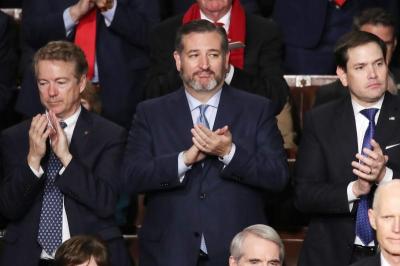
A bipartisan group of US senators has introduced a bill to enhance cooperation with Taiwan on drone development and to reduce reliance on supply chains linked to China. The proposed Blue Skies for Taiwan Act of 2026 was introduced by Republican US senators Ted Cruz and John Curtis, and Democratic US senators Jeff Merkley and Andy Kim. The legislation seeks to ease constraints on Taiwan-US cooperation in uncrewed aerial systems (UAS), including dependence on China-sourced components, limited access to capital and regulatory barriers under US export controls, a news release issued by Cruz on Wednesday said. The bill would establish a "Blue UAS


 RSS
RSS