


As the COVID-19 pandemic gradually recedes in Taiwan and virus prevention policies are eased, concern over being infected has fallen and the mask mandate has been lifted in most public places. Nonetheless, there is no room for complacency. As the effectiveness of vaccines diminishes over time, we still need to be mindful of how to protect the public against infection in the post-pandemic era.
COVID-19 NEED MSONITORING TO SEE WHETHER IT WOULD TURN INTO FLU
Lee Ping-ing (李秉穎), a professor at National Taiwan University Hospital, said in an interview that COVID-19 could gradually morph into the common cold rather than influenza.

Photo courtesy of Lee Ping-ing
As with all coronaviruses, the virus that causes COVID-19 is constantly mutating, but it only causes colds due to the immunity developed by the human body post-infection, Lee said.
Even though it is impossible to avoid severe symptoms entirely, symptoms in new cases would gradually become less severe over time, he said. It is possible that, in the future, the novel coronavirus would develop in such a way that it would only cause severe illness in young children, and less so in adults.
COVID-19 symptoms are not entirely mild at this point, and so it is still important to monitor the rate of severe illness and death in the first few years following the pandemic, Lee said. If the symptoms remain severe and the death rate high, annual vaccinations for the first few years would still be required.
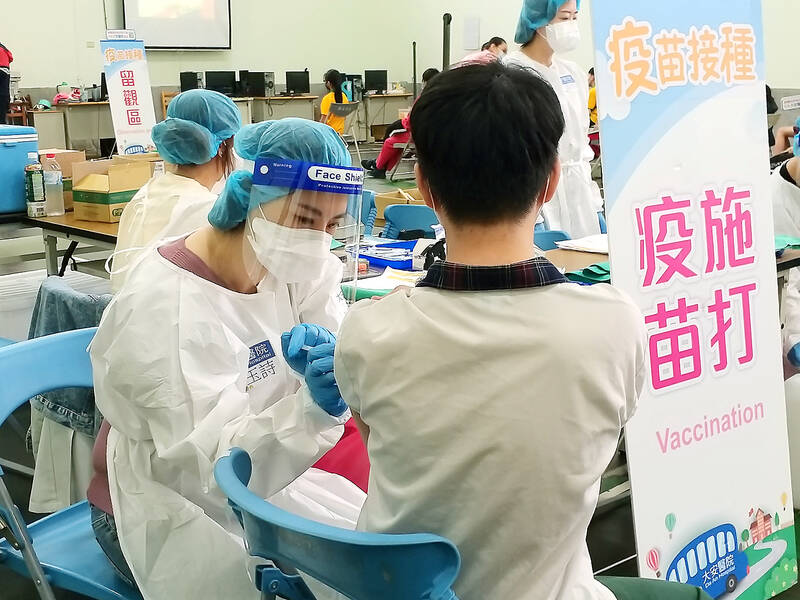
Photo: Liberty Times file
AS PANDEMIC RECEDES, VACCINE SAFETY BECOMES PRIORITY
According to the Centers for Disease Control, 60 million doses of COVID-19 vaccines were administered in Taiwan, with a coverage rate of 94 percent for the first dose, 89 percent for the second dose, 0.9 percent for an additional primary dose, 76.7 percent for the first booster and 24.5 percent for the second booster. The coverage rates of the first and second doses were excellent, but the vaccination rates of the additional primary dose and the third and fourth booster shots were not as high as for the two initial shots.
According to Lee, the rate of serious illness and fatality among high-risk and unvaccinated groups remains high after COVID-19 infection. Although the pandemic is receding and the virus should dissipate. there are still chances of infections over the next three to four years, or even longer.
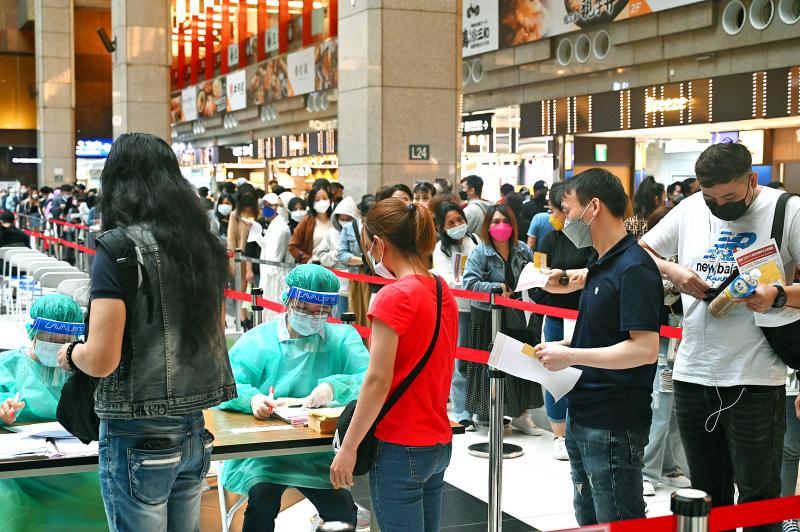
Photo: Liberty Times file
During the interview, Lee also spoke of the development of new vaccines, saying that in the early stages of the COVID-19 pandemic all the vaccines were approved on an emergency basis, with the emphasis being on efficacy and supply speed, with less stringent measures placed on safety assessment.
Now that the pandemic has subsided, vaccine safety has become more important, and in the future COVID-19 vaccines would require official drug certification, Lee said.
THE SAFER PROTEIN-BASED NOVAVAX WILL BE USED FOR PREVENTIVE JABS
As the pandemic eases and the urgency of vaccinations decreases, more attention will be paid to vaccine side effects and safety.
Lee said that there were initially mainly mRNA vaccine and adenovirus vector vaccines, both of which had the advantage of quick production and quick response, but carried the risk of causing severe complications, such as myocarditis and blood clots in adolescents.
In the immediate outbreak of the pandemic, vaccination was considered preferable to being unvaccinated due to the possibility of severe illness and death from the disease, but later on, when the newer strains of the virus proved to be less lethal, it was no longer ideal to use the two vaccines that could cause serious side effects, he said.
Sub-unit protein vaccines, which have a longer history than mRNA and adenovirus vector vaccines, have been used to treat diseases such as hepatitis B, cervical cancer and the flu, and are less likely to cause serious side effects, Lee said.
The Novavax vaccine, which was granted Emergency Use Listing by the WHO and has been authorized in more than 40 countries worldwide, is a protein-based vaccine. Designed from the gene sequence of SARS-CoV-2, the virus that causes COVID-19, it uses Novavax’s recombinant nanoparticle technology and it is formulated with Novavax’s Matrix-M adjuvant, which increases the vaccine’s ability to stimulate immunity. The safety of the vaccine is recognized and Taiwan approved it for use in adults in June last year and in adolescents in September last year, making it a strong additional option for high-risk groups, students and adolescents.
In the coming years, the risk of infection will remain high regardless of whether one has previously been infected with SARS-CoV-2. Vaccinations will continue to be the primary means of preventing serious illness and death.

Considering that most countries issue more than five denominations of banknotes, the central bank has decided to redesign all five denominations, the bank said as it prepares for the first major overhaul of the banknotes in more than 24 years. Central bank Governor Yang Chin-lung (楊金龍) is expected to report to the Legislative Yuan today on the bank’s operations and the redesign’s progress. The bank in a report sent to the legislature ahead of today’s meeting said it had commissioned a survey on the public’s preferences. Survey results showed that NT$100 and NT$1,000 banknotes are the most commonly used, while NT$200 and NT$2,000

The Centers for Disease Control (CDC) yesterday reported the first case of a new COVID-19 subvariant — BA.3.2 — in a 10-year-old Singaporean girl who had a fever upon arrival in Taiwan and tested positive for the disease. The girl left Taiwan on March 20 and the case did not have a direct impact on the local community, it said. The WHO added the BA.3.2 strain to its list of Variants Under Monitoring in December last year, but this was the first imported case of the COVID-19 variant in Taiwan, CDC Deputy Director-General Lin Ming-cheng (林明誠) said. The girl arrived in Taiwan on

ANNUAL EVENT: Two massive Pokemon balloons are to be set up in Daan Park, with an event zone operating from 10am to 6pm This year’s Taipei Floral Picnic is to be held at Daan Park today and tomorrow, featuring an exclusive Pokemon Go event, a themed food market, a coffee rave picnic area and stage performances, the Taipei Department of Information and Tourism said yesterday. Two massive Pokemon balloons are to be set up in the park as attractions, with an exclusive event zone operating from 10am to 6pm, it said. Participants who complete designated tasks on-site would have a chance to receive limited-edition souvenirs, it added. People could also try the newly launched game Pokemon Pokopia in the trial area, the department said. Three PokeStops are

South Korea is planning to revise its controversial electronic arrival card, a step Taiwanese officials said prompted them to hold off on planned retaliatory measures, a South Korean media report said yesterday. A Yonhap News Agency report said that the South Korean Ministry of Foreign Affairs is planning to remove the “previous departure place” and “next destination” fields from its e-arrival card system. The plan, reached after interagency consultations, is under review and aims to simplify entry procedures and align the electronic form with the paper version, a South Korean ministry official said. The fields — which appeared only on the electronic form


 RSS
RSS