

The highest-speed test to date of a self-driving car developed by the Industrial Technology Research Institute (ITRI, 工研院) was successfully conducted at Taiwan Taoyuan International Airport Wednesday, ITRI said Thursday.
The self-driving shuttle, which drove at 50 kilometers per hour, is part of a four-year project to develop autonomous shuttles for the country’s international airports, ITRI said, adding that it is to invest “at least NT$5 billion” into the project.
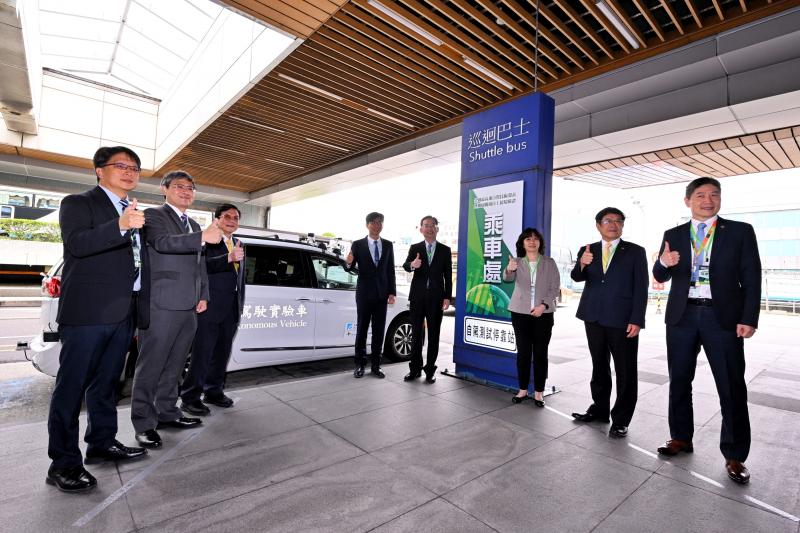
Photo: CNA
This week’s test drive reached a speed record that was the fastest achieved to date by a self-driving car in Taiwan, and second worldwide only to shuttles operating at Phoenix Sky Harbor International Airport in Phoenix, Arizona, Department of Industrial Technology Director-General Chiou Chyou-huey (邱求慧) said.
The shuttle is being run on a 4.2km circuit, and is assisted by 5G-connected safety systems, he said.
“In the future, higher-speed self-driving will be implemented on open roads such as expressways or highways. ” he said.
“There have already been 15 test cases on open roads in Taiwan.”
Future challenges to implementing widespread autonomous driving included the implementation of relevant regulations, and devising technical solutions to more complicated road conditions, he said, adding that 5G-connected smart technology at intersections would improve the safety of self-driving vehicles.

McDonald’s Taiwan today said it has halted sales of its limited edition Sea Flavor Fried Shrimp Burger and its double-patty version, after the importer notified the company last night that the shrimp patties contained nitrofurans — a group of synthetic antibiotics — and their metabolites. Sales of the shrimp burgers were suspended nationwide at 10:30am today and customers who purchased them yesterday or in the early hours of this morning would be eligible for refunds, the company said, adding that more details would be announced within a week. McDonald’s Taiwan said it was notified last night that subsequent batch testing had found
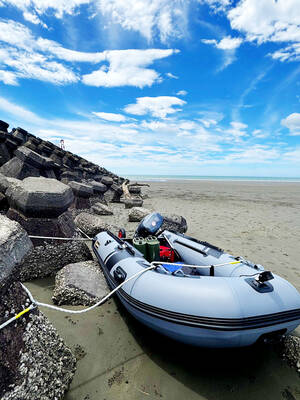
Two Chinese suspected to have illegally entered Taiwan are being held incommunicado, the Coast Guard Administration (CGA) said yesterday, after a rubber boat was found north of the Port of Taipei last month. An angler late last month discovered a rubber boat on a beach in New Taipei City’s Bali District (八里), a member of the public wrote on Threads on Monday. The next day, the angler investigated the boat and discovered that it contained Chinese-made metal oil drums, toilet paper packaging with simplified Chinese characters, an empty soda bottle sold in China and three life jackets, the post said. The fisher reported
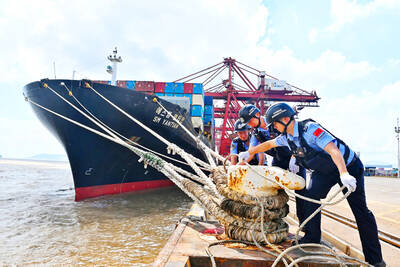
STRAIT AUTHORITY: The Maritime and Port Bureau said that it had implemented measures ahead of the storm’s arrival and no incidents had occurred under its watch China’s use of typhoon disaster prevention as a pretext to exercise traffic control over vessels in the Taiwan Strait was unacceptable, the Maritime and Port Bureau said in a statement on Monday. The bureau issued the statement after China’s Guangdong Maritime Safety Administration on Thursday last week unilaterally said that it would enforce traffic controls over northbound vessels in the Taiwan Strait due to Typhoon Dolphin. The bureau said that following the Chinese announcement, it had immediately issued maritime safety notices via coastal radio and maritime safety centers to inform vessels operating near Taiwan that the Taiwan Strait is international waters. Under the
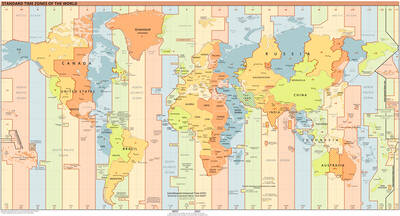
UNNECESSARY?: While some said that the switch would mean more sunlight exposure for workers, others said the government should promote flexible working hours instead An online debate has resurfaced on whether Taiwan should switch to the same time zone as Japan, with supporters citing its geographic location and saying that China would have no right to object. The debate erupted on Threads when users suggested that Taiwan should stop using the same time zone as China, Malaysia and Singapore, GMT+8, and instead switch one hour ahead to the same time zone as Japan and South Korea, GMT+9, which it is geographically closer to. Under GMT+9 the sun would set later year-round, meaning that people would see sunlight after getting off work even in the winter and


 RSS
RSS