


Costco Taiwan yesterday presented a plan to compensate customers who had purchased frozen mixed berry products that were later found to be contaminated with the hepatitis A virus.
Costco members who bought the frozen berries at its Kaohsiung warehouse would be offered a full refund plus compensation equivalent to the refund amount, the Kaohsiung Department of Administrative and International Affairs, quoting Costco, said in a statement.
Costco is also to offer a subsidy of NT$500 (US$16.27) to any members who after consulting a doctor at healthcare facilities designated by the Centers for Disease Control (CDC) undergo an immunoglobulin test for hepatitis A, the department said.
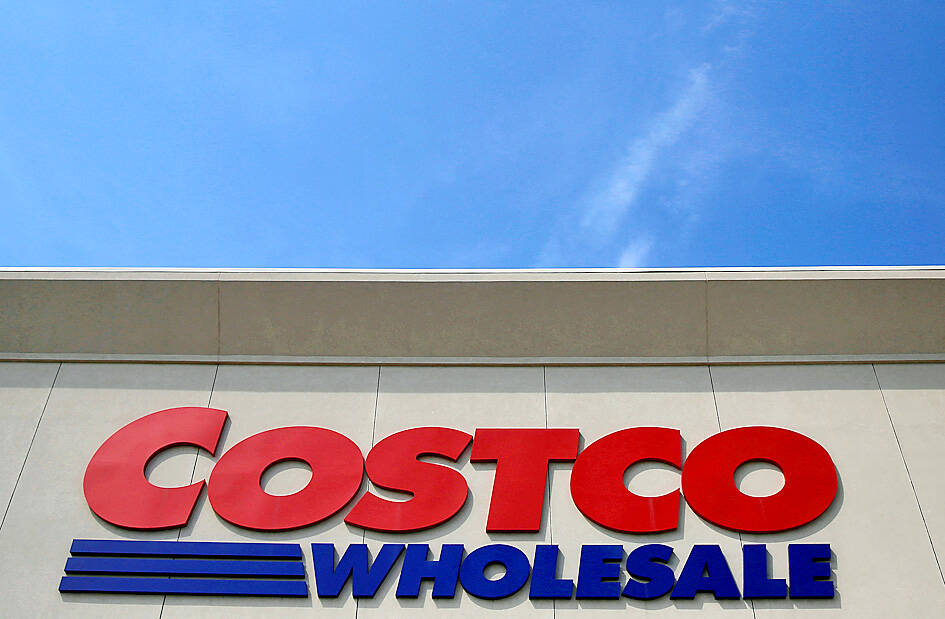
Photo: Reuters
In addition, Costco is to pay the full medical bill of any member diagnosed with hepatitis A that could be traced to the contaminated berry products, which were sold under Costco’s Kirkland Signature brand, the department said.
The US last month reported that five people tested positive for hepatitis A, likely due to consuming store-bought frozen berries, after which a number of brands recalled their products from retailers.
On April 11, the department asked Costco to remove frozen berries from its shelves as a preventive measure, and began sample inspections on five brands of frozen berry products.
On April 28, after tests on the Kirkland Signature Three Berry Blend imported from Chile were positive for the hepatitis A virus, the department ordered the product to be removed and destroyed.
On Tuesday last week, Kaohsiung consumer protection officers summoned Costco managers to city hall and told the company to present a compensation plan by Tuesday last week, which must include medical expenses and other related costs incurred by consumers of the berries, the statement issued yesterday said.
The company has since been fined NT$7.5 million, the Kaohsiung City Government said.
As of yesterday, 39,129.59kg of Costo’s frozen berries had been recalled, the Ministry of Health and Welfare said.
Meanwhile, the Kaohsiung Consumer Protection Office said it had received nine cases related to the contaminated berry products.
Commenting on the issue, Food and Drug Administration (FDA) Director Wu Shou-mei (吳秀梅) said the agency had received a report from Costco about the matter, but the information was insufficient.
For example, there was no information about health checks for Costco personnel or improvements in the company’s Hazard Analysis and Critical Control Point system, which is a scientific and systematic approach to identify, assess and control food hazards, Wu said.
The FDA has asked Costco to provide supplementary documentation within two weeks, she said.
Additional reporting by Hsu Li-chuan
‘DENIAL DEFENSE’: The US would increase its military presence with uncrewed ships, and submarines, while boosting defense in the Indo-Pacific, a Pete Hegseth memo said The US is reorienting its military strategy to focus primarily on deterring a potential Chinese invasion of Taiwan, a memo signed by US Secretary of Defense Pete Hegseth showed. The memo also called on Taiwan to increase its defense spending. The document, known as the “Interim National Defense Strategic Guidance,” was distributed this month and detailed the national defense plans of US President Donald Trump’s administration, an article in the Washington Post said on Saturday. It outlines how the US can prepare for a potential war with China and defend itself from threats in the “near abroad,” including Greenland and the Panama
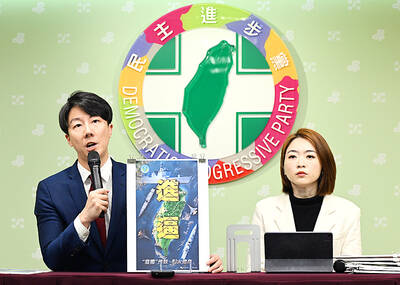
The Chinese Nationalist Party (KMT) is maintaining close ties with Beijing, the Democratic Progressive Party (DPP) said yesterday, hours after a new round of Chinese military drills in the Taiwan Strait began. Political parties in a democracy have a responsibility to be loyal to the nation and defend its sovereignty, DPP spokesman Justin Wu (吳崢) told a news conference in Taipei. His comments came hours after Beijing announced via Chinese state media that the Chinese People’s Liberation Army’s Eastern Theater Command was holding large-scale drills simulating a multi-pronged attack on Taiwan. Contrary to the KMT’s claims that it is staunchly anti-communist, KMT Deputy

RESPONSE: The government would investigate incidents of Taiwanese entertainers in China promoting CCP propaganda online in contravention of the law, the source said Taiwanese entertainers living in China who are found to have contravened cross-strait regulations or collaborated with the Chinese Communist Party (CCP) could be subject to fines, a source said on Sunday. Several Taiwanese entertainers have posted on the social media platform Sina Weibo saying that Taiwan “must be returned” to China, and sharing news articles from Chinese state media. In response, the Mainland Affairs Council (MAC) has asked the Ministry of Culture to investigate whether the entertainers had contravened any laws, and asked for them to be questioned upon their return to Taiwan, an official familiar with the matter said. To curb repeated

Myanmar has turned down an offer of assistance from Taiwanese search-and-rescue teams after a magnitude 7.7 earthquake struck the nation on Friday last week, saying other international aid is sufficient, the National Fire Agency said yesterday. More than 1,700 have been killed and 3,400 injured in the quake that struck near the central Myanmar city of Mandalay early on Friday afternoon, followed minutes later by a magnitude 6.7 aftershock. Worldwide, 13 international search-and-rescue teams have been deployed, with another 13 teams mobilizing, the agency said. Taiwan’s search-and-rescue teams were on standby, but have since been told to stand down, as


 RSS
RSS