


Chinese Nationalist Party (KMT) Vice Chairman Andrew Hsia (夏立言) called for better understanding across the Taiwan Strait to improve people’s lives in a meeting with China’s Taiwan Affairs Office Director Song Tao (宋濤) in Beijing on Thursday.
Hsia, whose delegation was scheduled to visit six Chinese cities until Friday next week after arriving on Wednesday, urged Taiwan and China to focus on bread-and-butter issues so that people are not affected by political differences between the two sides, a KMT statement said.
Among the issues are the difficulties faced by Taiwanese small and medium-sized enterprises, particularly in the agricultural and fisheries sectors, due to several Chinese suspensions of imported goods from Taiwan since 2021, Hsia said.
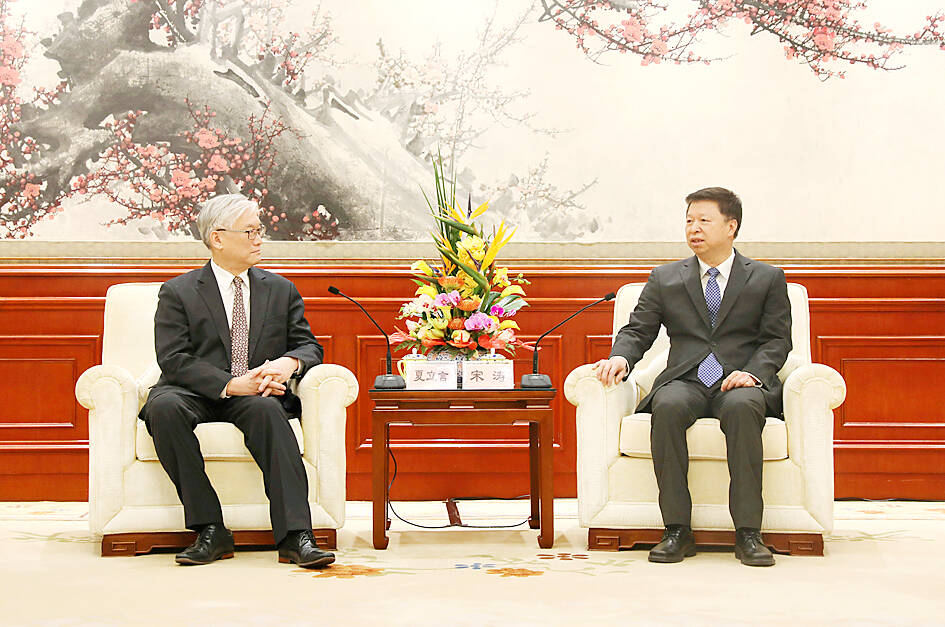
Photo courtesy of the KMT
Taiwan and China should make sure that previous cross-strait agreements relate to people’s livelihoods, and are properly implemented, he said.
The two sides should seek ways to reduce the cost and inconvenience of cross-strait exchanges so that more dialogue can be carried out to “improve stability and peaceful development,” Hsia said.
Hsia’s trip has been controversial given China’s sustained pressure on Taiwan, but the KMT described the meeting in Beijing as candid, stressing that the party has been acting in line with its existing position, including the promotion of the so-called “1992 consensus.”
The “1992 consensus” — a term that former Mainland Affairs Council (MAC) chairman Su Chi (蘇起) in 2006 admitted making up in 2000 — refers to a tacit understanding between the KMT and the Chinese Communist Party (CCP) that both sides of the Taiwan Strait acknowledge that there is “one China,” with each side having its own interpretation of what “China” means.
The Democratic Progressive Party (DPP) has never accepted the existence of such an agreement and does not agree with the formula, as it implies that Taiwan is part of China.
The MAC said that the meeting downgraded and hurt Taiwan’s sovereignty, as Song voiced Beijing’s intention to “carry through its strategy to resolve the Taiwan issue.”
Song also expressed Beijing’s willingness to work with the KMT more closely based on their common ground of the “1992 consensus” and opposition to Taiwanese independence, which the MAC described as a “united front” tactic.
The CCP has used the “1992 consensus” as a formula to reach “one country, two systems” unification, and Taiwanese refuse to accept it, the MAC said.
The KMT and CCP should abide by mainstream sentiment in Taiwan and avoid “hijacking the normalization of cross-strait relations,” DPP officials said in a statement yesterday.
“Chinese officials talked about their new approach to resolving the Taiwan issue, meaning annexing Taiwan by force, but the KMT is singing the same tune and cooperating,” it said. “It is deceiving the public and sabotaging the means to safeguard Taiwan.”
“The KMT’s actions will prompt more opposition among the public, while sending out wrong messages to the international community,” it added.
The KMT said that Hsia’s visit was intended to deal with Chinese import barriers, but China impeded the import process, then reduced restrictions for some products out of “generosity,” it said, adding that the KMT should not accept China’s unreasonable actions.
Hsia was scheduled to visit Shanghai, Nanjing, Wuhan, Chongqing and Chengdu during his trip, in which he is to meet with Taiwanese communities to get a first-hand understanding of their needs, the KMT said.
The trip is Hsia’s first visit to China this year, following a 17-day trip last year shortly after Beijing launched a high-pressure military and economic campaign in retaliation for then-US House of Representatives speaker Nancy Pelosi’s visit to Taipei.
Additional reporting by Jason Pan
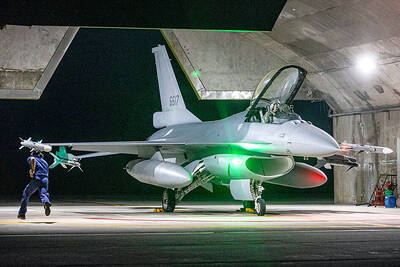
Taiwan has received more than US$70 million in royalties as of the end of last year from developing the F-16V jet as countries worldwide purchase or upgrade to this popular model, government and military officials said on Saturday. Taiwan funded the development of the F-16V jet and ended up the sole investor as other countries withdrew from the program. Now the F-16V is increasingly popular and countries must pay Taiwan a percentage in royalties when they purchase new F-16V aircraft or upgrade older F-16 models. The next five years are expected to be the peak for these royalties, with Taiwan potentially earning
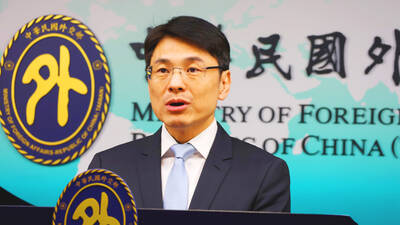
STAY IN YOUR LANE: As the US and Israel attack Iran, the ministry has warned China not to overstep by including Taiwanese citizens in its evacuation orders The Ministry of Foreign Affairs (MOFA) yesterday rebuked a statement by China’s embassy in Israel that it would evacuate Taiwanese holders of Chinese travel documents from Israel amid the latter’s escalating conflict with Iran. Tensions have risen across the Middle East in the wake of US and Israeli airstrikes on Iran beginning Saturday. China subsequently issued an evacuation notice for its citizens. In a news release, the Chinese embassy in Israel said holders of “Taiwan compatriot permits (台胞證)” issued to Taiwanese nationals by Chinese authorities for travel to China — could register for evacuation to Egypt. In Taipei, the ministry yesterday said Taiwan

‘LIKE-MINDED PARTNER’: Tako van Popta said it would be inappropriate to delay signing the deal with Taiwan because of China, adding he would promote the issue Canadian senators have stressed Taiwan’s importance for international trade and expressed enthusiasm for ensuring the Taiwan-Canada trade cooperation framework agreement is implemented this year. Representative to Canada Harry Tseng (曾厚仁) in an interview with the Central News Agency (CNA) said he was increasingly uneasy about Ottawa’s delays in signing the agreement, especially as Ottawa has warmed toward Beijing. There are “no negotiations left. Not only [is it] initialed, we have three versions of the text ready: English, French and Mandarin,” Tseng said. “That tells you how close we are to the final signature.” Tseng said that he hoped Canadian Prime Minister Mark Carney
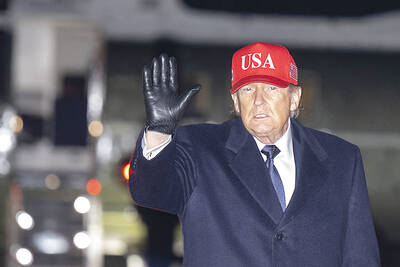
The US’ joint strikes with Israel on Iran dismantled a key pillar of China’s regional strategy, removing an important piece in Beijing’s potential Taiwan Strait scenario, said Zineb Riboua, a senior researcher at the Hudson Institute’s Center for Middle East Peace and Security. In an article titled: “The Iran Question Is All About China,” Riboua said that understanding the Iran issue in the context of China’s “grand strategy” is essential to fully grasp the complexity of the situation. Beijing has spent billions of dollars over the years turning Iran into a “structural strategic asset,” diverting US military resources in the


 RSS
RSS