


Next year’s presidential and legislative elections offer a choice between war and peace, former president Ma Ying-jeou (馬英九) said yesterday.
“Vote for the KMT [Chinese Nationalist Party], and there will be no battlefield across the Taiwan Strait,” he said.
Speaking at a flag-raising ceremony hosted by the KMT at its headquarters, Ma said the “resist China, protect Taiwan” policy promoted by the Tsai Ing-wen (蔡英文) administration over the past six years had caused an unprecedented increase in cross-strait tensions.
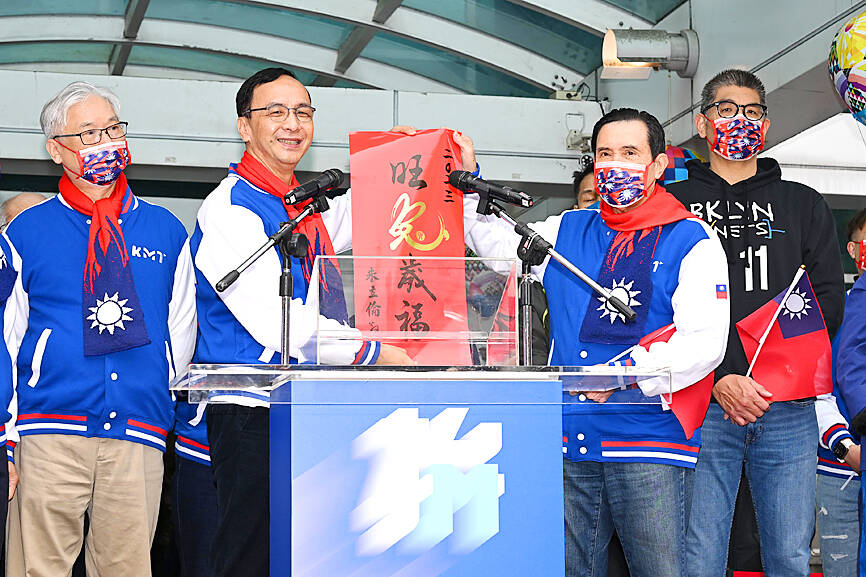
Photo: Hu Shun-hsiang, Taipei Times
The Democratic Progressive Party’s (DPP) cross-strait policy is out of tune with public opinion and has lost public support, said Ma, who served as president from 2008 to 2016.
Taiwan should not only prepare for war, but also avoid war, he said.
Avoiding war means not being provocative, and as a gesture to that end, Taiwan should reopen the “small three links” as soon as possible to ensure national secutiry along with the well-being of Taiwanese, he said.
The “small three links” refer to direct trade, postal and transport services between China and the Taiwanese outlying islands of Kinmen and Matsu. The links were initiated on Jan. 1, 2001, but were suspended in February 2020 amid the COVID-19 pandemic.
Regarding Tsai’s restoration of one-year mandatory military service for young men, Ma said: “Vote for the DPP, youth go to the battlefield. Vote for the KMT, there will be no battlefield on either side of the strait.”
Ma credited KMT Chairman Eric Chu (朱立倫) for substantial gains in the mayoral and councilor elections on Nov. 26. The KMT won 14 of the 22 city and county leadership posts being contested.
With morale bolstered within the KMT, Ma said the party should work toward victory in the Taipei and Nantou legislative by-elections later this month and in March respectively, as well as the presidential and legislative elections next year.
Addressing the ceremony, Chu said that the KMT is determined to win the legislative by-elections and nominate strong candidates for the national elections.
The KMT must “walk the right path and select the right people” to run in next year’s elections, and must be “selfless and united” to achieve its goals, he added.

The military has spotted two Chinese warships operating in waters near Penghu County in the Taiwan Strait and sent its own naval and air forces to monitor the vessels, the Ministry of National Defense (MND) said. Beijing sends warships and warplanes into the waters and skies around Taiwan on an almost daily basis, drawing condemnation from Taipei. While the ministry offers daily updates on the locations of Chinese military aircraft, it only rarely gives details of where Chinese warships are operating, generally only when it detects aircraft carriers, as happened last week. A Chinese destroyer and a frigate entered waters to the southwest
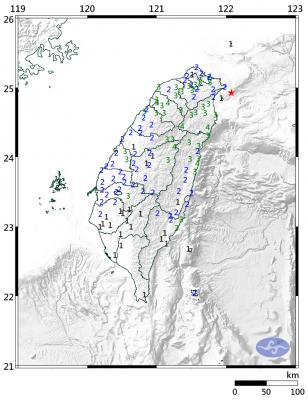
A magnitude 6.1 earthquake struck off the coast of Yilan County at 8:39pm tonight, the Central Weather Administration (CWA) said, with no immediate reports of damage or injuries. The epicenter was 38.7km east-northeast of Yilan County Hall at a focal depth of 98.3km, the CWA’s Seismological Center said. The quake’s maximum intensity, which gauges the actual physical effect of a seismic event, was a level 4 on Taiwan’s 7-tier intensity scale, the center said. That intensity level was recorded in Yilan County’s Nanao Township (南澳), Hsinchu County’s Guansi Township (關西), Nantou County’s Hehuanshan (合歡山) and Hualien County’s Yanliao (鹽寮). An intensity of 3 was

Japanese Prime Minister Sanae Takaichi’s comment last year on Tokyo’s potential reaction to a Taiwan-China conflict has forced Beijing to rewrite its invasion plans, a retired Japanese general said. Takaichi told the Diet on Nov. 7 last year that a Chinese naval blockade or military attack on Taiwan could constitute a “survival-threatening situation” for Japan, potentially allowing Tokyo to exercise its right to collective self-defense. Former Japan Ground Self-Defense Force general Kiyofumi Ogawa said in a recent speech that the remark has been interpreted as meaning Japan could intervene in the early stages of a Taiwan Strait conflict, undermining China’s previous assumptions
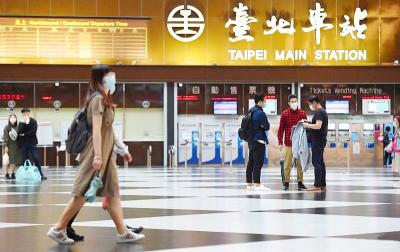
Taiwan Railways Corp (TRC) today announced that Shin Kong Mitsukoshi has been selected as the preferred bidder to operate the Taipei Railway Station shopping mall, replacing the current operator, Breeze Development Co Ltd. Among eight qualified firms that delivered presentations and were evaluated by a review committee, Shin Kong Mitsukoshi was ranked first, while Breeze was named the runner-up, the rail company said in a statement. Contract negotiations are to proceed in accordance with regulations, it said, adding that if negotiations with the top bidder fail, it could invite the second-ranked applicant to enter talks. Breeze in a statement today expressed doubts over


 RSS
RSS