


There are three or four high-risk faults in the populous Chianan Plain (嘉南平原) beneath Chiayi County and Tainan, the Central Weather Bureau (CWB) said yesterday, declining to provide details to avoid causing panic.
About 10 faults of various lengths are in the area, but only three or four of them are considered dangerous, CWB Seismological Center Director Chen Kuo-chang (陳國昌) said.
As no dislocation has been recorded from the faults for a long time, their seismic activity should be monitored closely because the accumulated energy could be high, he said.
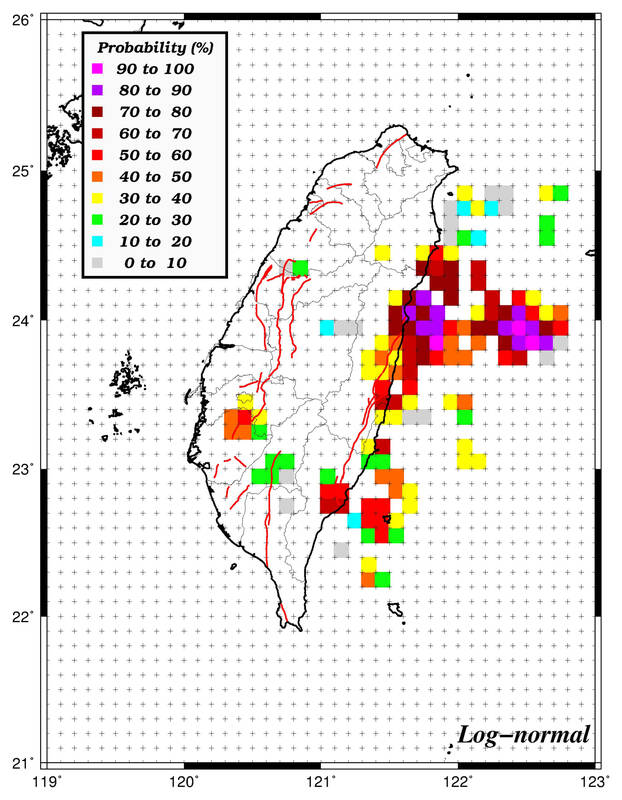
Photo courtesy of the Central Weather Bureau
However, there is no ideal way of predicting earthquakes, and even calculating the long-term probability of a quake can be difficult, he said.
Former CWB director-general Shyn Tzay-chyn (辛在勤) told reporters at a news conference in Taipei that the Meishan (梅山), Chuko (觸口), Baihe (白河) and Sinhua (新化) faults in the Chianan Plain have long been considered potentially hazardous faults, and some seismologists believe that the Muchiliao (木屐寮) fault is a high-risk feature.
The risk levels of the faults have been known for nearly 50 years, but there was no reason to alarm people by discussing them, he said.
The latest research by the Central Geological Survey revealed 36 active faults nationwide, with seismologists warning about the Shanchiao fault (山腳斷層) beneath the Taipei basin.
Chen said that the risk of Shanchiao causing large earthquakes is quite low, adding that the fault has not caused earthquakes or rifts, or dislocated in the past century.
Some people are concerned that the Chishang fault (池上斷層) might dislocate, as the hypocenter of the main shock of Sunday’s magnitude 6.8 earthquake was near it.
“It is not certain” whether dislocation would occur, Chen said, adding that “only time will tell.”
Regarding this week’s series of earthquakes, Chen said that the temblors should gradually stop, with 164 earthquakes recorded as of 9:30am yesterday.
Aftershocks are expected to decrease in magnitude and frequency over the next four weeks, with a slim chance of a magnitude 5 quake today, he said.
The center has not yet identified an active fault linked to the quakes, the main shock of which was the strongest onshore earthquake to hit Taitung since 1973.
Since neither the main shock nor the foreshocks that reached magnitude 6 occurred along Chishang’s fault lines, it is certain that the quakes were not triggered by the Chishang fault system as some seismologists suggested, Chen said.
In response to speculation that the source of the quakes could be a blind active fault under the Central Mountain Range, Chen said no active fault line under the principal mountain range on Taiwan had been discovered, citing Central Geological Survey data from last year.
The survey would conduct further studies to determine if the Central Mountain Range fault is active but blind, which is still under debate in the seismology community, he added.

Taiwanese can file complaints with the Tourism Administration to report travel agencies if their activities caused termination of a person’s citizenship, Mainland Affairs Council Minister Chiu Chui-cheng (邱垂正) said yesterday, after a podcaster highlighted a case in which a person’s citizenship was canceled for receiving a single-use Chinese passport to enter Russia. The council is aware of incidents in which people who signed up through Chinese travel agencies for tours of Russia were told they could obtain Russian visas and fast-track border clearance, Chiu told reporters on the sidelines of an event in Taipei. However, the travel agencies actually applied

New measures aimed at making Taiwan more attractive to foreign professionals came into effect this month, the National Development Council said yesterday. Among the changes, international students at Taiwanese universities would be able to work in Taiwan without a work permit in the two years after they graduate, explainer materials provided by the council said. In addition, foreign nationals who graduated from one of the world’s top 200 universities within the past five years can also apply for a two-year open work permit. Previously, those graduates would have needed to apply for a work permit using point-based criteria or have a Taiwanese company
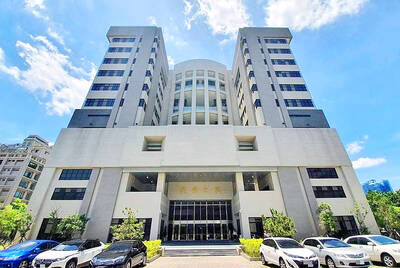
The Shilin District Prosecutors’ Office yesterday indicted two Taiwanese and issued a wanted notice for Pete Liu (劉作虎), founder of Shenzhen-based smartphone manufacturer OnePlus Technology Co (萬普拉斯科技), for allegedly contravening the Act Governing Relations Between the People of the Taiwan Area and the Mainland Area (臺灣地區與大陸地區人民關係條例) by poaching 70 engineers in Taiwan. Liu allegedly traveled to Taiwan at the end of 2014 and met with a Taiwanese man surnamed Lin (林) to discuss establishing a mobile software research and development (R&D) team in Taiwan, prosecutors said. Without approval from the government, Lin, following Liu’s instructions, recruited more than 70 software
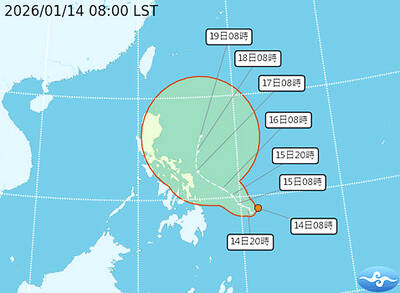
BACK TO WINTER: A strong continental cold air mass would move south on Tuesday next week, bringing colder temperatures to northern and central Taiwan A tropical depression east of the Philippines could soon be upgraded to be the first tropical storm of this year, the Central Weather Administration (CWA) said yesterday, adding that the next cold air mass is forecast to arrive on Monday next week. CWA forecaster Cheng Jie-ren (鄭傑仁) said the first tropical depression of this year is over waters east of the Philippines, about 1,867km southeast of Oluanpi (鵝鑾鼻), and could strengthen into Tropical Storm Nokaen by early today. The system is moving slowly from northwest to north, and is expected to remain east of the Philippines with little chance of affecting Taiwan,


 RSS
RSS