


Although alcoholism treatment makes drunk driving offenders less likely to relapse, only about 2 percent of deferred prosecutions involve medical intervention, Taiwan Against Drunk Driving said yesterday.
Harsher penalties for driving under the influence of alcohol imposed over the past few years have proved effective at reducing cases, but issues with recidivism remain, the group told a news conference in Taipei announcing the winners of its research award.
Last year, 46,640 people were prosecuted for drunk driving, down from 74,635 in 2018, group chairman Chen Chiao-chicy (陳喬琪) said, citing Ministry of Justice data.
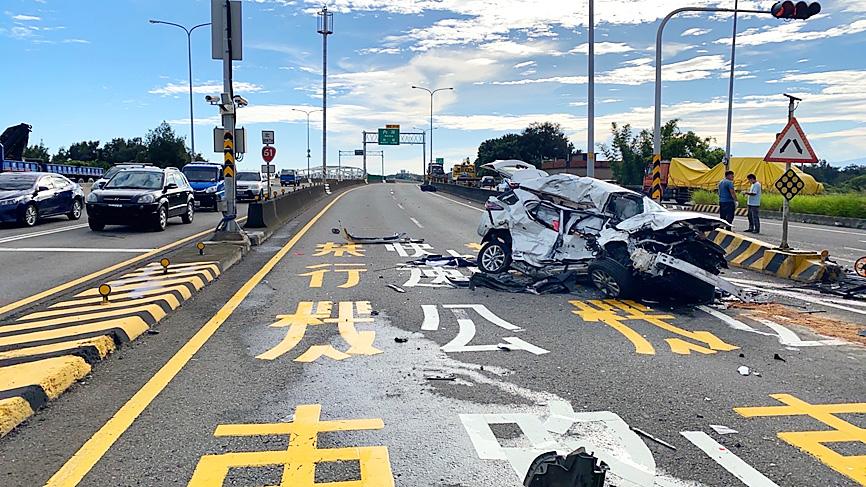
Photo: CNA
About 40 percent of them were repeat offenders, Ministry of Health and Welfare data showed.
As research shows that about 70 percent of repeat offenders have problems with alcohol addiction, prosecutors have been encouraged to refer offenders to hospitals for evaluation and treatment, group vice chairman Hsu Li-min (許立民) said.
The effectiveness of this strategy is borne out by the evidence, Hsu said.
Cheng Wan-ju (鄭婉汝), a psychiatrist at China Medical University Hospital who won first prize for her paper on post-intervention recidivism among drunk drivers, found a correlation between treatment length and recidivism.
In the study, Cheng found that participants who received treatment for more than four months had a three-times lower recidivism rate than those who received treatment for only four months.
Participants who stayed in treatment longer also showed better psychological symptoms and drinking behavior in the year following their intervention, the study found.
People drink and drive for any number of reasons, but reducing recidivism among drivers with alcoholism is the most worthwhile prevention effort, Cheng told the news conference.
While strict penalties are effective, if offenders are not treated following incarceration, their medical condition might lead them on the path to reoffending, she said, recommending at least one year of treatment and at least four months mandated by the courts.
However, the rate of referral for treatment is extremely low, as it increases the administrative burden on prosecutors, Hsu said.
Of the 11,501 offenders granted deferred prosecution last year, only 90, or 0.8 percent, were referred for treatment, he said.
In the first five months of this year, the share rose to 2.1 percent, or 108 people out of 5,094, but the rate is still very low, he said.

The Centers for Disease Control (CDC) yesterday reported the first case of a new COVID-19 subvariant — BA.3.2 — in a 10-year-old Singaporean girl who had a fever upon arrival in Taiwan and tested positive for the disease. The girl left Taiwan on March 20 and the case did not have a direct impact on the local community, it said. The WHO added the BA.3.2 strain to its list of Variants Under Monitoring in December last year, but this was the first imported case of the COVID-19 variant in Taiwan, CDC Deputy Director-General Lin Ming-cheng (林明誠) said. The girl arrived in Taiwan on

South Korea is planning to revise its controversial electronic arrival card, a step Taiwanese officials said prompted them to hold off on planned retaliatory measures, a South Korean media report said yesterday. A Yonhap News Agency report said that the South Korean Ministry of Foreign Affairs is planning to remove the “previous departure place” and “next destination” fields from its e-arrival card system. The plan, reached after interagency consultations, is under review and aims to simplify entry procedures and align the electronic form with the paper version, a South Korean ministry official said. The fields — which appeared only on the electronic form

The Ministry of Foreign Affairs (MOFA) is suspending retaliation measures against South Korea that were set to take effect tomorrow, after Seoul said it is updating its e-arrival system, MOFA said today. The measures were to be a new round of retaliation after Taiwan on March 1 changed South Korea's designation on government-issued alien resident certificates held by South Korean nationals to "South Korea” from the "Republic of Korea," the country’s official name. The move came after months of protests to Seoul over its listing of Taiwan as "China (Taiwan)" in dropdown menus on its new online immigration entry system. MOFA last week

A bipartisan group of US senators has introduced a bill to enhance cooperation with Taiwan on drone development and to reduce reliance on supply chains linked to China. The proposed Blue Skies for Taiwan Act of 2026 was introduced by Republican US senators Ted Cruz and John Curtis, and Democratic US senators Jeff Merkley and Andy Kim. The legislation seeks to ease constraints on Taiwan-US cooperation in uncrewed aerial systems (UAS), including dependence on China-sourced components, limited access to capital and regulatory barriers under US export controls, a news release issued by Cruz on Wednesday said. The bill would establish a "Blue UAS


 RSS
RSS