


The Food and Drug Administration (FDA) yesterday said it was reviewing the technical data on the Novavax COVID-19 vaccine following the US drugmaker’s request for emergency use authorization (EUA).
The request was filed several months ago, but the data provided at the time had been insufficient, containing only the vaccine’s processing information, FDA Director-General Wu Shou-mei (吳秀梅) said.
The company recently provided the missing information by including data on the vaccine’s clinical trials, pharmacology and toxicology, Wu said, adding that health experts would assess the request once its review is complete.

Photo: Reuters
The FDA aims to complete the review on the Novavax data within one month, she said.
Novavax said in a statement on Friday that its submission includes data from two pivotal Phase 3 clinical trials, which enrolled about 30,000 participants aged 18 years or older in the US and Mexico.
“In both trials, the vaccine demonstrated efficacy with a reassuring safety profile. Serious and severe adverse events were low in number, and balanced between vaccine and placebo groups,” Novavax said.
The most common adverse reactions observed during the trials were headache, nausea or vomiting, myalgia, arthralgia, pain or tenderness at the injection site, fatigue and malaise, the company said.
Taiwan has not yet received any doses of the Novavax vaccine, although the Central Epidemic Command Center in March said that the nation had ordered about 2 million doses through the global vaccine sharing initiative COVAX.
Separately, commenting on Taiwan-based United Biomedical Inc (UBI) Asia’s reapplication for an EUA for its COVID-19 vaccine, Wu said the company has every right to do so, but it must provide new information and evidence before the review process can move forward.
UBI Asia’s original EUA request was rejected on Aug. 16 last year after a measure of its UB-612 vaccine’s ability to neutralize SARS-CoV-2 failed to meet FDA standards.
The company at the time said that it would present new findings to the FDA to have its EUA application reviewed again, which it did in March.

Trips for more than 100,000 international and domestic air travelers could be disrupted as China launches a military exercise around Taiwan today, Taiwan’s Civil Aviation Administration (CAA) said yesterday. The exercise could affect nearly 900 flights scheduled to enter the Taipei Flight Information Region (FIR) during the exercise window, it added. A notice issued by the Chinese Civil Aviation Administration showed there would be seven temporary zones around the Taiwan Strait which would be used for live-fire exercises, lasting from 8am to 6pm today. All aircraft are prohibited from entering during exercise, it says. Taipei FIR has 14 international air routes and
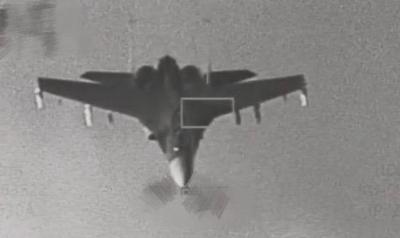
The Ministry of National Defense (MND) today released images of the military tracking China’s People's Liberation Army (PLA) movements during the latest round of Chinese drills around Taiwan. The PLA began "Justice Mission 2025" drills today, carrying out live-fire drills, simulated strikes on land and maritime targets, and exercises to blockade the nation's main ports. The exercises are to continue tomorrow, with the PLA announcing sea and air space restrictions for five zones around Taiwan for 10 hours starting from 8:30am. The ministry today released images showing a Chinese J-16 fighter jet tracked by a F-16V Block 20 jet and the
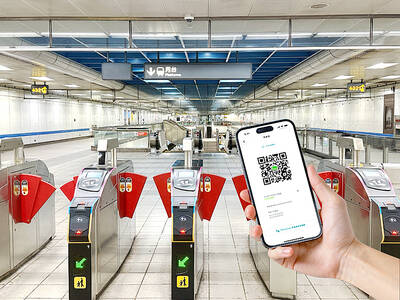
City buses in Taipei and New Taipei City, as well as the Taipei MRT, would on Saturday begin accepting QR code payments from five electronic payment providers, the Taipei Department of Transportation said yesterday. The new option would allow passengers to use the “transportation QR code” feature from EasyWallet, iPass Money, iCash Pay, Jkopay or PXPay Plus. Passengers should open their preferred electronic payment app, select the “transportation code” — not the regular payment code — unlock it, and scan the code at ticket readers or gates, General Planning Division Director-General Liu Kuo-chu (劉國著) said. People should move through the

Snow fell on Yushan (Jade Mountain, 玉山) yesterday morning as a continental cold air mass sent temperatures below freezing on Taiwan’s tallest peak, the Central Weather Administration (CWA) said. Snowflakes were seen on Yushan’s north peak from 6:28am to 6:38am, but they did not fully cover the ground and no accumulation was recorded, the CWA said. As of 7:42am, the lowest temperature recorded across Taiwan was minus-5.5°C at Yushan’s Fengkou observatory and minus-4.7°C at the Yushan observatory, CWA data showed. On Hehuanshan (合歡山) in Nantou County, a low of 1.3°C was recorded at 6:39pm, when ice pellets fell at Songsyue Lodge (松雪樓), a


 RSS
RSS