


Human rights and LGBTQ+ advocacy groups on Wednesday urged the government to expedite a proposed amendment to allow all transnational same-sex couples to register their marriage in Taiwan.
Although Taiwan legalized same-sex marriage in 2019, the Ministry of the Interior has over the past two years followed a directive that prohibits same-sex couples from registering when one partner is from a country or jurisdiction where same-sex marriage is illegal.
The directive cites as its legal basis Article 46 of the Act Governing the Choice of Law in Civil Matters Involving Foreign Elements (涉外民事法律適用法), which stipulates that the formation of a marriage is governed by the laws of each partner’s home country.
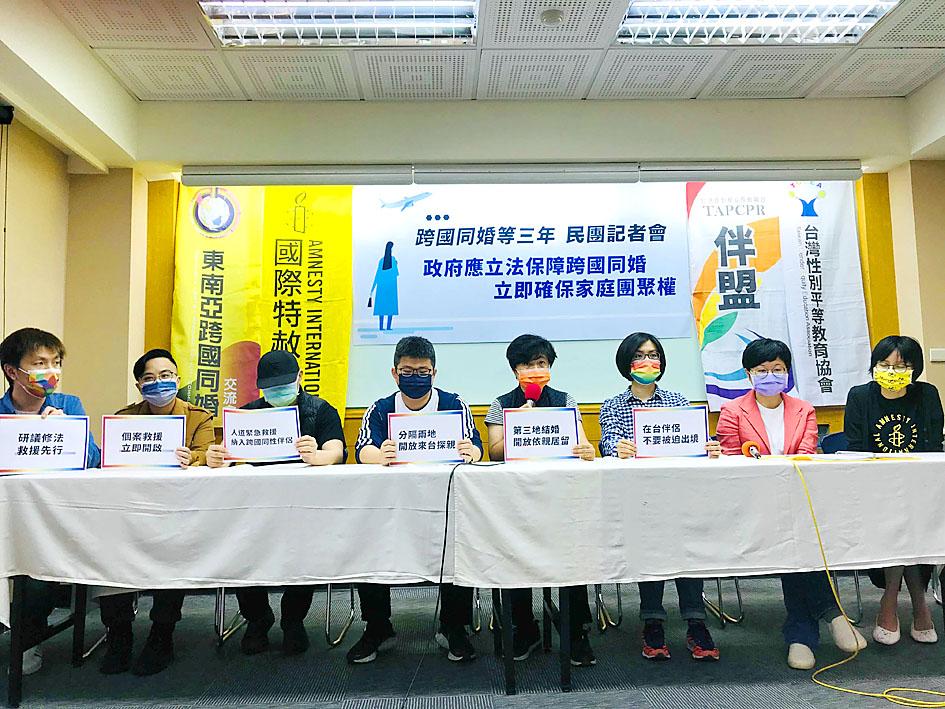
Photo courtesy of the TAPCPR
As a result, if one partner in a transnational same-sex couple comes from a country that has not legalized gay marriage, the government prohibits them from marrying in Taiwan and does not recognize a marriage registered in a third country.
Taiwan Alliance to Promote Civil Partnership Rights (TAPCPR) secretary-general Chien Chih-chieh (簡至潔) told a news conference on Wednesday that to resolve the issue, the Judicial Yuan in January last year submitted a proposed revision of the act to the Cabinet for review.
However, 16 months have passed and the Cabinet has made little progress on a draft amendment, Chien said, urging the government to understand the obstacle facing some transnational same-sex couples who wish to get married in Taiwan and speed up the legislative process.
Once the Cabinet approves the amendment, it would send the draft to the Legislative Yuan for review.
Amnesty International Taiwan secretary-general Chiu I-ling (邱伊翎) said that the act in its current form discriminates against gay people of certain nationalities, which is not in line with two UN human rights-related covenants adopted by Taiwan in 2009.
The International Covenant on Civil and Political Rights and the International Covenant on Economic, Social and Cultural Rights contain provisions that guarantee all people protection from discrimination due to race, sex, political opinion, national or social origin, and birth or other status.
The groups called on the government to take immediate measures to ensure the right of transnational same-sex couples to family unions.
The government should allow a foreign national in a transnational same-sex couple married in a third country to use a dependent visa to travel to Taiwan if their partner is Taiwanese or based in Taiwan with valid residency, Chien said.
The government should include transnational same-sex couples with one partner from a country that has not legalized gay marriage in a new measure introduced by the Bureau of Consular Affairs on April 12, Chien added.
The measure allows “relatives” of Taiwanese nationals and foreigners with valid Taiwanese residency to apply to enter Taiwan on a visitor visa.
The bureau measure considers the need and right for family reunions at a time when strict border controls continue to prohibit most foreign arrivals.
The right to reunite and stay together is what concerns transnational same-sex couples the most, Chien said, citing TAPCPR data showing that at least 138 such couples have not been able to be together in person for more than two years because of Taiwan’s border controls.
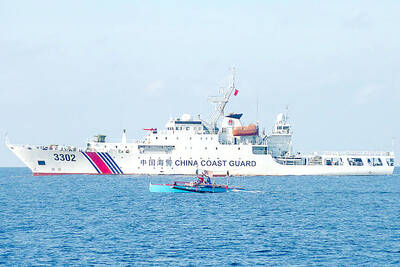
EXPANSIONIST: China deploys an average of 40 to 50 warships and coast guard vessels daily in the South China Sea, despite pledges not to militarize the region, an official said China is attempting to expand its influence across the First Island Chain and increase pressure on Japan by sending coast guard vessels into waters off of Taiwan under the pretext of maritime negotiations with Japan and the Philippines, a national security official said yesterday. China’s recent actions in the waters east of Taiwan and Japan and the Philippines’ exclusive economic zones (EEZ) are attempts to establish dominance in First Island Chain waters, said the official who declined to be named, adding that this is “expansion disguised as law enforcement.” Framing China’s actions solely as a cross-strait issue is a serious misjudgment that
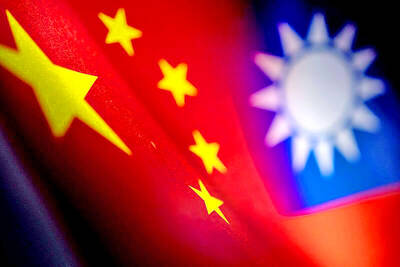
BAIT AND SWITCH: Allowing KMT-run counties to sell to China while the threat of abrupt cancelations hangs overhead is another form of coercion, officials said Beijing is using agricultural purchase offers announced during the Straits Forum to deepen Taiwan’s dependence on the Chinese market, a Taiwanese official said yesterday as they criticized the Taitung County commissioner’s participation in the initiative. During the Straits Forum held in Xiamen on Saturday, Chinese officials announced a sales and purchase agreement for agricultural products from some counties led by the Chinese Nationalist Party (KMT). Taitung County Commissioner Yao Ching-ling (饒慶鈴), who was barred from attending the event in person by the Mainland Affairs Council, participated via video. Under the agreement, China would purchase atemoyas, pomeloes, tea and grouper harvested in Taitung,

SHIFTING FIRE: While the tempo of purely military exercises around Taiwan has gone down somewhat, Beijing is working to isolate Lai diplomatically from support abroad Chinese President Xi Jinping (習近平) is shifting tactics in his campaign to pressure Taiwan, ramping up diplomatic isolation of the nation while dialing down provocative displays of military aggression. Taiwan recorded a daily average of five Chinese military aircraft crossing the Taiwan Strait’s buffer line with China through May this year — half the number logged in the same period last year. In March, Beijing did not send a single fighter jet near Taiwan for seven days, the longest absence on record outside of typhoon season. In comparison, China sent 153 planes near Taiwan during one day at its peak in
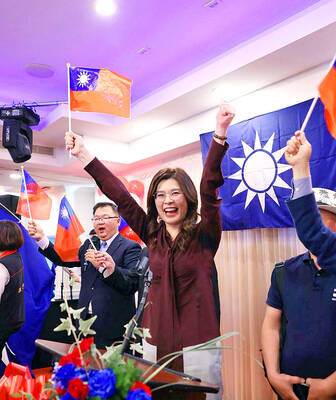
Meetings between Chinese Nationalist Party (KMT) Chairwoman Cheng Li-wun (鄭麗文) and people with alleged links to China during her US trip have drawn attention from US security circles, a source said. During a two-week visit to the US beginning on June 1, Cheng held a series of public engagements with people reportedly under scrutiny by US security agencies over alleged links to China, surveillance of dissidents in operations directed from Beijing, and cross-border influence activities, the source said yesterday. In one instance, China Fujian Association chairman Chen Heng (陳恒) appeared alongside Cheng in photographs. Chen and another man, Lu Jianwang (盧建旺), were among


 RSS
RSS