

China-based Taiwanese actors Kevin Lin (林瑞陽) and Ting Chang (張庭), his wife, have had their Sina Weibo and TikTok accounts put under restrictions, local media reported yesterday.
Authorities were investigating financial fraud allegations against Lin, the Central News Agency (CNA) said.
Chang, who uses her TikTok account for marketing products, has been banned from conducting business on the platform due to activity that “violates TikTok’s community guidelines,” the report said, citing a notification from the platform.

Photo: Hu Shun-hsiang, Taipei Times
The couple is accused of reselling products at prices several times the original value through their company, Shanghai Daerwei Trading Co (上海達爾威貿易有限公司).
The Shijiazhuang City Government in June last year investigated whether Shanghai Daerwei was engaging in multilevel marketing.
Another investgation last month resulted in authorities freezing 600 million yuan (US$94.4 million) of the company’s assets, Chinese media said.
In their most recent posts to Sina Weibo on Wednesday last week, Lin and Chang said that the company only engages in lawful business practices and has paid all due taxes.
They would cooperate with investigations, they said.
At the top of the main page of the actors’ Sina Weibo accounts, there is now a message in Chinese that says: “This account has been restricted from posting due to contraventions of the law.”
The restriction notification on Chang’s TikTok account says that restrictions are to remain in effect until Sunday next week.
China regularly restricts or closes the social media accounts of Internet celebrities facing investigations, CNA said.
“Viya has had both her WeChat and TikTok accounts closed,” the report said, referring to social media influencer Huang Wei (黃薇), known by the stage name Viya (薇婭), who was last month fined 1.34 billion yuan for alleged tax evasion.
Viya, who regularly advertises high-priced items online, is known as the “queen of livestreaming” in China.
“Normally when Chinese online celebrities face account restrictions, they will disappear completely from the Internet. In the worst cases, they end up in prison,” CNA quoted a Chinese social media account that comments on China’s entertainment industry as saying.

Minister of Sports Lee Yang (李洋) today said the Chinese Taipei Basketball Association (CTBA) has been urged not to undermine Taiwan’s credibility in international competitions, after a Taiwanese team advanced to the semi-finals of the 45th William Jones Cup over the Philippines last week due to a controversial new rule guaranteeing a semi-final place to the host team. The Republic of China Blue team advanced to the semi-finals after winning just one game in the group round due to a “host guarantee” spot, overtaking the Philippines, who held a 5-1 record ahead of the semi-finals. The Blue team finished the tournament
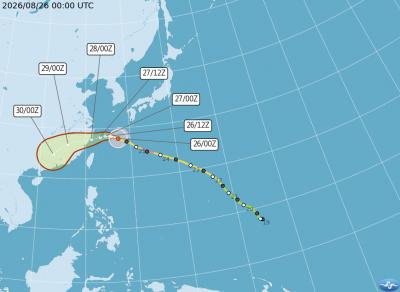
A sea warning for Typhoon Saudel, which has shifted to a more northerly track as it nears Taiwan, is expected early tomorrow, the Central Weather Administration (CWA) said today. As of this morning, Saudel was about 650km east-northeast of Taipei, moving west-northwest at 12kph with maximum sustained winds of 162kph, CWA data showed. Although Saudel remains a moderate typhoon, it has weakened and is expected to weaken further as it nears Taiwan due to unfavorable atmospheric and ocean conditions, CWA forecaster Lin Po-tung (林伯東) said. The storm is forecast to make its closest approach to Taiwan tomorrow and on Friday, Lin added. According to
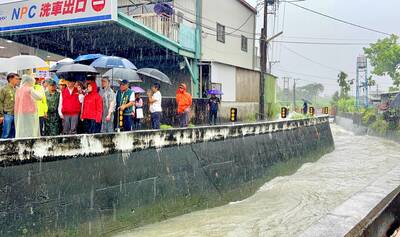
SEA WARNING EXPECTED: As atmospheric conditions are unfavorable for its development, the storm’s intensity is continuing to weaken, a CWA official said Typhoon Saudel is continuing to weaken and shift its path northward, with a sea warning expected to be issued this evening, the Central Weather Administration (CWA) said yesterday. The agency did not rule out issuing a land warning for outlying Lienchiang County (Matsu) tomorrow morning, although all storm warnings could be lifted by Friday night. Saudel is expected to be closest to Taiwan from tomorrow night to Friday, bringing localized heavy rain to northern and southern Taiwan, as well as central mountainous areas, the agency said. As of 2pm yesterday, the center of moderate Typhoon Saudel was about 890km east-northeast
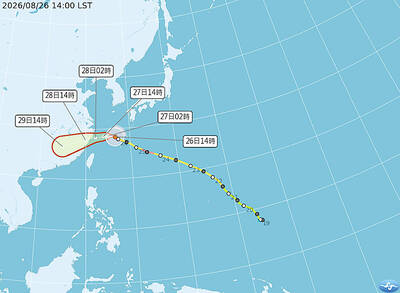
MODERATE TYPHOON: Localized heavy rain is forecast to hit central and southern Taiwan, the CWA said, adding that the storm would likely move away on Saturday A sea warning for Typhoon Saudel, which shifted to a more northerly track as it approached Taiwan, is likely early today, the Central Weather Administration (CWA) said yesterday. As of 2pm yesterday, the center of typhoon was about 630km northeast of Taipei, moving west-northwest at 14kph with maximum wind gusts of up to 162kph, CWA data showed. Saudel is a moderate typhoon and is expected to weaken as it nears Taiwan due to atmospheric and ocean conditions, CWA forecaster Lin Po-tung (林伯東) said. A sea warning indicates hazardous typhoon conditions in waters surrounding Taiwan within 24 hours, Lin said. The storm is forecast to


 RSS
RSS