


Researchers have developed a new type of microbial fertilizer capable of increasing crop output by up to 440 percent, the Council of Agriculture has announced.
Microbial fertilizers have in the past few years swept the industry, generating hundreds of millions of New Taiwan dollars in value, Kaohsiung District Agricultural Research and Extension Station director Tai Shun-fa (戴順發) said on Tuesday, adding that this newest discovery provides farmers with yet another option amid a growing supply.
Station researcher Chen Tai-yuan (陳泰元) said they collected microorganisms from productive organic farms across Kaohsiung and Pingtung County.
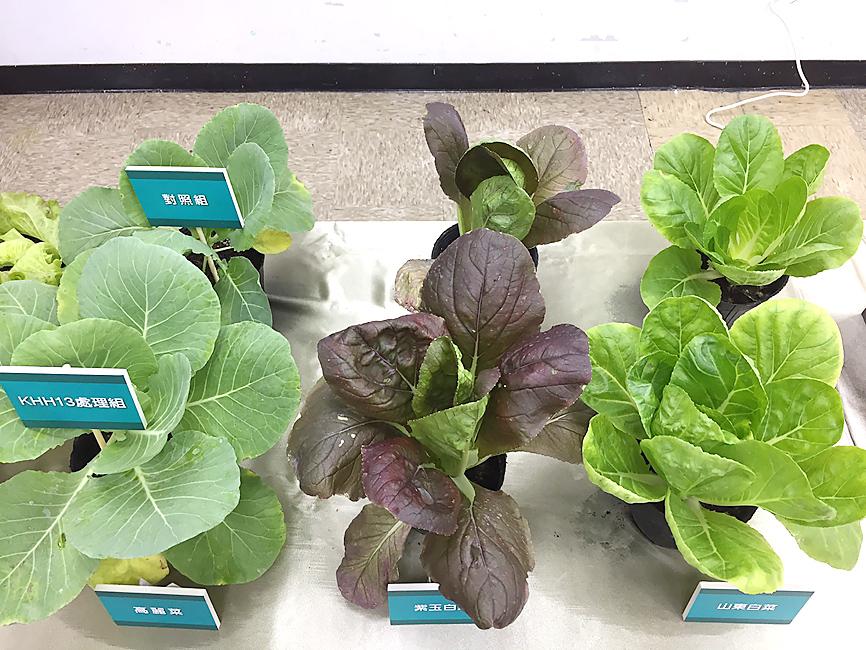
Photo: CNA
From the more than 30 types collected, researchers identified one from a rice field in Pingtung County’s Wandan Township (萬丹) that showed promise in promoting crop growth, he said.
The microbe, Bacillus velezensis KHH13, works by dissolving minerals such as phosphorus and potassium, making them more accessible to crops, he said.
The microbes can also produce indole-3-acetic Acid, or IAA, a plant growth hormone, and enzymes important to plant growth, he added.
In testing, KHH13 has proven capable of significantly increasing the net weight of a variety of leafy greens, Chen said.
For example, the weight of Chinese white cabbage rose by 80 percent, oilseed rape and celery by 190 percent, and curled lettuce by 440 percent, he said.
KHH13 can also produce compounds to compete with pathogenic organisms, improving soil health and protecting crops from damage, Chen said.
The fertilizer has already been patented domestically and licensed for nonexclusive use by Green Mountain Co, Tai said.
The agricultural supply firm in May began selling the fertilizer under the name Wandan Microbial Fertilizer (萬丹菌肥), he added.
It is also included in a subsidy program for organic fertilizers by the Agriculture and Food Agency, which covers half the retail price up to NT$5,000 per hectare, Tai said.

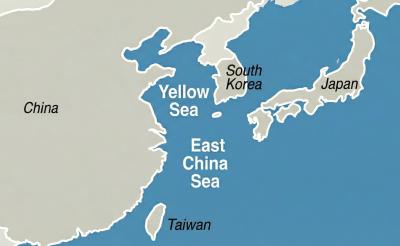
China has reserved offshore airspace in the Yellow Sea and East China Sea from March 27 to May 6, issuing alerts usually used to warn of military exercises, although no such exercises have been announced, the Wall Street Journal (WSJ) reported yesterday. Reserving such a large area for 40 days without explanation is an “unusual step,” as military exercises normally only last a few days, the paper said. These alerts, known as Notice to Air Missions (Notams), “are intended to inform pilots and aviation authorities of temporary airspace hazards or restrictions,” the article said. The airspace reserved in the alert is
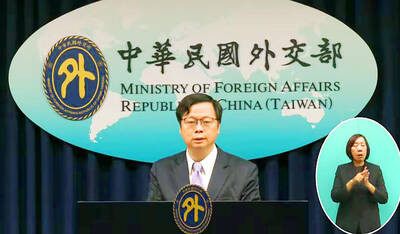
NAMING SPAT: The foreign ministry called on Denmark to propose an acceptable solution to the erroneous nationality used for Taiwanese on residence permits Taiwan has revoked some privileges for Danish diplomatic staff over a Danish permit that lists “Taiwan” as “China,” Eric Huang (黃鈞耀), head of the Ministry of Foreign Affairs’ Department of European Affairs, told a news conference in Taipei yesterday. Reporters asked Huang whether the Danish government had responded to the ministry’s request that it correct the nationality on Danish residence permits of Taiwanese, which has been listed as “China” since 2024. Taiwan’s representative office in Denmark continues to communicate with the Danish government, and the ministry has revoked some privileges previously granted to Danish representatives in Taiwan and would continue to review

More than 6,000 Taiwanese students have participated in exchange programs in China over the past two years, despite the Mainland Affairs Council’s (MAC) “orange light” travel advisory, government records showed. The MAC’s publicly available registry showed that Taiwanese college and university students who went on exchange programs across the Strait numbered 3,592 and 2,966 people respectively. The National Immigration Agency data revealed that 2,296 and 2,551 Chinese students visited Taiwan for study in the same two years. A review of the Web sites of publicly-run universities and colleges showed that Taiwanese higher education institutions continued to recruit students for Chinese educational programs without
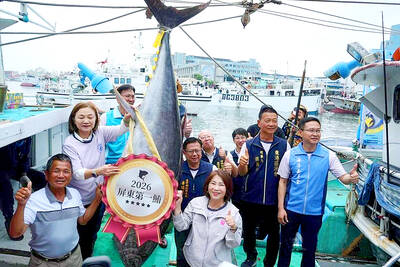
The first bluefin tuna of the season, brought to shore in Pingtung County and weighing 190kg, was yesterday auctioned for NT$10,600 (US$333.5) per kilogram, setting a record high for the local market. The auction was held at the fish market in Donggang Fishing Harbor, where the Siaoliouciou Island-registered fishing vessel Fu Yu Ching No. 2 delivered the “Pingtung First Tuna” it had caught for bidding. Bidding was intense, and the tuna was ultimately jointly purchased by a local restaurant and a local company for NT$10,600 per kilogram — NT$300 ,more than last year — for a total of NT$2.014 million. The 67-year-old skipper


 RSS
RSS