


Democratic Progressive Party (DPP) Legislator Chen Ting-fei (陳亭妃) yesterday said she has obtained broadcast regulators’ approval to play the sea goddess Matsu (媽祖) in a TV drama.
Chen wrote on Facebook that she and the production team of Formosa TV’s Taiwan New Mysteries had been granted approval from the National Communications Commission (NCC).
Local media reported that filming for the show earlier this week began at the Tainan Grand Matsu Temple (台南大天后宮).

Photo: Wang Mei-Hsiu, Taipei Times
Elected officials are subject to greater scrutiny when they appear in TV shows, which is as it should be, Chen said.
Before accepting the role, she consulted laws and regulations pertinent to the matter, Chen said.
Citing the commission’s approval, Chen said that politicians are allowed to appear in a drama as long as their role is not designed to boost their political career.
The commission highlighted that elected officials are barred from writing or editing a drama, she added.
Responding to criticism that she allegedly received preferential treatment from the commission, Chen said that her case is not comparable to that of Taichung Mayor Lu Shiow-yen (盧秀燕) of the Chinese Nationalist Party (KMT), who was on Aug. 30 fined NT$200,000 for a cameo in a separate TV show.
Lu played herself in the TVBS show Girl’s Power, while Chen has been cast to play a character different from her role as lawmaker, she said.
“There is no double standard,” Chen added.
The Taipei District Court has upheld Lu’s fine, saying that her appearance in the show in 2019 was intended to boost her as Taichung mayor and promote the Taichung Flora Expo.
Her role had been added to the script at a late stage of the writing process, it added.
In the finished script, the show’s protagonists incidentally meet Lu at their wedding and praise her for her good taste in men, which indicates that Lu’s appearance was intended to promote her as mayor, the court said.

The Centers for Disease Control (CDC) yesterday reported the first case of a new COVID-19 subvariant — BA.3.2 — in a 10-year-old Singaporean girl who had a fever upon arrival in Taiwan and tested positive for the disease. The girl left Taiwan on March 20 and the case did not have a direct impact on the local community, it said. The WHO added the BA.3.2 strain to its list of Variants Under Monitoring in December last year, but this was the first imported case of the COVID-19 variant in Taiwan, CDC Deputy Director-General Lin Ming-cheng (林明誠) said. The girl arrived in Taiwan on

South Korea is planning to revise its controversial electronic arrival card, a step Taiwanese officials said prompted them to hold off on planned retaliatory measures, a South Korean media report said yesterday. A Yonhap News Agency report said that the South Korean Ministry of Foreign Affairs is planning to remove the “previous departure place” and “next destination” fields from its e-arrival card system. The plan, reached after interagency consultations, is under review and aims to simplify entry procedures and align the electronic form with the paper version, a South Korean ministry official said. The fields — which appeared only on the electronic form

The Ministry of Foreign Affairs (MOFA) is suspending retaliation measures against South Korea that were set to take effect tomorrow, after Seoul said it is updating its e-arrival system, MOFA said today. The measures were to be a new round of retaliation after Taiwan on March 1 changed South Korea's designation on government-issued alien resident certificates held by South Korean nationals to "South Korea” from the "Republic of Korea," the country’s official name. The move came after months of protests to Seoul over its listing of Taiwan as "China (Taiwan)" in dropdown menus on its new online immigration entry system. MOFA last week
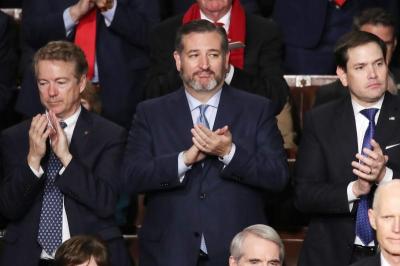
A bipartisan group of US senators has introduced a bill to enhance cooperation with Taiwan on drone development and to reduce reliance on supply chains linked to China. The proposed Blue Skies for Taiwan Act of 2026 was introduced by Republican US senators Ted Cruz and John Curtis, and Democratic US senators Jeff Merkley and Andy Kim. The legislation seeks to ease constraints on Taiwan-US cooperation in uncrewed aerial systems (UAS), including dependence on China-sourced components, limited access to capital and regulatory barriers under US export controls, a news release issued by Cruz on Wednesday said. The bill would establish a "Blue UAS


 RSS
RSS