


A South Korean court on Wednesday upheld an eight-year prison sentence handed down to a South Korean man who killed a Taiwanese student while driving under the influence of alcohol in Seoul.
The appellate division of the Seoul Central District Court upheld the prison term for the 52-year-old driver, surnamed Kim, accused of killing 28-year-old doctoral student Elaine Tseng (曾以琳), while drunk driving in the city’s Gangnam District on Nov. 6 last year, Yonhap news agency reported.
The ruling upheld the Seoul Central District Court’s sentence issued on April 14.
Tseng was on her way home from a professor’s residence when she was killed by the driver after he ran a red light at a pedestrian crossing.
Kim was found to have ignored traffic lights and been driving over the speed limit.
“The bereaved family only wishes for stern and reasonable punishment against the driver and is unwilling to accept any financial reparations or apology,” the court said, adding that there were no grounds to change the earlier ruling.
Kim, who had pled guilty, requested leniency from the district court, claiming he had difficulty driving at the time because a contact lens he was wearing had slipped out of place, diminishing his vision.
The court dismissed his plea and levied a heavier sentence than the six years prosecutors were seeking, adding that Kim had twice previously been found guilty of drunk driving.
After Tseng’s death, her parents and a South Korean friend on Nov. 23 last year launched a petition on the Web site of the South Korean presidential office calling for the maximum sentence for vehicular homicide to be raised, to ensure the punishment would be severe enough to prevent similar tragedies.
The petition reached the required 200,000 signatures needed for a government response in just five days.

The Centers for Disease Control (CDC) yesterday reported the first case of a new COVID-19 subvariant — BA.3.2 — in a 10-year-old Singaporean girl who had a fever upon arrival in Taiwan and tested positive for the disease. The girl left Taiwan on March 20 and the case did not have a direct impact on the local community, it said. The WHO added the BA.3.2 strain to its list of Variants Under Monitoring in December last year, but this was the first imported case of the COVID-19 variant in Taiwan, CDC Deputy Director-General Lin Ming-cheng (林明誠) said. The girl arrived in Taiwan on

South Korea is planning to revise its controversial electronic arrival card, a step Taiwanese officials said prompted them to hold off on planned retaliatory measures, a South Korean media report said yesterday. A Yonhap News Agency report said that the South Korean Ministry of Foreign Affairs is planning to remove the “previous departure place” and “next destination” fields from its e-arrival card system. The plan, reached after interagency consultations, is under review and aims to simplify entry procedures and align the electronic form with the paper version, a South Korean ministry official said. The fields — which appeared only on the electronic form

The Ministry of Foreign Affairs (MOFA) is suspending retaliation measures against South Korea that were set to take effect tomorrow, after Seoul said it is updating its e-arrival system, MOFA said today. The measures were to be a new round of retaliation after Taiwan on March 1 changed South Korea's designation on government-issued alien resident certificates held by South Korean nationals to "South Korea” from the "Republic of Korea," the country’s official name. The move came after months of protests to Seoul over its listing of Taiwan as "China (Taiwan)" in dropdown menus on its new online immigration entry system. MOFA last week
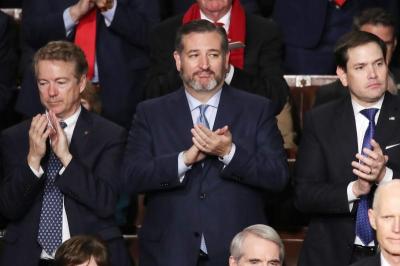
A bipartisan group of US senators has introduced a bill to enhance cooperation with Taiwan on drone development and to reduce reliance on supply chains linked to China. The proposed Blue Skies for Taiwan Act of 2026 was introduced by Republican US senators Ted Cruz and John Curtis, and Democratic US senators Jeff Merkley and Andy Kim. The legislation seeks to ease constraints on Taiwan-US cooperation in uncrewed aerial systems (UAS), including dependence on China-sourced components, limited access to capital and regulatory barriers under US export controls, a news release issued by Cruz on Wednesday said. The bill would establish a "Blue UAS


 RSS
RSS