


A Taiwanese research team has developed a drug that shows promise for boosting immunotherapy in the treatment of malignant tumors, it said on Monday.
In animal trails, the drug helped boost immunotherapy efficacy by 30 to 40 percent in the treatment of tumors, said research team leader Alan Lee (李岳倫), of the National Institute of Cancer Research.
While the drug VEGF121-VEGF165 proved effective against tissue tumors in animal trails, it was not tested for use in the treatment of blood cancer, Lee told a news conference.
Safety tests of the drug would be carried out on animals before moving to clinical trials within the next five years, he said, adding that human trials would focus on patients with cancer of the breast, colon, neck and head.
Cancer cells tend to have an impenetrable shield, much like that of Marvel superhero Captain America, which wards off T cells, a type of white blood cell that protects the body against cancerous cells and other cells that have become infected by pathogens, such as bacteria or viruses, Lee said.
With VEGF121-VEGF165, the research team has developed a fusion protein drug that can breach the “Captain America” shield and enter the tumor’s microenvironment, thus enhancing immunotherapy to fight the cancer cells, he said.
VEGF is an abbreviation for vascular endothelial growth factor, a signaling protein that promotes the growth of new blood vessels.
National Health Research Institutes president Liang Kung-yee (梁賡義) said the drug’s key innovative concepts and research techniques have been patented in the EU, Japan and the US.
A paper on the team’s research was published in December last year in the Journal for Immuno Therapy of Cancer, the official journal of the Society for Immunotherapy of Cancer.

The Centers for Disease Control (CDC) yesterday reported the first case of a new COVID-19 subvariant — BA.3.2 — in a 10-year-old Singaporean girl who had a fever upon arrival in Taiwan and tested positive for the disease. The girl left Taiwan on March 20 and the case did not have a direct impact on the local community, it said. The WHO added the BA.3.2 strain to its list of Variants Under Monitoring in December last year, but this was the first imported case of the COVID-19 variant in Taiwan, CDC Deputy Director-General Lin Ming-cheng (林明誠) said. The girl arrived in Taiwan on

South Korea is planning to revise its controversial electronic arrival card, a step Taiwanese officials said prompted them to hold off on planned retaliatory measures, a South Korean media report said yesterday. A Yonhap News Agency report said that the South Korean Ministry of Foreign Affairs is planning to remove the “previous departure place” and “next destination” fields from its e-arrival card system. The plan, reached after interagency consultations, is under review and aims to simplify entry procedures and align the electronic form with the paper version, a South Korean ministry official said. The fields — which appeared only on the electronic form

The Ministry of Foreign Affairs (MOFA) is suspending retaliation measures against South Korea that were set to take effect tomorrow, after Seoul said it is updating its e-arrival system, MOFA said today. The measures were to be a new round of retaliation after Taiwan on March 1 changed South Korea's designation on government-issued alien resident certificates held by South Korean nationals to "South Korea” from the "Republic of Korea," the country’s official name. The move came after months of protests to Seoul over its listing of Taiwan as "China (Taiwan)" in dropdown menus on its new online immigration entry system. MOFA last week
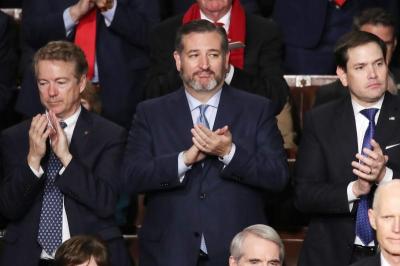
A bipartisan group of US senators has introduced a bill to enhance cooperation with Taiwan on drone development and to reduce reliance on supply chains linked to China. The proposed Blue Skies for Taiwan Act of 2026 was introduced by Republican US senators Ted Cruz and John Curtis, and Democratic US senators Jeff Merkley and Andy Kim. The legislation seeks to ease constraints on Taiwan-US cooperation in uncrewed aerial systems (UAS), including dependence on China-sourced components, limited access to capital and regulatory barriers under US export controls, a news release issued by Cruz on Wednesday said. The bill would establish a "Blue UAS


 RSS
RSS