


Whether the ban on certain Japanese food products is lifted depends on Taiwanese, Japanese Representative to Taiwan Hiroyasu Izumi said yesterday, while praising the taste of Taiwanese pineapples.
Izumi made the remarks on the sidelines of an exhibition commemorating the 10th anniversary of the 2011 earthquake in Japan.
After the Fukushima Dai-ichi nuclear power plant disaster, which was caused by the earthquake, Taiwan imposed a ban on imports of food products from Fukushima and four other prefectures — Chiba, Gunma, Ibaraki and Tochigi — which remains a sticking point in bilateral relations.

Photo: Liao Chen-huei, Taipei Times
More than 77 percent of Taiwanese who voted in a 2018 referendum chose to retain the ban, but the vote is only legally binding for two years.
Asked if Taiwan and Japan have discussed removing the ban, Izumi said that the issue of whether to lift the ban should be decided by Taiwan’s government, as it is responsible for food safety.
Nonetheless, scientific evidence, including data collected by Taiwanese researchers, shows that food products produced in the five prefectures are safe, he added.
Asked he has supported Taiwanese pineapples, as many Japanese have done after China’s ban on imports of the fruit from Monday last week, Izumi said that Taiwanese pineapples are delicious.
Among the more than 20 cultivars of Taiwanese pineapples, he particularly likes the No. 16 and No. 17 cultivars, Izumi added.
Many Japanese are willing to pay a bit more to buy Taiwanese pineapples in Japan, as they want to show support for Taiwan, he said.
Twenty-two Taiwanese businesses participated in Japan’s International Food and Beverage Exhibition this week, and pineapples as well as pineapple juice, dried fruit and fried rice made with the fruit attracted the most attention among Taiwan’s products, Representative to Japan Frank Hsieh (謝長廷) wrote on Facebook on Tuesday.

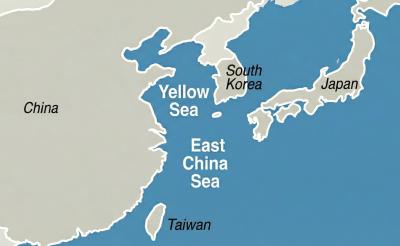
China has reserved offshore airspace in the Yellow Sea and East China Sea from March 27 to May 6, issuing alerts usually used to warn of military exercises, although no such exercises have been announced, the Wall Street Journal (WSJ) reported yesterday. Reserving such a large area for 40 days without explanation is an “unusual step,” as military exercises normally only last a few days, the paper said. These alerts, known as Notice to Air Missions (Notams), “are intended to inform pilots and aviation authorities of temporary airspace hazards or restrictions,” the article said. The airspace reserved in the alert is
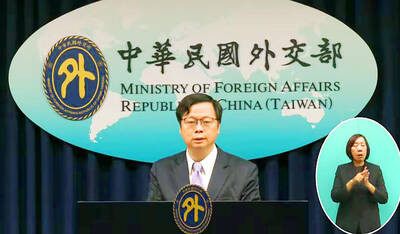
NAMING SPAT: The foreign ministry called on Denmark to propose an acceptable solution to the erroneous nationality used for Taiwanese on residence permits Taiwan has revoked some privileges for Danish diplomatic staff over a Danish permit that lists “Taiwan” as “China,” Eric Huang (黃鈞耀), head of the Ministry of Foreign Affairs’ Department of European Affairs, told a news conference in Taipei yesterday. Reporters asked Huang whether the Danish government had responded to the ministry’s request that it correct the nationality on Danish residence permits of Taiwanese, which has been listed as “China” since 2024. Taiwan’s representative office in Denmark continues to communicate with the Danish government, and the ministry has revoked some privileges previously granted to Danish representatives in Taiwan and would continue to review
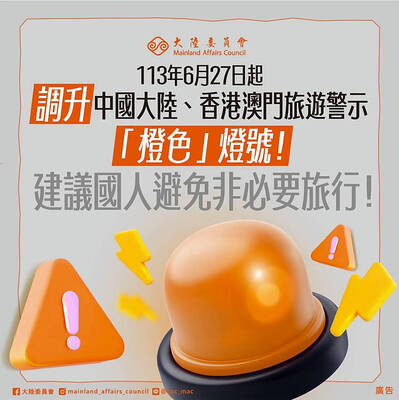
More than 6,000 Taiwanese students have participated in exchange programs in China over the past two years, despite the Mainland Affairs Council’s (MAC) “orange light” travel advisory, government records showed. The MAC’s publicly available registry showed that Taiwanese college and university students who went on exchange programs across the Strait numbered 3,592 and 2,966 people respectively. The National Immigration Agency data revealed that 2,296 and 2,551 Chinese students visited Taiwan for study in the same two years. A review of the Web sites of publicly-run universities and colleges showed that Taiwanese higher education institutions continued to recruit students for Chinese educational programs without

China has reserved offshore airspace over the Yellow Sea and East China Sea from March 27 to May 6, issuing alerts that are usually used to warn of military exercises, although no such exercises have been announced, the Wall Street Journal (WSJ) reported on Sunday. Reserving such a large area for 40 days without explanation is an “unusual step,” as military exercises normally only last a few days, the paper said. The alerts, known as notice to air missions (NOTAMs), “are intended to inform pilots and aviation authorities of temporary airspace hazards or restrictions,” the article said. The airspace reserved in the alert


 RSS
RSS