


Chunghwa Post might begin testing uncrewed aerial vehicles (UAVs) to deliver mail to Siaoliouciou Island (小琉球) from March next year, the Institute of Transportation said yesterday.
The move is part of the Ministry of Transportation and Communications’ push to increase the commercial use of drones, the institute said, adding that the postal company previously tested UAVs for mail delivery in Tainan’s Zuojhen District (左鎮) and on Alishan.
In Tainan, the drones carried 5kg shipments of peaches from farms in the district to the Zuojhen Post Office, cutting what is typically a 90-minute truck route to 15 minutes, it said.
On Alishan, UAVs delivered medical supplies to isolated communities, it said.
Both trials were aimed at testing the feasibility of using drones for deliveries, but did not investigate the commercial viability of such a delivery method, it said.
The institute is in March to start accepting bids from drone operators that would conform to the cost and service needs of Chunghwa Post, it said, adding that it would perform trial runs after bids are awarded.
It takes about 45 minutes to reach the Siaoliouciou post office from Pingtung County’s Donggang Township (東港), about 16km away, Chunghwa Post said.
The company transports 500kg to 800kg daily between the post offices, and is sometimes unable to make deliveries in winter when seas are rough, it said.
UAVs could help overcome the challenges of the sea, but they also come with their own limitations, it said, citing a weight limit of 20kg per delivery, and their inability to carry heavy loads in strong winds.
“Cost is also an issue. When we used drones to deliver fruit in Tainan we discovered that the associated costs were higher than the value of the fruit,” it said, adding that costs would have to be reduced for the delivery model to be commercially viable.

Yangmingshan National Park authorities yesterday urged visitors to respect public spaces and obey the law after a couple was caught on a camera livestream having sex at the park’s Qingtiangang (擎天崗) earlier in the day. The Shilin Police Precinct in Taipei said it has identified a suspect and his vehicle registration number, and would summon him for questioning. The case would be handled in accordance with public indecency charges, it added. The couple entered the park at about 11pm on Thursday and began fooling around by 1am yesterday, the police said, adding that the two were unaware of the park’s all-day live

A former soldier and an active-duty army officer were yesterday indicted for allegedly selling classified military training materials to a Chinese intelligence operative for a total of NT$79,440. The Taipei District Prosecutors’ Office indicted Chen Tai-yin (陳泰尹) and Lee Chun-ta (李俊達) for contravening the National Security Act (國家安全法) and the Anti-Corruption Act (貪污治罪條例). Chen left the military in September 2013 after serving alongside then-staff sergeant Lee, now an army lieutenant, at the 21st Artillery Command of the army’s Sixth Corps from 2011 to 2013, according to the indictment. Chen met a Chinese intelligence operative identified as “Wang” (王) through a friend in November

Minister of Digital Affairs Lin Yi-ching (林宜敬) yesterday cited regulatory issues and national security concerns as an expert said that Taiwan is among the few Asian regions without Starlink. Lin made the remarks on Facebook after funP Innovation Group chief executive officer Nathan Chiu (邱繼弘) on Friday said Taiwan and four other countries in Asia — China, North Korea, Afghanistan and Syria — have no access to Starlink. Starlink has become available in 166 countries worldwide, including Ukraine, Malaysia, the Philippines and Vietnam, in the six years since it became commercial, he said. While China and North Korea block Starlink, Syria is not
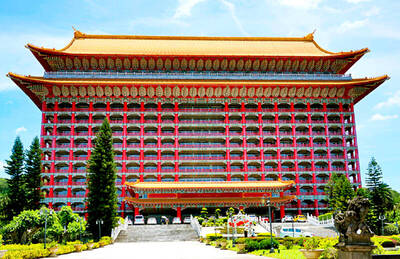
The Grand Hotel Taipei has rejected media reports claiming that the hotel had prevented CBS from broadcasting coverage of the Beijing summit between U.S. President Donald Trump and Chinese President Xi Jinping (習近平) on its premises. Media reports alleging that the hotel owner, dissatisfied with CBS’s coverage, prohibited the network from broadcasting political content on the hotel premises, are not true, the hotel said in a statement issued last night. The reports were “inconsistent with how the hotel actually handled the matter,” it said. The hotel said it received a refund request from a


 RSS
RSS