


The Central Epidemic Command Center (CECC) yesterday reported two new imported cases of COVID-19 and four travelers who tested positive in other countries after leaving Taiwan.
Minister of Health and Welfare Chen Shih-chung (陳時中), who heads the center, said that one of the imported cases — case No. 522 — is a Taiwanese woman in her 20s, who went to Ireland for work in October last year and returned on Sunday without symptoms.
The woman went into home quarantine and on Monday began experiencing symptoms, including a fever and muscle pain, Chen said, adding that her test result returned positive yesterday.
Chen said that case No. 523 is an Indian man in his 30s, who provided a negative polymerase chain reaction (RT-PCR) test result from within three days before he got on a flight to Taiwan and had not experienced any symptoms since his arrival in Taiwan on Sept. 9.
The man was quarantined at a hotel from his arrival until Sept. 23, and remained at another hotel for self-health management between Sept. 24 and Sept. 30, Chen said, adding that the man was required by his work to provide another test result.
The man’s test returned positive yesterday, with a PCR cycle threshold (Ct) value of 34, Chen said, adding that the man’s antibody test result showed that he is negative for IgM antibodies and positive for IgG antibodies.
Centers for Disease Control (CDC) Deputy Director-General Chuang Jen-hsiang (莊人祥), the CECC’s spokesman, said that the antibody test results indicate that the man might have contracted the disease more than three weeks ago.
His negative test result obtained before coming to Taiwan might have been a false negative, or the virus might not have been detectable during the incubation period, Chuang added.
The CECC has also been informed of three cases in Japan regarding travelers from Taiwan — a Taiwanese and two Japanese, Chen said.
The Taiwanese is asymptomatic and had been tested negative on Sept. 30 before departing, but an antigen test administered upon arrival in Japan on Friday returned positive, Chen said.
One of the Japanese is asymptomatic and tested positive upon arrival, but later tested negative in PCR tests taken on Saturday and Monday, he said.
The other Japanese is a sailor, who departed from the Philippines in July, began experiencing chest pain on Sept. 17 and was hospitalized in Taiwan on Sept. 18, Chen said, adding that the man was discharged on Sept. 25 and stayed at a quarantine hotel until Friday last week without showing symptoms.
The man on Saturday tested positive in an antigen test upon arrival in Japan, but a PCR test on Sunday returned negative, he said.
Chen said that a French man in his 20s, who came to Taiwan in February and departed on Sept. 30, did not show symptoms in Taiwan, but tested positive upon returning to France on Thursday last week.
Thirty-four people among 74 close contacts of the three cases reported from Japan tested negative in PCR and antibody tests, and three people among nine close contacts of the case reported by French authorities also tested negative in PCR and antibody tests, he said.
Chen said that the 22 Filipino migrant workers, who last month tested positive after returning to home, all tested negative after a 14-day mandatory quarantine, adding that the large number of cases initially testing positive, but then testing negative poses questions on how tests are conducted in the Philippines.
CECC advisory specialist panel convener Chang Shan-chwen (張上淳) said that the panel takes the positive test results in travelers from Taiwan reported in other countries with a pinch of salt, as it believes that many of them could be false-negative cases.
Chang said that while contacts of all these cases would be tracked thoroughly, so far all PRC and antibody test results of contacts were negative.
“As of Tuesday, at least 1,050 people among about 1,400 close contacts of these cases have been tested, and all tests were negative, indicating that they are not infected, nor have they developed antibodies,” Chang said, adding that local communities remain safe from COVID-19.
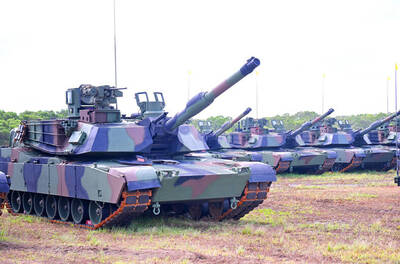
The manufacture of the remaining 28 M1A2T Abrams tanks Taiwan purchased from the US has recently been completed, and they are expected to be delivered within the next one to two months, a source said yesterday. The Ministry of National Defense is arranging cargo ships to transport the tanks to Taiwan as soon as possible, said the source, who is familiar with the matter. The estimated arrival time ranges from late this month to early next month, the source said. The 28 Abrams tanks make up the third and final batch of a total of 108 tanks, valued at about NT$40.5 billion
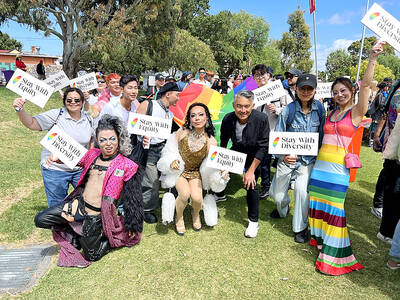
A group from the Taiwanese Designers in Australia association yesterday represented Taiwan at the Midsumma Pride March in Melbourne. The march, held in the St. Kilda suburb, is the city’s largest LGBTQIA+ parade and the flagship event of the annual Midsumma Festival. It attracted more than 45,000 spectators who supported the 400 groups and 10,000 marchers that participated this year, the association said. Taiwanese Designers said they organized a team to march for Taiwan this year, joining politicians, government agencies, professionals and community organizations in showing support for LGBTQIA+ people and diverse communities. As the first country in Asia to legalize same-sex

Travel agencies in Taiwan are working to secure alternative flights for travelers bound for New Zealand for the Lunar New Year holiday, as Air New Zealand workers are set to strike next week. The airline said that it has confirmed that the planned industrial action by its international wide-body cabin crew would go ahead on Thursday and Friday next week. While the Auckland-based carrier pledged to take reasonable measures to mitigate the impact of the workers’ strike, an Air New Zealand flight arriving at Taipei from Auckland on Thursday and another flight departing from Taipei for Auckland on Saturday would have to
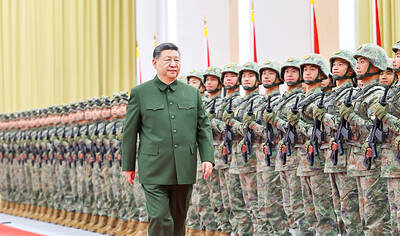
MOTIVES QUESTIONED The PLA considers Xi’s policies toward Taiwan to be driven by personal considerations rather than military assessment, the Epoch Times reports Chinese President Xi Jinping’s (習近平) latest purge of the Chinese People’s Liberation Army (PLA) leadership might have been prompted by the military’s opposition to plans of invading Taiwan, the Epoch Times said. The Chinese military opposes waging war against Taiwan by a large consensus, putting it at odds with Xi’s vision, the Falun Gong-affiliated daily said in a report on Thursday, citing anonymous sources with insight into the PLA’s inner workings. The opposition is not the opinion of a few generals, but a widely shared view among the PLA cadre, the Epoch Times cited them as saying. “Chinese forces know full well that


 RSS
RSS