


The Central Epidemic Command Center (CECC) yesterday reported three new cases of COVID-19 — two travelers from the US and one from France — bringing the total number of confirmed cases in Taiwan to 521.
All of the patients are Taiwanese, said Centers for Disease Control (CDC) Deputy Director-General Chuang Jen-hsiang (莊人祥), who is also the CECC’s spokesman.
Case No. 519 is a man in his 30s who permanently works in the US and has been returning to Taiwan every two to three months, Chuang said, adding that he did not show any symptoms in the US and arrived in Taiwan on Sunday.
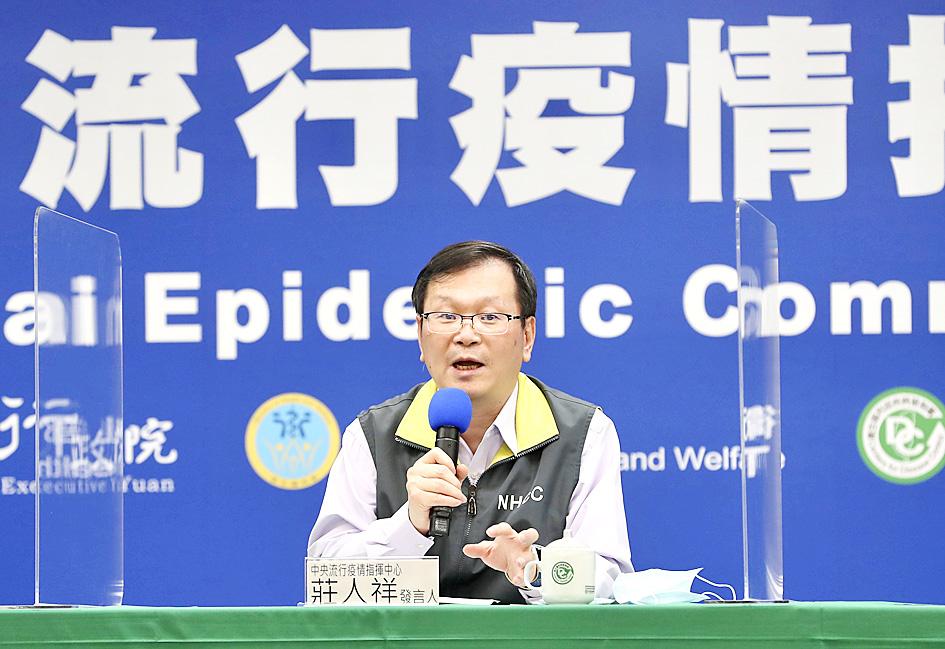
Photo: CNA
The man reported to quarantine officers upon arrival that he experienced throat itchiness during the flight and was tested for COVID-19, with the result coming back positive yesterday, he said.
Case No. 520 is a woman in her 20s who graduated from a school in France this year, but returned to the country for personal reasons in the middle of last month, Chuang said.
She developed symptoms including a fever, a headache, a runny nose, nasal congestion and loss of the sense of smell from Sept. 27 to Wednesday last week while in France, but did not see a doctor, he said.
The woman reported having a runny nose and nasal congestion upon arriving at the airport in Taiwan on Sunday, and her test result came back positive yesterday, he added.
Case No. 521 is a man in his 30s who permanently works in the US and departed Taiwan in May last year, Chuang said, adding that he developed diarrhea and a swollen throat on Saturday and reported his symptoms upon arrival in Taiwan on Sunday.
His test result came back positive yesterday, he added.
The two cases from the US were on the same flight, but they do not know each other, Chuang said, adding that 21 people who sat near the two during the flight have been placed under home isolation.
Eleven people who sat near case No. 520 during the flight from France have also been placed under home isolation, he said.
In related news, more than 399,000 people received a flu shot on Monday, the first day when government-funded flu vaccines became available, Chuang said.
The figure nearly doubled from last year’s about 202,000 people who got vaccinated on the first day of the government-funded flu vaccine program, he added.
Of those who were vaccinated on Monday, about 208,000 were aged 65 or above and about 101,000 were aged 50 to 64, accounting for about three-quarters of the day’s total, Chuang said.
A large number of people are expected to get vaccinated early in the program to reach more than 3 million shots in the first month, he said, citing past occurrences, adding that the CDC hopes that the remaining 3 million or so doses would be administered before the end of the year.
CDC Epidemic Intelligence Center Deputy Director Guo Hung-wei (郭宏偉) said that as most outpatient clinics were closed during the Mid-Autumn Festival long weekend, the number of emergency department visits for flu-like illness last week rose only slightly from the previous week to 7,422, but still remained lower than the 14,110 visits a year earlier.
Among the respiratory tract viral infections reported in the past four weeks, the most common types were herpes simplex virus (40 percent), adenoviruses (32.5 percent) and respiratory syncytial virus (21.3 percent), he said.
CDC physician Lin Yung-ching (林詠青) said the three types of viruses are common causes of the common cold, which is different from the flu.
People with a common cold usually only experience respiratory tract symptoms, while flu symptoms can affect the whole body, such as a high fever and body aches, Lin said.
The symptoms of the flu and COVID-19 are similar, so if people experience flu-like symptoms, they should report their contact history, travel history and occupation to the doctor when seeking medical attention, he said, adding that getting vaccinated against the flu can reduce the risk of developing serious complications.

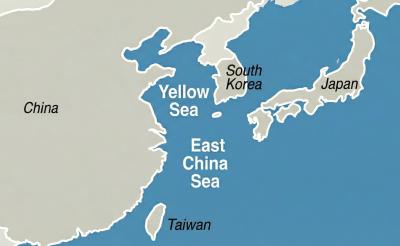
China has reserved offshore airspace in the Yellow Sea and East China Sea from March 27 to May 6, issuing alerts usually used to warn of military exercises, although no such exercises have been announced, the Wall Street Journal (WSJ) reported yesterday. Reserving such a large area for 40 days without explanation is an “unusual step,” as military exercises normally only last a few days, the paper said. These alerts, known as Notice to Air Missions (Notams), “are intended to inform pilots and aviation authorities of temporary airspace hazards or restrictions,” the article said. The airspace reserved in the alert is
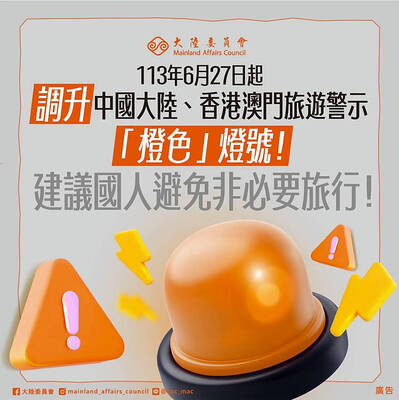
More than 6,000 Taiwanese students have participated in exchange programs in China over the past two years, despite the Mainland Affairs Council’s (MAC) “orange light” travel advisory, government records showed. The MAC’s publicly available registry showed that Taiwanese college and university students who went on exchange programs across the Strait numbered 3,592 and 2,966 people respectively. The National Immigration Agency data revealed that 2,296 and 2,551 Chinese students visited Taiwan for study in the same two years. A review of the Web sites of publicly-run universities and colleges showed that Taiwanese higher education institutions continued to recruit students for Chinese educational programs without

A bipartisan group of US senators has introduced a bill to enhance cooperation with Taiwan on drone development and to reduce reliance on supply chains linked to China. The proposed Blue Skies for Taiwan Act of 2026 was introduced by Republican US senators Ted Cruz and John Curtis, and Democratic US senators Jeff Merkley and Andy Kim. The legislation seeks to ease constraints on Taiwan-US cooperation in uncrewed aerial systems (UAS), including dependence on China-sourced components, limited access to capital and regulatory barriers under US export controls, a news release issued by Cruz on Wednesday said. The bill would establish a "Blue UAS
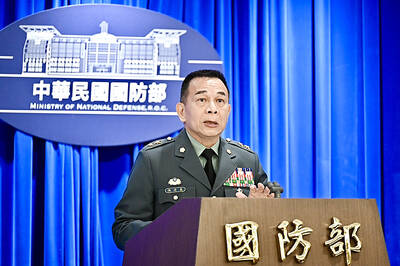
The Republic of China Army Command yesterday relieved Kinmen Defense Battalion commander after authorities indicted the officer on charges connected to using methamphetamine. The Kinmen District Prosecutors’ Office on Wednesday detained Colonel He (何) after the Coast Guard linked him to drug shipments and proceeded to charge him yesterday for using and possessing crystal meth. The man was released on a NT$50,000 bail and banned from leaving Kinmen, the office said. Army Chief of Staff Lieutenant General Chen Chien-yi (陳建義) told a news conference yesterday that He has been removed and another officer is taking over the unit as the acting commander. The military


 RSS
RSS