


Members of the legislature’s Education and Culture Committee yesterday raised concerns about how to manage school meals in light of the government’s policy to allow US pork imports containing ractopamine residue.
President Tsai Ing-wen (蔡英文) on Aug. 28 announced that Taiwan would ease restrictions on US pork imports containing the “leanness-enhancing” additive and beef from cattle aged 30 months or older, saying that the decision was “based on our national economic interests and consistent with our overall strategic goals.”
The policy is scheduled to take effect on Jan. 1.
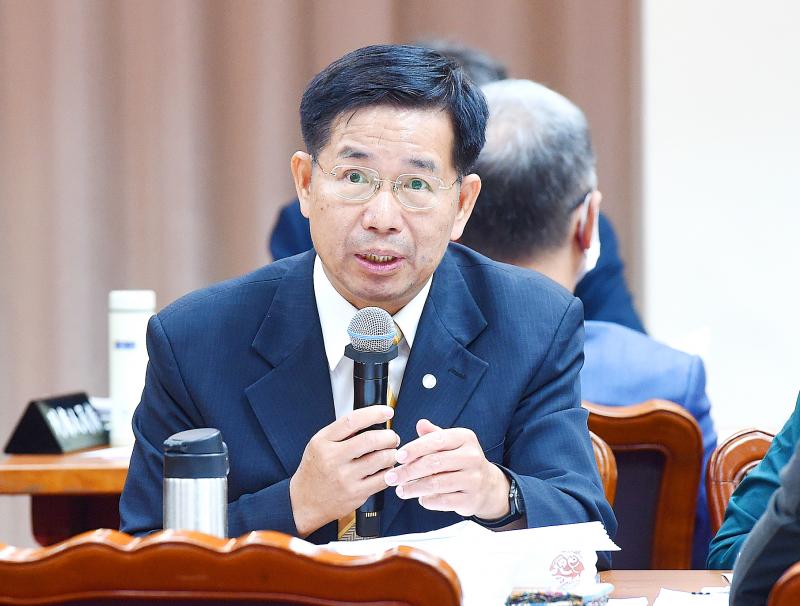
Photo: Liao Chen-huei, Taipei Times
On the same day as Tsai’s announcement, the Ministry of Education released a statement saying that schools that provide meals must prioritize the use of quality local agricultural products accredited by the central competent agricultural authority in accordance with Article 23 of the School Health Act (學校衛生法), which also prohibits schools from using foods that contain genetically modified ingredients.
The ministry asked that schools at all levels use domestic pork and beef in the meals that they provide.
At yesterday’s committee meeting, several lawmakers commended the ministry for issuing the statement, but raised doubts about the implementation of the policy.
“Since US pork is cheaper than domestic pork ... how will we use market mechanisms to ensure that [school caterers] would not use imported US pork?” Democratic Progressive Party (DPP) Legislator Huang Kuo-shu (黃國書) asked Minister of Education Pan Wen-chung (潘文忠).
Huang added that many parents were beginning to doubt whether there was sufficient personnel to inspect school meals given that there are nearly 4,000 schools below the senior-high level.
“With this many schools below the senior-high level, how would we catch breaches?” he asked.
Pan said that the ministry has over the past month discussed with local governments the inclusion of penalties in their food service contracts.
On its Campus Food Ingredients Registration Platform, the ministry has made the listing of the origin of meat items mandatory, he said.
The popularity of food delivery platforms among senior-high school students creates another food safety issue on school campuses, Huang said.
Regarding origin labeling for food delivery platforms, Deputy Minister of Health and Welfare Hsueh Jui-yuan (薛瑞元) said that platforms would be required to include such labeling in their online menus.
Chinese Nationalist Party (KMT) Legislator Lee De-wei (李德維) asked Hsueh whether the ministry would be willing to establish a “leanness-enhancing agent victims’ fund.”
If a causal relationship could be proved, regulations such as the Consumer Protection Act (消費者保護法) would be able to address the issue, Hsueh said.
While the ministry’s response to Tsai’s announcement was “quick,” doubts remain among the public, DPP Legislator Chang Liao Wan-chien (張廖萬堅) said.
The ministry and the Council of Agriculture should create centralized “campus food supply centers” in administrative districts in the nation’s city and counties, Chang Liao said.

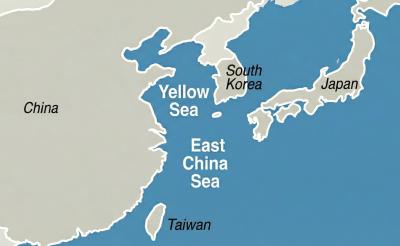
China has reserved offshore airspace in the Yellow Sea and East China Sea from March 27 to May 6, issuing alerts usually used to warn of military exercises, although no such exercises have been announced, the Wall Street Journal (WSJ) reported yesterday. Reserving such a large area for 40 days without explanation is an “unusual step,” as military exercises normally only last a few days, the paper said. These alerts, known as Notice to Air Missions (Notams), “are intended to inform pilots and aviation authorities of temporary airspace hazards or restrictions,” the article said. The airspace reserved in the alert is
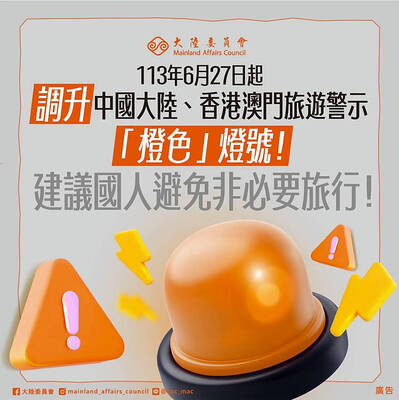
More than 6,000 Taiwanese students have participated in exchange programs in China over the past two years, despite the Mainland Affairs Council’s (MAC) “orange light” travel advisory, government records showed. The MAC’s publicly available registry showed that Taiwanese college and university students who went on exchange programs across the Strait numbered 3,592 and 2,966 people respectively. The National Immigration Agency data revealed that 2,296 and 2,551 Chinese students visited Taiwan for study in the same two years. A review of the Web sites of publicly-run universities and colleges showed that Taiwanese higher education institutions continued to recruit students for Chinese educational programs without

A bipartisan group of US senators has introduced a bill to enhance cooperation with Taiwan on drone development and to reduce reliance on supply chains linked to China. The proposed Blue Skies for Taiwan Act of 2026 was introduced by Republican US senators Ted Cruz and John Curtis, and Democratic US senators Jeff Merkley and Andy Kim. The legislation seeks to ease constraints on Taiwan-US cooperation in uncrewed aerial systems (UAS), including dependence on China-sourced components, limited access to capital and regulatory barriers under US export controls, a news release issued by Cruz on Wednesday said. The bill would establish a "Blue UAS
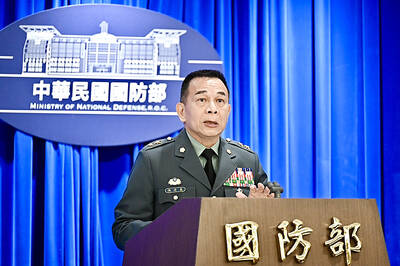
The Republic of China Army Command yesterday relieved Kinmen Defense Battalion commander after authorities indicted the officer on charges connected to using methamphetamine. The Kinmen District Prosecutors’ Office on Wednesday detained Colonel He (何) after the Coast Guard linked him to drug shipments and proceeded to charge him yesterday for using and possessing crystal meth. The man was released on a NT$50,000 bail and banned from leaving Kinmen, the office said. Army Chief of Staff Lieutenant General Chen Chien-yi (陳建義) told a news conference yesterday that He has been removed and another officer is taking over the unit as the acting commander. The military


 RSS
RSS