


National Taiwan University (NTU) College of Public Health vice dean Tony Chen (陳秀熙) yesterday said a classification for foreign countries based on COVID-19 infection risk should be introduced, and the mandatory 14-day quarantine shortened to five days with two mandatory tests for travelers from high-risk countries.
New imported cases and foreign nationals testing positive after returning home from Taiwan has sparked public debate on whether the government should expand COVID-19 testing to all inbound travelers to better detect asymptomatic cases locally, he said.
Taiwan has so far done a good job detecting most COVID-19 cases at its border, due to strict border control policies, including testing of all inbound travelers with symptoms and a 14-day home quarantine for all arriving travelers, but it might miss asymptomatic cases, which might lead to local outbreaks, Chen added.
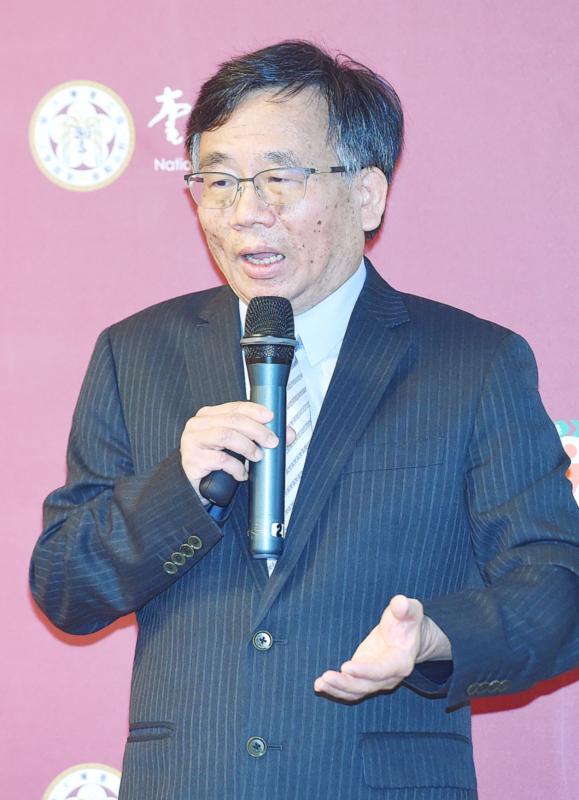
Photo: Liao Chen-huei, Taipei Times
Based on data on imported cases, he said that the majority of them developed symptoms within five days after entering Taiwan and that a five-day quarantine with two tests might be more effective than the current policy.
If travelers are tested upon arrival, quarantined for five days and tested again, more than 99 percent of cases would also have be detected, he said.
However, Chen said that he is not suggesting that COVID-19 testing should be required for all arriving travelers, but the government should consider classifying countries of departure into the categories — low, medium and high infection risks — and implement a two-test policy on travelers from high-infection-risk countries.
Expanded testing would not render a quarantine policy unnecessary, but Taiwan should improve its testing to prevent asymptomatic COVID-19 carriers from entering local communities, he said, adding that earlier detection of cases would also allow for earlier treatment and reduce the risk of severe cases.
If asymptomatic COVID-19 cases in Taiwan remain under 50, the risk of local outbreaks would be low, but if the number increases to more than 100 or 200 people, Taiwan might face a resurgence of locally transmitted infections, he said, adding that some countries have seen COVID-19 flare up again in the past few weeks.
However, Fang Chi-tai (方啟泰), a professor at NTU’s Institute of Epidemiology and Preventive Medicine, said that data from South Korea, which implemented a policy on testing all arriving travelers since May 11, showed that it did not increase the detection rate of imported cases, and the number of locally transmitted cases did not decrease either.
All the existing tests are not perfectly accurate and might show false-negative or false-positive results, he said, adding that comprehensive evaluation according to clinical and epidemiological data was needed.
Testing all travelers upon arrival might cause those who test negative to let down their guard during quarantine, he said.
Strictly implementing the current policy of a 14-day quarantine and an additional seven-day self-health management would be a better method of preventing imported cases causing local infections, Fang said, adding that mask wearing remains equally important.

Considering that most countries issue more than five denominations of banknotes, the central bank has decided to redesign all five denominations, the bank said as it prepares for the first major overhaul of the banknotes in more than 24 years. Central bank Governor Yang Chin-lung (楊金龍) is expected to report to the Legislative Yuan today on the bank’s operations and the redesign’s progress. The bank in a report sent to the legislature ahead of today’s meeting said it had commissioned a survey on the public’s preferences. Survey results showed that NT$100 and NT$1,000 banknotes are the most commonly used, while NT$200 and NT$2,000

The Centers for Disease Control (CDC) yesterday reported the first case of a new COVID-19 subvariant — BA.3.2 — in a 10-year-old Singaporean girl who had a fever upon arrival in Taiwan and tested positive for the disease. The girl left Taiwan on March 20 and the case did not have a direct impact on the local community, it said. The WHO added the BA.3.2 strain to its list of Variants Under Monitoring in December last year, but this was the first imported case of the COVID-19 variant in Taiwan, CDC Deputy Director-General Lin Ming-cheng (林明誠) said. The girl arrived in Taiwan on

ANNUAL EVENT: Two massive Pokemon balloons are to be set up in Daan Park, with an event zone operating from 10am to 6pm This year’s Taipei Floral Picnic is to be held at Daan Park today and tomorrow, featuring an exclusive Pokemon Go event, a themed food market, a coffee rave picnic area and stage performances, the Taipei Department of Information and Tourism said yesterday. Two massive Pokemon balloons are to be set up in the park as attractions, with an exclusive event zone operating from 10am to 6pm, it said. Participants who complete designated tasks on-site would have a chance to receive limited-edition souvenirs, it added. People could also try the newly launched game Pokemon Pokopia in the trial area, the department said. Three PokeStops are

South Korea is planning to revise its controversial electronic arrival card, a step Taiwanese officials said prompted them to hold off on planned retaliatory measures, a South Korean media report said yesterday. A Yonhap News Agency report said that the South Korean Ministry of Foreign Affairs is planning to remove the “previous departure place” and “next destination” fields from its e-arrival card system. The plan, reached after interagency consultations, is under review and aims to simplify entry procedures and align the electronic form with the paper version, a South Korean ministry official said. The fields — which appeared only on the electronic form


 RSS
RSS