


The Taiwan Academy of Allergy Asthma and Clinical Immunology yesterday urged parents to be aware of allergy symptoms in young children, as they could lead to complications if left untreated.
Academy chairman Yang Kuen-der (楊崑德), a physician at Mackay Memorial Hospital’s division of pediatric allergy, immunology and rheumatology, said that a survey on parent behaviors suggests that one in two parents are aware of allergic reactions in their young children, but very few of them take preventive measures.
“Many parents think only having mild allergy symptoms would not do much harm or the allergic reactions would improve when the child grows up,” he said, adding that the survey suggests about 70 percent of parents neglect signs of allergic reactions.
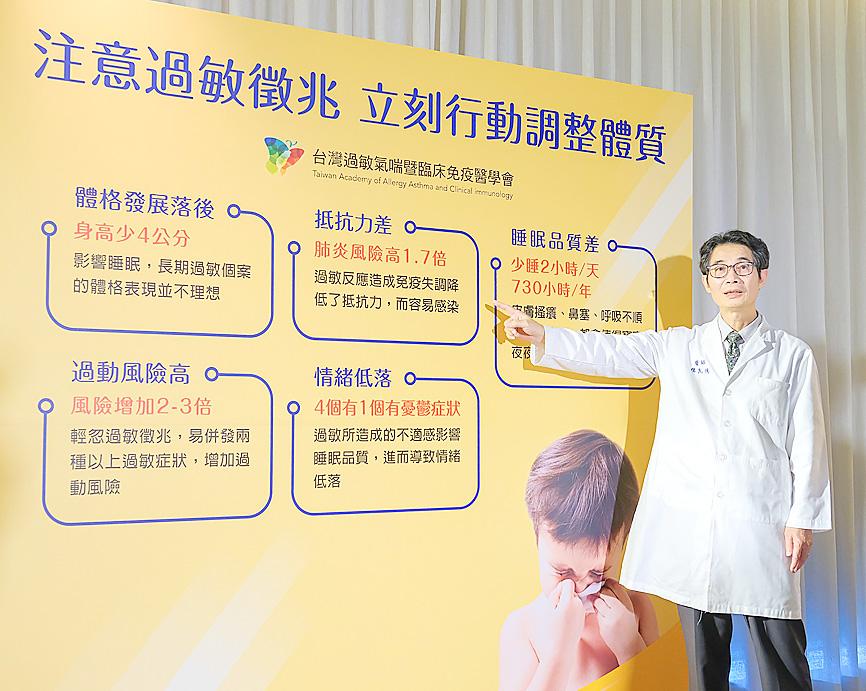
Photo courtesy of the TAAACI
The academy asked Pan Wen-harn (潘文涵), a distinguished research fellow at Academia Sinica’s Institute of Biomedical Science, to share her expertise in a video clip to raise awareness in parents about helping their children prevent allergies.
Pan said that when she took her son to see a doctor for a common cold, she noticed that her son had been suffering from an allergic reaction, with symptoms including skin irritation, rashes, a stuffy nose and sleeping with his mouth open.
The symptoms caused him to lose focus and become hyperactive, and he was eventually diagnosed with Tourette’s syndrome, she said.
Allergies, low serotonin levels and an improper diet might increase the risk of developing attention deficit hyperactivity disorder (ADHD), Pan said, adding that many children with ADHD also experience allergic reactions.
Allergic reactions often occur on the skin, in the eyes, and respiratory and digestive systems, Yang said, adding that the symptoms might include rashes, blisters, itching and swelling of the skin; itchy or watery eyes; abdominal cramps, nausea, bloating and diarrhea; trouble breathing or wheezing, sneezing, and a runny or stuffy nose.
If left untreated, the symptoms might have long-term negative effects on a child’s health, including poor sleep quality, poor immune system development, and impaired growth and mental development, he said.

The military has spotted two Chinese warships operating in waters near Penghu County in the Taiwan Strait and sent its own naval and air forces to monitor the vessels, the Ministry of National Defense (MND) said. Beijing sends warships and warplanes into the waters and skies around Taiwan on an almost daily basis, drawing condemnation from Taipei. While the ministry offers daily updates on the locations of Chinese military aircraft, it only rarely gives details of where Chinese warships are operating, generally only when it detects aircraft carriers, as happened last week. A Chinese destroyer and a frigate entered waters to the southwest
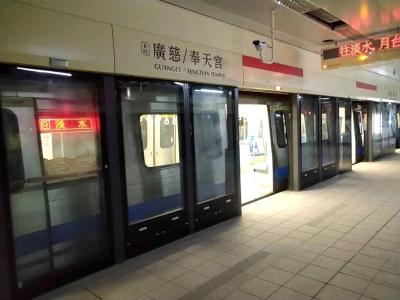
The eastern extension of the Taipei MRT Red Line could begin operations as early as late June, the Taipei Department of Rapid Transit Systems said yesterday. Taipei Rapid Transit Corp said it is considering offering one month of free rides on the new section to mark its opening. Construction progress on the 1.4km extension, which is to run from the current terminal Xiangshan Station to a new eastern terminal, Guangci/Fengtian Temple Station, was 90.6 percent complete by the end of last month, the department said in a report to the Taipei City Council's Transportation Committee. While construction began in October 2016 with an
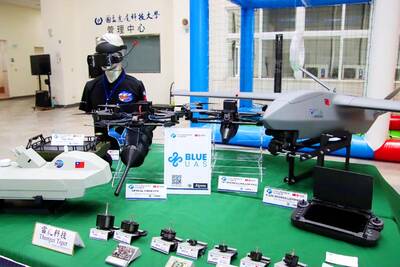
NON-RED SUPPLY: Boosting the nation’s drone industry is becoming increasingly urgent as China’s UAV dominance could become an issue in a crisis, an analyst said Taiwan’s drone exports to Europe grew 41.7-fold from 2024 to last year, with demand from Ukraine’s fight against Russian aggression the most likely driver of growth, a study showed. The Institute for Democracy, Society and Emerging Technology (DSET) in a statement on Wednesday said it found that many of Taiwan’s uncrewed aerial vehicle (UAV) sales were from Poland and the Czech Republic. These countries likely transferred the drones to Ukraine to aid it in its fight against the Russian invasion that started in 2022, it said. Despite the gains, Taiwan is not the dominant drone exporter to these markets, ranking second and fourth
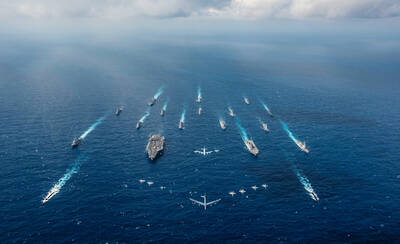
Japanese Prime Minister Sanae Takaichi’s comment last year on Tokyo’s potential reaction to a Taiwan-China conflict has forced Beijing to rewrite its invasion plans, a retired Japanese general said. Takaichi told the Diet on Nov. 7 last year that a Chinese naval blockade or military attack on Taiwan could constitute a “survival-threatening situation” for Japan, potentially allowing Tokyo to exercise its right to collective self-defense. Former Japan Ground Self-Defense Force general Kiyofumi Ogawa said in a recent speech that the remark has been interpreted as meaning Japan could intervene in the early stages of a Taiwan Strait conflict, undermining China’s previous assumptions


 RSS
RSS