


President Tsai Ing-wen’s (蔡英文) second term would start with a minor Cabinet reshuffle, with National Development Council Minister Chen Mei-ling (陳美伶), Minister of Culture Cheng Li-chiun (鄭麗君) and Minister of Science and Technology Chen Liang-gee (陳良基) leaving, a source with knowledge of the matter said yesterday.
Tsai and vice president-elect William Lai (賴清德) are to be inaugurated on Wednesday next week.
The three ministers have accomplished the missions they were assigned, and the reshuffle would not interrupt efforts to prevent the spread of COVID-19 or the government’s operations, the source said.
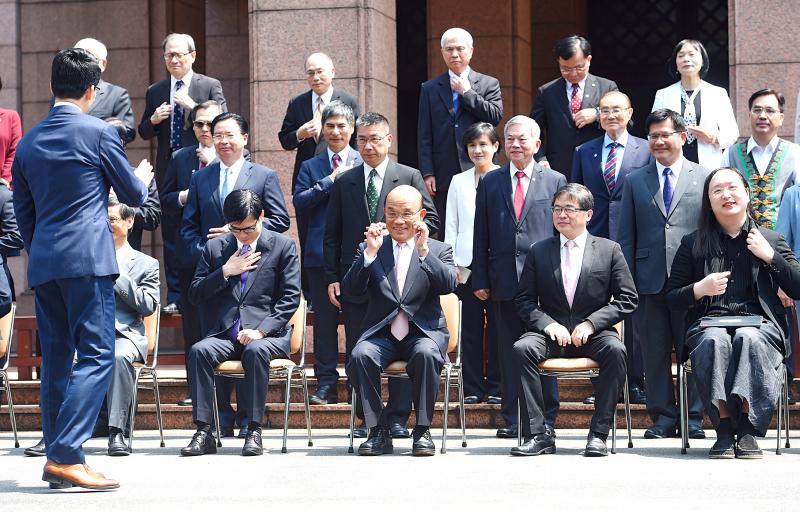
Photo: Liu Hsin-de, Taipei Times
Minister Without Portfolio Kung Ming-hsin (龔明鑫), who is at the helm of the government’s economic stimulus policies during the COVID-19 pandemic, has been tapped to take over the National Development Council, they said.
Chen Liang-gee plans to return to teaching at National Taiwan University, where he used to be a chair professor, they said.
Cheng yesterday said on Facebook that she had decided to leave the Cabinet before the Jan. 11 presidential and legislative elections, and had tendered her resignation to Premier Su Tseng-chang (蘇貞昌) on Jan. 16 because she wanted to spend more time with her son before he starts elementary school.
However, she decided to delay her departure after the COVID-19 outbreak began to worsen, because she was worried about the effect the outbreak might have on the nation’s arts and cultural sector, Cheng wrote.
Cheng took up the culture portfolio as part of former premier Lin Chuan’s (林全) Cabinet, and she said she had been reluctant to stay on when Su asked her to join his Cabinet in January last year.
However, she is glad she did and that she had the opportunity to push for many pieces of legislation that have helped promote the nation’s culture and the establishment of the National Human Rights Museum and the Taiwan Creative Content Agency, she wrote.
She said she was also proud of helping introducing the concept of “cultural governance” to the nation’s political culture.
Minister of National Defense Yen De-fa (嚴德發) and Minister of the Interior Hsu Kuo-yung (徐國勇) are staying on, despite recent controversies, the source said.
Hsu sparked an uproar in March when he reported National Police Agency Director-General Chen Jia-chin (陳家欽) to the Taipei District Prosecutors’ Office over alleged graft involving the agency’s staffing.
Su was not pleased by Hsu’s handling of the matter, but decided to keep Hsu in his because of his abilities, the source said.
Yen has come under criticism over the handling of an outbreak of COVID-19 on a ship that took part in the navy’s “Friendship Flotilla” mission to Palau.
Chen Liang-gee wrote on Facebook that he was grateful to have been given the opportunity to serve the nation for four years.
Technology is the foundation of a nation and the way to its prosperity, and he would continue dedicating himself to creating a quality and competitive research environment and incubator in the nation, he said.
Additional reporting by Lee Hsin-fang

LOUD AND PROUD Taiwan might have taken a drubbing against Australia and Japan, but you might not know it from the enthusiasm and numbers of the fans Taiwan might not be expected to win the World Baseball Classic (WBC) but their fans are making their presence felt in Tokyo, with tens of thousands decked out in the team’s blue, blowing horns and singing songs. Taiwanese fans have packed out the Tokyo Dome for all three of their games so far and even threatened to drown out home team supporters when their team played Japan on Friday. They blew trumpets, chanted for their favorite players and had their own cheerleading squad who dance on a stage during the game. The team struggled to match that exuberance on the field, with
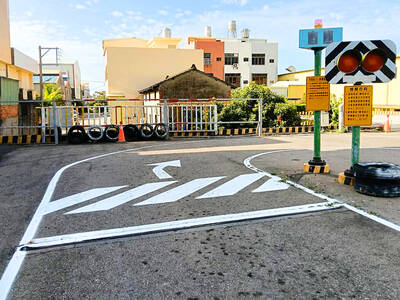
UPDATED TEST: The new rules aim to assess drivers’ awareness of risky behaviors and how they respond under certain circumstances, the Highway Bureau said Driver’s license applicants who fail to yield to pedestrians at intersections or to check blind spots, or omit pointing-and-calling procedures would fail the driving test, the Highway Bureau said yesterday. The change is set to be implemented at the end of the month, and is part of the bureau’s reform of the driving portion of the test, which has been criticized for failing to assess whether drivers can operate vehicles safely. Sedan drivers would be tested regarding yielding to pedestrians and turning their heads to check blind spots, while drivers of large vehicles would be tested on their familiarity with pointing-and-calling

A Taiwanese man apologized on Friday after saying in a social media post that he worked with Australia to provide scouting reports on Taiwan’s team, enabling Australia’s victory in this year’s World Baseball Classic (WBC), saying it was a joke and that he did not hold any position with foreign teams or Taiwan’s sports training center. Chen Po-hao (陳柏豪) drew the rage of many Taiwan baseball fans when he posted online on Thursday night, claiming credit for Australia’s 3-0 win over Taiwan in the opening game for Pool C, saying he worked as a physical therapist with the national team and
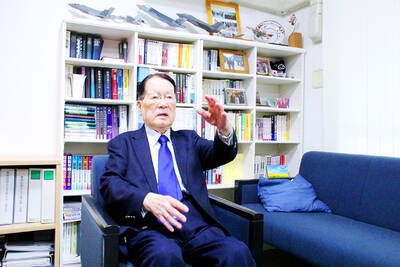
Whether Japan would help defend Taiwan in case of a cross-strait conflict would depend on the US and the extent to which Japan would be allowed to act under the US-Japan Security Treaty, former Japanese minister of defense Satoshi Morimoto said. As China has not given up on the idea of invading Taiwan by force, to what extent Japan could support US military action would hinge on Washington’s intention and its negotiation with Tokyo, Morimoto said in an interview with the Liberty Times (sister paper of the Taipei Times) yesterday. There has to be sufficient mutual recognition of how Japan could provide


 RSS
RSS