


A system utilizing artificial intelligence, machine learning and computer vision can identify whether people are wearing masks, which could help ensure that everyone entering a Mass Rapid Transport (MRT) station is wearing a mask during the COVID-19 pandemic.
A team from National Chiao Tung University that developed the system on Monday said that preliminary tests carried out at campus cafeteria and classrooms showed 95 percent accuracy.
The team was led by Cheng Wen-huang (鄭文皇) and Shuai Hong-han (帥宏翰), a professor and assistant professor in the electrical engineering department.
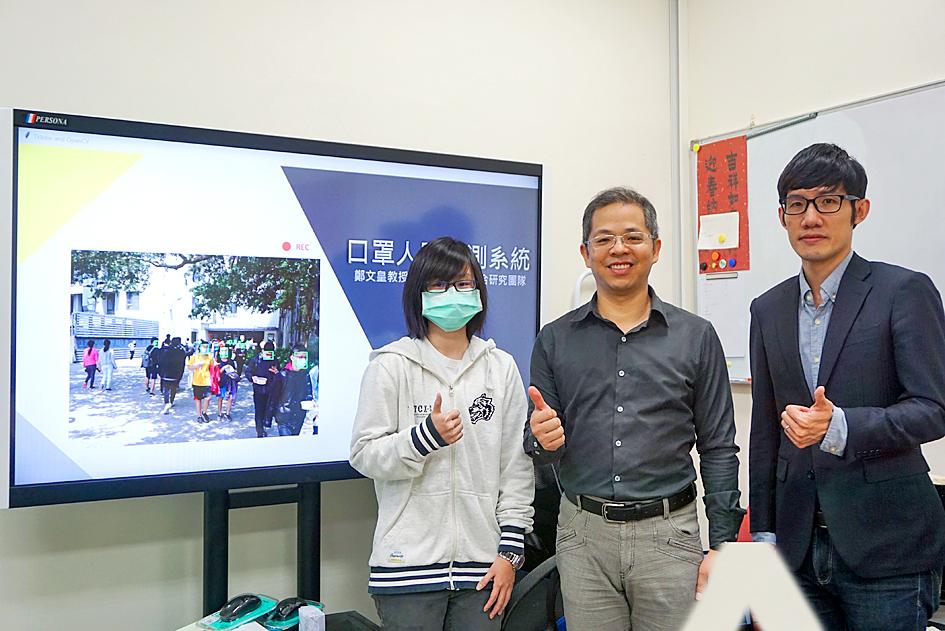
Photo copied by Hung Mei-hsiu, Taipei Times
For the tests, those wearing masks were marked with a green square and those without were marked with a red square, it said.
Key characteristics of facial features are targeted, allowing the system to identify individuals even without a full facial capture, including if their head was down as they used a cellphone or if their face was covered by an arm as they slept at a desk, the team said.
This approach is innovative, as previous programs were “taught” to identify individuals by being fed large portrait photographs, which raised the risk of misjudgements if facial features are obstructed, if the size of the face is too small or the angle is wrong, Shuai said.
In such circumstances, individuals would have to stand in front of a camera for a system to be able to recognize them, Shuai said.
The system could help monitor whether people are wearing masks on MRT trains or other forms of public transportation, as the government does not have enough people to monitor enforcement of the mask policy, the team said.
Using the system would not cause a back-up at entrances to MRT stations, as it retains high identification rates even with dense crowds, with results in under 0.03 seconds, the team said.
Meanwhile, National Cheng Kung University Hospital on Monday unveiled a lightweight protective tent designed to prevent the risk of infection when medical personnel are treating a COVID-19 patient.
Fang Pin-hui (方品惠), a physician with the Tainan-based hospital’s emergency medicine department who helped develop the tent, said doctors must be protected, especially when trying to intubate COVID-19 patients experiencing respiratory failure, which can expose them to aerosol-based transmission of the virus, especially if they are not wearing protective gear.
The tent-like device was inspired by an umbrella and a raincoat and consists of two L-shaped frames and a transparent PVC film, materials which are easy to find and relatively inexpensive, Fang said.
It can be placed on a bed or stretcher and acts as a barrier between a physician and patient, with holes cut in the film to allow doctors or nurses to put their hands through to perform procedures, she said.
Although intubation is typically not performed in an ambulance, the device could also be used by ambulance crews in an emergency to prevent them from being exposed to aerosols, Fang said.
The hospital said the tent was designed so that it would be easy to assemble, adding that the device was described in an article in the April issue of the Annals of Emergency Medicine.
Lai Hsien-yung (賴賢勇), an anesthesiologist at Mennonite Christian Hospital in Hualien, designed something similar in March — an acrylic box — which has already been adopted in the Philippines and Indonesia.
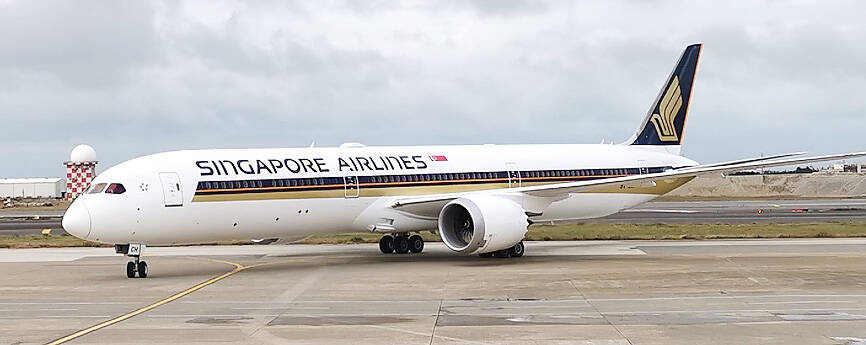
INCREASED CAPACITY: The flights on Mondays, Wednesdays, Fridays and Sundays would leave Singapore in the morning and Taipei in the afternoon Singapore Airlines is adding four supplementary flights to Taipei per week until May to meet increased tourist and business travel demand, the carrier said on Friday. The addition would raise the number of weekly flights it operates to Taipei to 18, Singapore Airlines Taiwan general manager Timothy Ouyang (歐陽漢源) said. The airline has recorded a steady rise in tourist and business travel to and from Taipei, and aims to provide more flexible travel arrangements for passengers, said Ouyang, who assumed the post in July last year. From now until Saturday next week, four additional flights would depart from Singapore on Monday, Wednesday, Friday
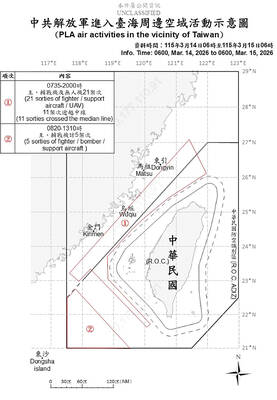
The Ministry of National Defense yesterday reported the return of large-scale Chinese air force activities after their unexplained absence for more than two weeks, which had prompted speculation regarding Beijing’s motives. China usually sends fighter jets, drones and other military aircraft around the nation on a daily basis. Interruptions to such routine are generally caused by bad weather. The Ministry of National Defense said it had detected 26 Chinese military aircraft in the Taiwan Strait over the previous 24 hours. It last reported that many aircraft on Feb. 25, when it spotted 30 aircraft, saying Beijing was carrying out another “joint combat

Taiwan successfully defended its women’s 540 kilogram title and won its first-ever men’s 640 kg title at the 2026 World Indoor Tug of War Championships in Taipei yesterday. In the women’s event, Taiwan’s eight-person squad reached the final following a round-robin preliminary round and semifinals featuring teams from Ukraine, Japan, Thailand, Vietnam, the Basque Country and South Korea. In the finals, they swept the Basque team 2-0, giving the team composed mainly of National Taiwan Normal University students and graduates its second championship in a row, and its fourth in five years. Team captain
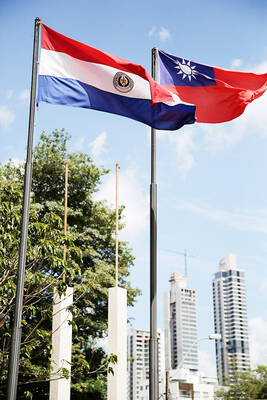
When Paraguayan opposition lawmaker Leidy Galeano returned from an all-expenses-paid tour of six Chinese cities late last year, she was convinced Paraguay risked missing out on major economic gains by sticking with longtime ally Taipei over Beijing — a message that participants on the trip heard repeatedly from Chinese officials. “Everything I saw there, I wanted for my country,” said Galeano, a member of the newly-formed Yo Creo party whose senior figures have spoken favorably about China. This trip and others like it — which people familiar with the visits said were at the invitation of the Chinese consulate in Sao Paulo


 RSS
RSS