


Minister of Health and Welfare Chen Shih-chung (陳時中) and US Health and Human Services (HHS) Secretary Alex Azar exchanged ideas about COVID-19 prevention in a conference call on Monday night.
The Ministry of Health and Welfare Office of International Cooperation said the 30-minute call began at 8pm, and Azar praised Taiwan’s achievements in preventing the spread of COVID-19 and thanked Taiwan for donating masks to the US.
Azar and Chen, who heads the Central Epidemic Command Center (CECC), had an in-depth talk about disease prevention strategies, global health and safety, and touched upon Taiwan’s participation in the WHO, the office said.
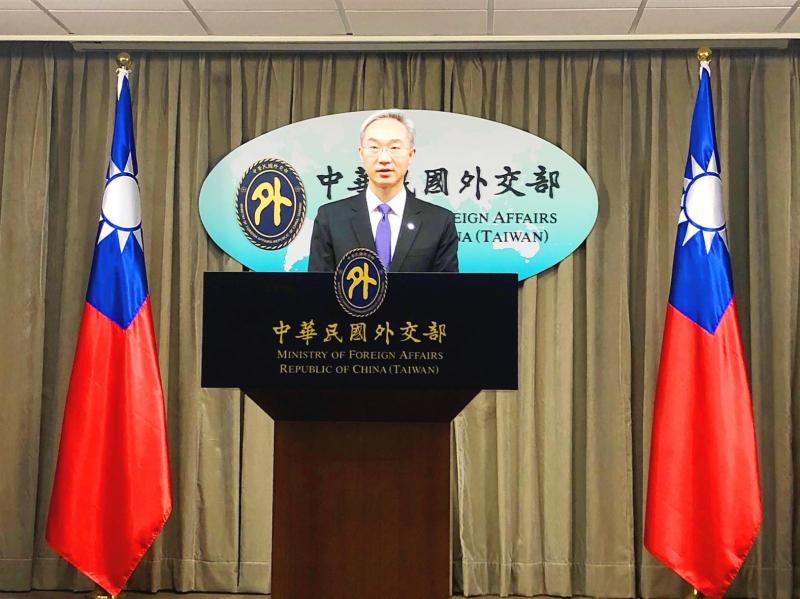
Photo: Lu Yi-hsuan, Taipei Times
“This morning I spoke with Minister Chen of Taiwan regarding the #COVID19 outbreak. I thanked him for Taiwan’s efforts to share their best practices and resources with the U.S.” Azar wrote on Twitter shortly after the telephone call. “Now, more than ever, global health partnership is crucial and I appreciate Taiwan’s contributions.”
At the center’s daily news conference yesterday, Chen said that Azer was curious about the government’s prevention measures, especially precision testing and results.
“He expressed that there is a lot of room for us [Taiwan and the US] to cooperate in using technology for disease prevention and to benefit the health of all human beings, and that the US would continue to support Taiwan’s participation in the World Health Assembly [WHA],” Chen said.
Also taking part in the call were American Institute in Taiwan (AIT) Director Brent Christensen, Centers for Disease Control Director-General Chou Jih-haw (周志浩), Department of North American Affairs Director-General Vincent Yao (姚金祥) and Deputy Minister of Foreign Affairs Hsu Szu-chien (徐斯儉) from the Ministry of Foreign Affairs, and Department of International Organizations Director-General Bob Chen (陳龍錦) and technical superintendent Liu Li-ling (劉麗玲) from the health ministry.
Their call was part of ongoing efforts to cooperate in disease prevention, Yao said yesterday during a news briefing at the foreign ministry in Taipei.
The call was a natural arrangement following a Taiwan-US joint statement on a partnership against coronavirus on March 18 and a March 31 virtual forum involving high-ranking officials from both nations, Yao said.
Chen had met Azar on the sidelines of the WHA annual session in Geneva, Switzerland, in 2018 and last year, even though Taiwan was not invited to the assembly, he said.
The US government has been consistent in supporting Taiwan’s bid to join the WHA, Yao said.
How Taiwan might join this year’s WHA, which is scheduled for next month, is still under discussion, given the uncertainty over how the assembly would be held, he added.
Yao also addressed a New York Post story on Sunday that described the measures Taiwan has taken to contain COVID-19 as “authoritarian.”
The story by Paula Froelich, headlined “Life after lockdown: Electronic monitoring, fines and compulsory face masks,” described Taiwan as “the Chinese-run state” and said “almost everyone is tracked,” citing as examples the government’s use of GPS signals to track the phones of individuals who have arrived from overseas and “borough chiefs are tasked with making calls twice a day to people in their jurisdiction [under home quarantine] to make sure they’re staying home.”
Taiwan’s disease prevention measures are among the most transparent in the world, while the nation’s achievements in limiting COVID-19 by using certain technological tools have been praised and accepted by the public, Yao said as he condemned the newspaper’s report.
He also criticized the reporter for not checking the facts before the paper published the story.
The ministry would continue to ask the newspaper for a correction through the Taipei Economic and Cultural Representative Office in the US and other channels, Yao said.
Froelich’s story, which cited a NBC News report datelined Taipei on Thursday about “life without lockdown” in Taiwan for several of its examples, ran the same day that the New York Post published an opinion piece by James B. Meigs, headlined “Why Taiwan was the only nation that responded correctly to coronavirus.”
Meigs’ piece, which analyzed leadership failures ranging from the Titanic hitting an iceberg to the NASA’s Challenger disaster, praised the actions taken by Taiwan’s public health authorities and government leaders in comparison with those taken by Republican and Democratic lawmakers, and other elected officials in the US.
Officials in the US had made mistakes due to a failure to anticipate the worst, while “Taiwan makes sure that its health institutions are hyper-vigilant about epidemic risks” as a result of the SARS epidemic of 2003, Meigs wrote.
Additional reporting by Lin Chia-nan and Diane Baker

Actor Darren Wang (王大陸) was sentenced to six months in prison, commutable to a fine, by the New Taipei District Court today for contravening the Personal Data Protection Act (個人資料保護法) in a case linked to an alleged draft-dodging scheme. Wang allegedly paid NT$3.6 million (US$114,380) to an illegal group to help him evade mandatory military service through falsified medical documents, prosecutors said. He transferred the funds to Chen Chih-ming (陳志明), the alleged mastermind of a draft-evasion ring, although he lost contact with him as he was already in detention on fraud charges, they said. Chen is accused of helping a

SECURITY: Starlink owner Elon Musk has taken pro-Beijing positions, and allowing pro-China companies to control Taiwan’s critical infrastructure is risky, a legislator said Starlink was reluctant to offer services in Taiwan because of the nation’s extremely high penetration rates in 4G and 5G services, the Ministry of Digital Affairs said yesterday. The ministry made the comments at a meeting of the legislature’s Transportation Committee, which reviewed amendments to Article 36 of the Telecommunications Management Act (電信管理法). Article 36 bans foreigners from holding more than 49 percent of shares in public telecommunications networks, while shares foreigners directly and indirectly hold are also capped at 60 percent of the total, unless specified otherwise by law. The amendments, sponsored by Chinese Nationalist Party (KMT) Legislator Ko

The eastern extension of the Taipei MRT Red Line could begin operations as early as late June, the Taipei Department of Rapid Transit Systems said yesterday. Taipei Rapid Transit Corp said it is considering offering one month of free rides on the new section to mark its opening. Construction progress on the 1.4km extension, which is to run from the current terminal Xiangshan Station to a new eastern terminal, Guangci/Fengtian Temple Station, was 90.6 percent complete by the end of last month, the department said in a report to the Taipei City Council's Transportation Committee. While construction began in October 2016 with an
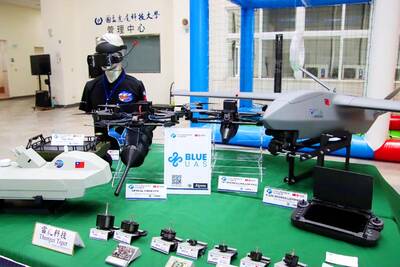
NON-RED SUPPLY: Boosting the nation’s drone industry is becoming increasingly urgent as China’s UAV dominance could become an issue in a crisis, an analyst said Taiwan’s drone exports to Europe grew 41.7-fold from 2024 to last year, with demand from Ukraine’s fight against Russian aggression the most likely driver of growth, a study showed. The Institute for Democracy, Society and Emerging Technology (DSET) in a statement on Wednesday said it found that many of Taiwan’s uncrewed aerial vehicle (UAV) sales were from Poland and the Czech Republic. These countries likely transferred the drones to Ukraine to aid it in its fight against the Russian invasion that started in 2022, it said. Despite the gains, Taiwan is not the dominant drone exporter to these markets, ranking second and fourth


 RSS
RSS