


The government should issue cash handouts instead of coupons as part of its relief and recovery plan for the COVID-19 pandemic, the Chinese Nationalist Party (KMT) said yesterday.
The effectiveness of the coupon policy proposed by the Ministry of Economic Affairs might be limited due to its use of mobile payment systems and other restrictions, the party said.
Older people and those unfamiliar with mobile payment systems might find redeeming the coupons inconvenient, it said.
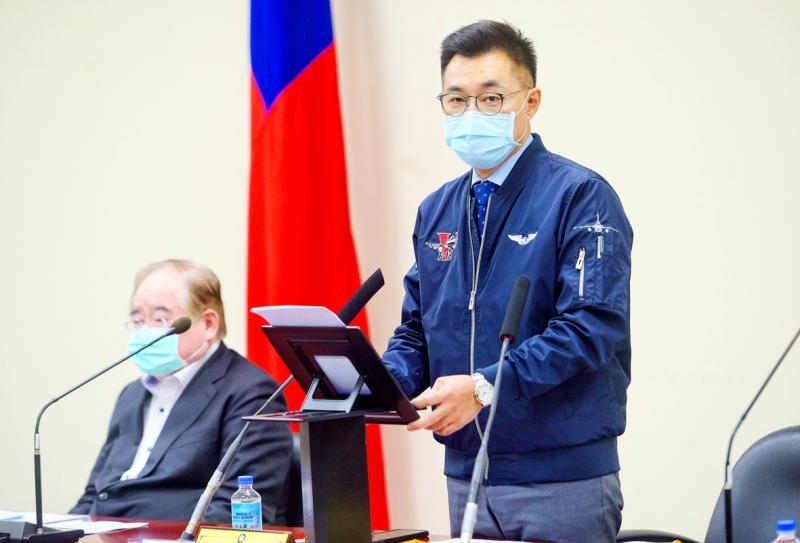
Photo: Chang Chia-ming, Taipei Times
The proposed coupons, which would give people a 25 percent discount on some purchases, “ignores the problem that poor and unemployed people have trouble paying even basic expenses,” it added.
Citing Singapore’s response as an example, KMT Legislator Alicia Wang (王育敏) said that the city-state’s government plans to give S$600 (US$420) to citizens aged 21 and older.
In Taiwan, the tourism and transportation industries can receive NT$10,000 (US$332) per month in wage subsidies for each worker, while service industries hit especially hard by the pandemic can receive up to NT$20,000 per month per employee, said Wang, who chairs the KMT Culture and Communications Committee.
In Singapore, the government is subsidizing 75 percent — to a maximum of S$4,600 — of all workers’ wages this month, she said.
Local governments have “almost no role” in a NT$60 billion special budget approved by the Legislative Yuan last month, the KMT said.
Local governments have a better understanding than the central government about which local small businesses, self-employed workers and geographic areas require aid, the party said, adding that the central government should give local governments a more active role in distributing relief funds.
Amid the intensifying calls from the KMT for cash handouts this week, Premier Su Tseng-chang (蘇貞昌) on Tuesday said that the effectiveness of distributing cash would not be great.
Instead of doing what is “most convenient” and handing out cash, the government has taken the time to make plans for each industry, he said.
If the government only handed out cash, some people would spend it, while others might save the money, he added.
Many of the Executive Yuan’s plans involve giving out cash, Su said.
However, not everyone would be eligible, he said, adding that cash is being given to disadvantaged groups, such as mid-to-low income households and people with special circumstances in need.
An example of special circumstances would be if an employer is unable to pay its employees, he added.
The government is not saying that cash handouts cannot be made, but it would be “lazy” to not distinguish between wealthy and poor groups, and make everyone eligible, Su said.
Minister Without Portfolio Kung Ming-hsin (龔明鑫) on Tuesday told a news conference that if the government gave every resident NT$12,000 like Singapore, the money would also trickle down to business owners, who would still proceed with any plans to cut their payrolls, even after receiving a handout.
Additional reporting by Chen Yu-fu, Peng Wan-hsin and Lin Liang-sheng
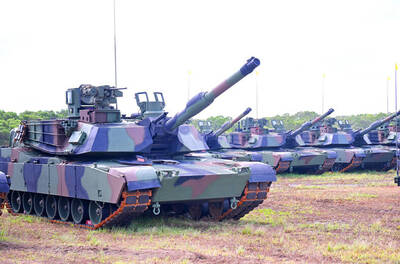
The manufacture of the remaining 28 M1A2T Abrams tanks Taiwan purchased from the US has recently been completed, and they are expected to be delivered within the next one to two months, a source said yesterday. The Ministry of National Defense is arranging cargo ships to transport the tanks to Taiwan as soon as possible, said the source, who is familiar with the matter. The estimated arrival time ranges from late this month to early next month, the source said. The 28 Abrams tanks make up the third and final batch of a total of 108 tanks, valued at about NT$40.5 billion
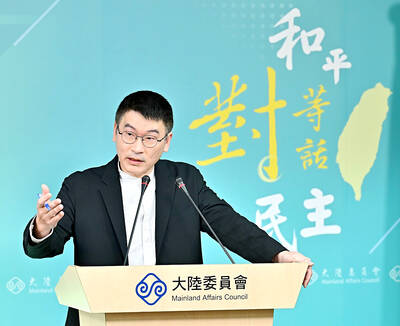
Two Taiwanese prosecutors were questioned by Chinese security personnel at their hotel during a trip to China’s Henan Province this month, the Mainland Affairs Council (MAC) said yesterday. The officers had personal information on the prosecutors, including “when they were assigned to their posts, their work locations and job titles,” MAC Deputy Minister and spokesman Liang Wen-chieh (梁文傑) said. On top of asking about their agencies and positions, the officers also questioned the prosecutors about the Cross-Strait Joint Crime-Fighting and Judicial Mutual Assistance Agreement, a pact that serves as the framework for Taiwan-China cooperation on combating crime and providing judicial assistance, Liang
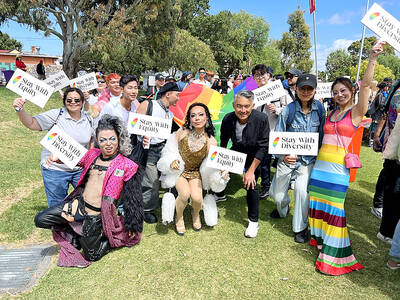
A group from the Taiwanese Designers in Australia association yesterday represented Taiwan at the Midsumma Pride March in Melbourne. The march, held in the St. Kilda suburb, is the city’s largest LGBTQIA+ parade and the flagship event of the annual Midsumma Festival. It attracted more than 45,000 spectators who supported the 400 groups and 10,000 marchers that participated this year, the association said. Taiwanese Designers said they organized a team to march for Taiwan this year, joining politicians, government agencies, professionals and community organizations in showing support for LGBTQIA+ people and diverse communities. As the first country in Asia to legalize same-sex
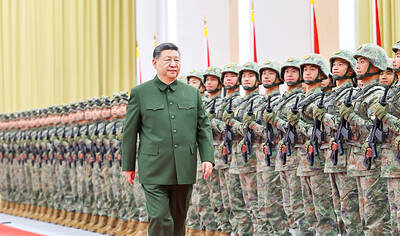
MOTIVES QUESTIONED The PLA considers Xi’s policies toward Taiwan to be driven by personal considerations rather than military assessment, the Epoch Times reports Chinese President Xi Jinping’s (習近平) latest purge of the Chinese People’s Liberation Army (PLA) leadership might have been prompted by the military’s opposition to plans of invading Taiwan, the Epoch Times said. The Chinese military opposes waging war against Taiwan by a large consensus, putting it at odds with Xi’s vision, the Falun Gong-affiliated daily said in a report on Thursday, citing anonymous sources with insight into the PLA’s inner workings. The opposition is not the opinion of a few generals, but a widely shared view among the PLA cadre, the Epoch Times cited them as saying. “Chinese forces know full well that


 RSS
RSS