


Ministry of Transportation and Communications yesterday said that it is considering including self-employed tour guides in a second bailout package for tourism industry workers.
The Tourism Bureau is studying the feasibility of the proposal after Minister of Transportation and Communications Lin Chia-lung (林佳龍) on Wednesday met with representatives of travel and tour guide associations to discuss how the ministry could help them as their businesses suffer because of the COVID-19 pandemic, the ministry said.
Tour guides have also experienced financial losses, as travel agencies have stopped organizing overseas tour groups or hosting tourists from other nations, the bureau said.
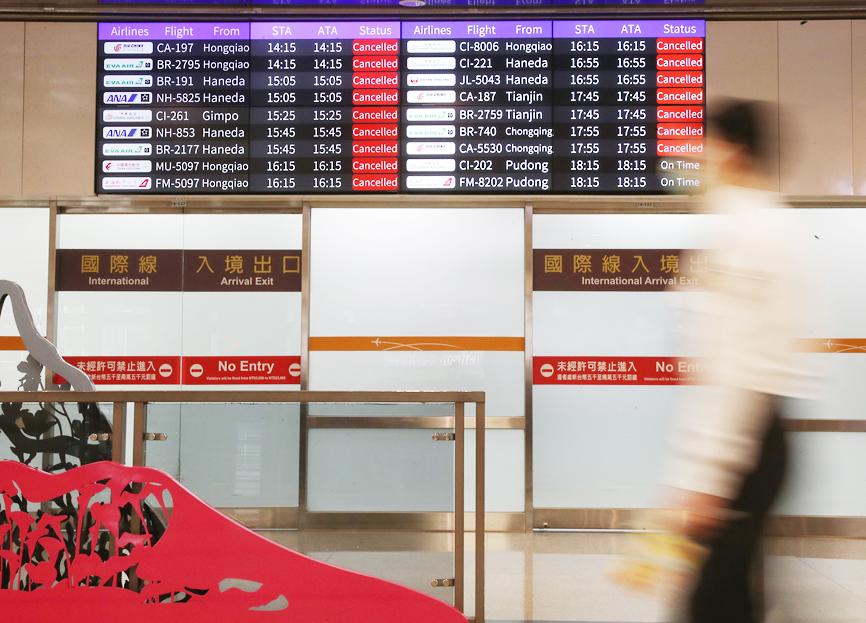
Photo: CNA
Apart from subsidizing workers of travel agencies, the bureau said that it is also considering giving self-employed tour guides monthly subsidies of NT$10,000 (US$330) for three consecutive months.
Lin said that the bailout package should help those who are really in need, and self-employed tour guides might have other jobs.
To ensure that the subsidies are used to help those whose main source of income is guiding tours, the bureau is stipulating that the ministry determine how the subsidies should be distributed.
The bureau said that it would not be difficult to ascertain whether someone is a certified, self-employed tour guide and has led tours before, as it can search its database.
What is difficult is verifying whether they have more than one source of income, it said, adding that it would quickly stipulate criteria and make them public.
The ministry said that it hopes to give out subsidies as quickly as possible so that workers in the travel industry can receive the funds by the middle of this month.
The ministry was allocated an additional NT$27.5 billion from the government’s second bailout package, of which NT$12.57 billion would be used to bolster the tourism industry.
The additional funds are to be used to increase subsidies for travel service operators so that they can pay workers’ salaries, the ministry said, adding it would allocate NT$1 billion from the fund to subsidize hotels assisting in the government’s disease-prevention efforts.
Separately yesterday, the ministry said that its policy requiring train, high-speed rail and inner-city bus passengers to wear masks has a legal basis.
The Central Epidemic Command Center has recommended that people using public transport wear masks, because they cannot maintain a distance of 1.5m from others when they are on board, the ministry said, adding that the center has also clarified that people do not have to observe “social distancing” indoors if they all wear masks.
Both the Special Act on COVID-19 Prevention, Relief and Recovery (嚴重特殊傳染性肺炎防治及紓困振興特別條例) and the Communicable Disease Control Act (傳染病防治法) authorize the center, as well as administrative agencies, to enforce measures as they see fit to control the spread of an epidemic, it said.

SECURITY: Starlink owner Elon Musk has taken pro-Beijing positions, and allowing pro-China companies to control Taiwan’s critical infrastructure is risky, a legislator said Starlink was reluctant to offer services in Taiwan because of the nation’s extremely high penetration rates in 4G and 5G services, the Ministry of Digital Affairs said yesterday. The ministry made the comments at a meeting of the legislature’s Transportation Committee, which reviewed amendments to Article 36 of the Telecommunications Management Act (電信管理法). Article 36 bans foreigners from holding more than 49 percent of shares in public telecommunications networks, while shares foreigners directly and indirectly hold are also capped at 60 percent of the total, unless specified otherwise by law. The amendments, sponsored by Chinese Nationalist Party (KMT) Legislator Ko
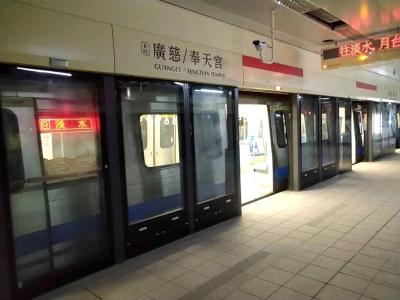
The eastern extension of the Taipei MRT Red Line could begin operations as early as late June, the Taipei Department of Rapid Transit Systems said yesterday. Taipei Rapid Transit Corp said it is considering offering one month of free rides on the new section to mark its opening. Construction progress on the 1.4km extension, which is to run from the current terminal Xiangshan Station to a new eastern terminal, Guangci/Fengtian Temple Station, was 90.6 percent complete by the end of last month, the department said in a report to the Taipei City Council's Transportation Committee. While construction began in October 2016 with an
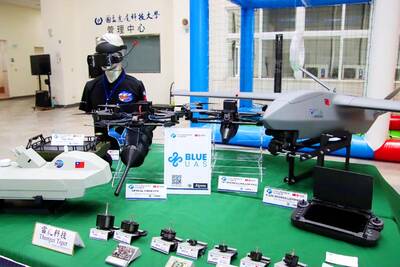
NON-RED SUPPLY: Boosting the nation’s drone industry is becoming increasingly urgent as China’s UAV dominance could become an issue in a crisis, an analyst said Taiwan’s drone exports to Europe grew 41.7-fold from 2024 to last year, with demand from Ukraine’s fight against Russian aggression the most likely driver of growth, a study showed. The Institute for Democracy, Society and Emerging Technology (DSET) in a statement on Wednesday said it found that many of Taiwan’s uncrewed aerial vehicle (UAV) sales were from Poland and the Czech Republic. These countries likely transferred the drones to Ukraine to aid it in its fight against the Russian invasion that started in 2022, it said. Despite the gains, Taiwan is not the dominant drone exporter to these markets, ranking second and fourth

The military has spotted two Chinese warships operating in waters near Penghu County in the Taiwan Strait and sent its own naval and air forces to monitor the vessels, the Ministry of National Defense (MND) said. Beijing sends warships and warplanes into the waters and skies around Taiwan on an almost daily basis, drawing condemnation from Taipei. While the ministry offers daily updates on the locations of Chinese military aircraft, it only rarely gives details of where Chinese warships are operating, generally only when it detects aircraft carriers, as happened last week. A Chinese destroyer and a frigate entered waters to the southwest


 RSS
RSS