


The government is to earmark NT$60 billion (US$1.99 billion) to loan to people who plan to create start-ups and pay interest of up to 1.67 percent for the first five years, the Executive Yuan said on Wednesday, adding that each successful applicant would be eligible for up to NT$1 million guaranteed partially or entirely by the government.
It made the statement in response to the youth entrepreneurship policy unveiled by President Tsai Ing-wen (蔡英文) at a platform presentation of presidential candidates.
Tsai said that she once received a letter from a young person in Miaoli County detailing the difficulties of entrepreneurship, so she instructed the Executive Yuan to draft a program to assist young people to create start-ups.
The government would serve as the guarantor for loans of up to NT$1 million, she said.
An evaluation system would be established to determine how much would be loaned to cultural and creative start-ups, she said.
Existing policies for youth entrepreneurship offer loans from NT$2 million to NT$12 million, while her proposal would offer smaller loans for people in the innovative, cultural and agricultural sectors, Tsai said.
The program would include a one-stop application process; a short review period, which would enable applicants to receive funds in seven days; the government serving as a guarantor for loans of up to NT$1 million; and the government paying interest of up to 1.67 percent for the first five years, Executive Yuan spokeswoman Kolas Yotaka said.
In addition, NT$10 billion would be set aside from the National Development Fund to invest in start-ups, with the quota for each investment limited to NT$20 million, Kolas said.
A speedy review process would be established for National Development Fund loans of up to NT$3 million for entrepreneurs, she said.
The government would establish accelerators for entrepreneurs and help them identify potential niche markets, she said, adding that it would team up with Internet giants such as Amazon, Google and Facebook to offer entrepreneurs courses on e-commerce.

Taipei has once again made it to the top 100 in Oxford Economics’ Global Cities Index 2025 report, moving up five places from last year to 60. The annual index, which was published last month, evaluated 1,000 of the most populated metropolises based on five indices — economics, human capital, quality of life, environment and governance. New York maintained its top spot this year, placing first in the economics index thanks to the strength of its vibrant financial industry and economic stability. Taipei ranked 263rd in economics, 44th in human capital, 15th in quality of life, 284th for environment and 75th in governance,

The Sports Administration yesterday demanded an apology from the national table tennis association for barring 17-year-old Yeh Yi-tian (葉伊恬) from competing in the upcoming World Table Tennis (WTT) United States Smash tournament in Las Vegas this July. The sports agency said in a statement that the Chinese Taipei Table Tennis Association (CTTTA) must explain to the public why it withdrew Yeh from the WTT tournament in Las Vegas. The sports agency said it contacted the association to express its disapproval of the decision-making process after receiving a complaint from Yeh’s coach, Chuang
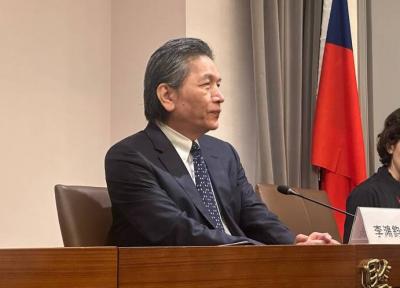
Control Yuan Secretary-General Lee Chun-yi (李俊俋) tendered his resignation last night, admitting that he had misused a government vehicle, as reported by media. His resignation was immediately accepted by the Control Yuan. In a statement explaining why he had resigned, Lee apologized for using a Control Yuan vehicle to transport his dog to a pet grooming salon on May 20. The issue first came to light late last month, when TVBS News reported that Lee had instructed his driver to take the dog to the salon. The news channel broadcast photos that it said were taken by an unnamed whistle-blower, which purportedly showed the

A former officer in China’s People’s Liberation Army (PLA) who witnessed the aftermath of the 1989 Tiananmen Square massacre has warned that Taiwan could face a similar fate if China attempts to unify the country by force. Li Xiaoming (李曉明), who was deployed to Beijing as a junior officer during the crackdown, said Taiwanese people should study the massacre carefully, because it offers a glimpse of what Beijing is willing to do to suppress dissent. “What happened in Tiananmen Square could happen in Taiwan too,” Li told CNA in a May 22 interview, ahead of the massacre’s 36th anniversary. “If Taiwanese students or


 RSS
RSS