


A two-year addiction to claw machines has landed a man in Changhua County’s Tianjhong Township (田中) with a NT$150,000 monthly salary repairing the games.
Two years ago, Wu Wei-en (巫維恩), 20, was helping his older sister move into a building in Tainan when he noticed a claw machine outlet on the first floor.
Deciding to try his luck, he won a robot vacuum cleaner that retails for about NT$300 after having fed NT$3,000 into the machines.
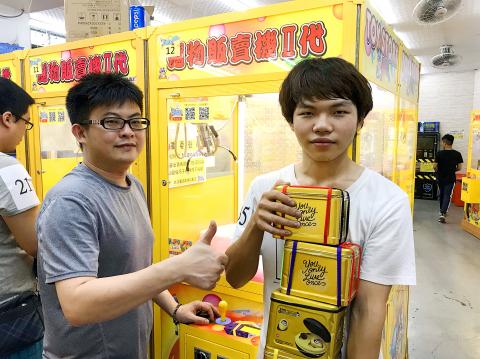
Photo: Yen Hung-chun, Taipei Times
Wu said that from that moment he became addicted to claw machines.
It was as if he had become “possessed,” he said.
Every day, he would follow experts’ advice on the Internet and then play at different stores, he said.
Soon, he was spending all of his salary and savings on the game, said Wu, who was earning NT$35,000 a month as a solar panel repairman at the time.
In his first year as a claw machine player, he found himself in debt, he said.
He traveled across the nation to play claw machines, at one point spending NT$7,000 to NT$8,000 a day, he said.
His parents urged him to stop, but he did not listen, Wu said, adding that he ended up borrowing money from family and friends to cover expenses.
However, after a year, he became an expert player, and was skilled enough to win enough items to pay down his debts, he said.
The speed of the claw and the rhythm of its swing all help determine a player’s chances of winning a prize, he said.
Winning a prize comes down to “whether or not you understand this machine’s personality,” Wu said, adding that he typically can determine whether a machine is “worth playing” after 40 to 50 tries.
Today, he has about NT$500,000 of prizes — including high-value electronics — that he sells online when he needs money, he said.
About six months ago, Wu met the owner of a chain of claw machine outlets who was impressed by his skills and hired him as a repairman.
Now, Wu earns NT$150,000 a month tuning and repairing claw machines.
He never thought that working with claw machines could be his career, Wu said.
When he was addicted to the game, he had to “beg for food,” and now the game is his livelihood, he said.

Taipei has once again made it to the top 100 in Oxford Economics’ Global Cities Index 2025 report, moving up five places from last year to 60. The annual index, which was published last month, evaluated 1,000 of the most populated metropolises based on five indices — economics, human capital, quality of life, environment and governance. New York maintained its top spot this year, placing first in the economics index thanks to the strength of its vibrant financial industry and economic stability. Taipei ranked 263rd in economics, 44th in human capital, 15th in quality of life, 284th for environment and 75th in governance,

The Sports Administration yesterday demanded an apology from the national table tennis association for barring 17-year-old Yeh Yi-tian (葉伊恬) from competing in the upcoming World Table Tennis (WTT) United States Smash tournament in Las Vegas this July. The sports agency said in a statement that the Chinese Taipei Table Tennis Association (CTTTA) must explain to the public why it withdrew Yeh from the WTT tournament in Las Vegas. The sports agency said it contacted the association to express its disapproval of the decision-making process after receiving a complaint from Yeh’s coach, Chuang
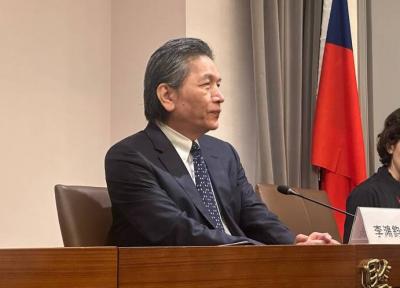
Control Yuan Secretary-General Lee Chun-yi (李俊俋) tendered his resignation last night, admitting that he had misused a government vehicle, as reported by media. His resignation was immediately accepted by the Control Yuan. In a statement explaining why he had resigned, Lee apologized for using a Control Yuan vehicle to transport his dog to a pet grooming salon on May 20. The issue first came to light late last month, when TVBS News reported that Lee had instructed his driver to take the dog to the salon. The news channel broadcast photos that it said were taken by an unnamed whistle-blower, which purportedly showed the

Democratic Progressive Party caucus chief executive Rosalia Wu, front, grabs the pennant in a dragon boat race hosted by Qu Yuan Temple in the Shuanghsi River in Taipei’s Beitou District yesterday.


 RSS
RSS