


The Taipei Department of Health yesterday said it soon plans to require all ramen stores with two or more shops in the city to register their ingredients to ensure food safety and disclose information about food products to the public.
Established in 2013, the city’s food ingredient registration Web site — Food Tracer Taipei — contains results from the health department’s food inspections, as well as data posted by stores and restaurants about the ingredients that they use.
There were 10 major categories of food establishments that need to register ingredients — including chain beverage and iced dessert stores, chain coffee shops, fast food restaurants and chain breakfast shops — and the health department announced that it has opened two new categories: chain Japanese ramen stores and traditional markets.
Fourteen Japanese ramen brands have already registered 95 types of products on the platform, including 682 ingredients, department section head Chen Yi-ting (陳怡婷) said.
The department is planning to require all ramen stores with two or more shops in the city to register their ingredients on the platform. Starting next month, it would gather feedback and expect to implement the regulation by next year at the earliest.
Eight traditional markets with 232 food stalls are using the platform, the Taipei Market Administration Office said, adding that four more markets would be included by the end of the year, a total of 350 food stalls.
The full disclosure of ingredients on the platform is a first step toward incorporating autonomous management and is in line with the city government’s principles of openness and transparency, Taipei Deputy Mayor Teng Chia-chi (鄧家基) said.
Taipei is the food capital of the nation and many foreign and local cuisines are popular in the city, so the government and the restaurants have a responsibility to ensure that the public can enjoy safe and delicious food, Department of Health Commissioner Huang Shier-chieg (黃世傑) said.
People can scan QR codes of establishments on the registration platform to learn about the ingredients used in food products they want to purchase, he added.

Taipei has once again made it to the top 100 in Oxford Economics’ Global Cities Index 2025 report, moving up five places from last year to 60. The annual index, which was published last month, evaluated 1,000 of the most populated metropolises based on five indices — economics, human capital, quality of life, environment and governance. New York maintained its top spot this year, placing first in the economics index thanks to the strength of its vibrant financial industry and economic stability. Taipei ranked 263rd in economics, 44th in human capital, 15th in quality of life, 284th for environment and 75th in governance,

The Sports Administration yesterday demanded an apology from the national table tennis association for barring 17-year-old Yeh Yi-tian (葉伊恬) from competing in the upcoming World Table Tennis (WTT) United States Smash tournament in Las Vegas this July. The sports agency said in a statement that the Chinese Taipei Table Tennis Association (CTTTA) must explain to the public why it withdrew Yeh from the WTT tournament in Las Vegas. The sports agency said it contacted the association to express its disapproval of the decision-making process after receiving a complaint from Yeh’s coach, Chuang
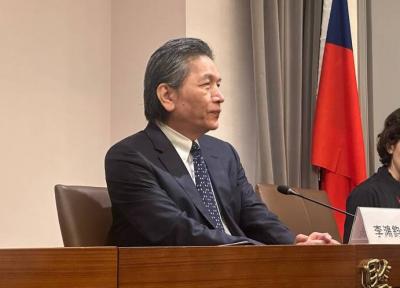
Control Yuan Secretary-General Lee Chun-yi (李俊俋) tendered his resignation last night, admitting that he had misused a government vehicle, as reported by media. His resignation was immediately accepted by the Control Yuan. In a statement explaining why he had resigned, Lee apologized for using a Control Yuan vehicle to transport his dog to a pet grooming salon on May 20. The issue first came to light late last month, when TVBS News reported that Lee had instructed his driver to take the dog to the salon. The news channel broadcast photos that it said were taken by an unnamed whistle-blower, which purportedly showed the

A former officer in China’s People’s Liberation Army (PLA) who witnessed the aftermath of the 1989 Tiananmen Square massacre has warned that Taiwan could face a similar fate if China attempts to unify the country by force. Li Xiaoming (李曉明), who was deployed to Beijing as a junior officer during the crackdown, said Taiwanese people should study the massacre carefully, because it offers a glimpse of what Beijing is willing to do to suppress dissent. “What happened in Tiananmen Square could happen in Taiwan too,” Li told CNA in a May 22 interview, ahead of the massacre’s 36th anniversary. “If Taiwanese students or


 RSS
RSS