


Taiwan saw its English-language skills ranking drop from 48th to 40th out of 88 countries and regions in Education First’s (EF) English-language proficiency index for this year.
Sweden topped the list, followed by the Netherlands and Singapore, the report by the Switzerland-based firm showed.
Taiwan had an average score of 51.88, down from 52.04 a year earlier, placing its English proficiency level in the “low” category; the other four categories being very high, high, moderate and very low.
Taipei performed best among the six special municipalities, followed by New Taipei City and Tainan, the report showed.
In terms of gender and age group, women outperformed men by a slight margin, although both scored below the global average.
The 21-to-25 age group performed the best, with scores that are higher than the global average, followed by the 18-to-20 age group.
English-language proficiency is usually indicative of greater productivity, EF senior director of research and academic partnerships Minh Tran (陳彥銘) said.
Europe ranked highest globally in terms of English proficiency, while Asian countries exhibited something of a bipolar extreme, with English education in certain countries still fixated on rote memorization, Tran said.
EF Taiwan branch chief executive Yang Ai-lin (楊愛麟) said that adopting bilingual education is not a short-term goal, as it requires fostering a friendly environment for such a policy and changing the public mindset.
The annual index is based on the scores of test-takers from each country or region, EF said, adding that the online exam is free of charge and available to all.
Only cities or countries with more than 400 examinees aged 18 or older are included in the index, the company said.
A total of 1.3 million people took part in the examinations, which were conducted last year, in Europe, Asia, Latin America, Africa and the Middle East, it said.
Compared with last year’s report, which saw 80 countries participating with 1 million examinees, 92 percent of the test takers were younger than 40, of which 60 percent were women and 40 percent men, it said.
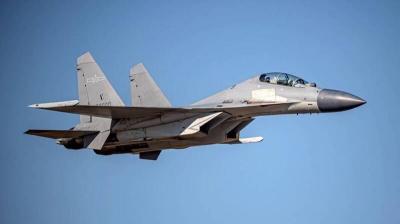
Eight Chinese naval vessels and 24 military aircraft were detected crossing the median line of the Taiwan Strait between 6am yesterday and 6am today, the Ministry of National Defense said this morning. The aircraft entered Taiwan’s northern, central, southwestern and eastern air defense identification zones, the ministry said. The armed forces responded with mission aircraft, naval vessels and shore-based missile systems to closely monitor the situation, it added. Eight naval vessels, one official ship and 36 aircraft sorties were spotted in total, the ministry said.
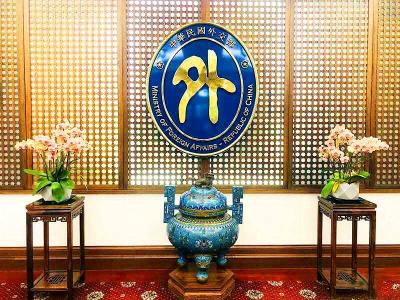
The Ministry of Foreign Affairs (MOFA) today said that if South Korea does not reply appropriately to its request to correct Taiwan’s name on its e-Arrival card system before March 31, it would take corresponding measures to alter how South Korea is labeled on the online Taiwan Arrival Card system. South Korea’s e-Arrival card system lists Taiwan as “China (Taiwan)” in the “point of departure” and “next destination” fields. The ministry said that it changed the nationality for South Koreans on Taiwan’s Alien Resident Certificates from “Korea” to “South Korea” on March 1, in a gesture of goodwill and based on the
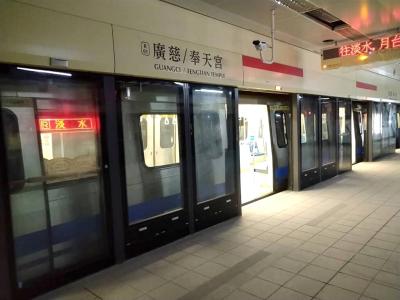
The New Taipei Metro's Sanyin Line and the eastern extension of the Taipei Metro's Tamsui-Xinyi Line (Red Line) are scheduled to begin operations in June, the National Development Council said today. The Red Line, which terminates at Xiangshan Station, would be connected by the 1.4km extension to a new eastern terminal, Guangci/Fengtian Temple Station, while the Sanyin Line would link New Taipei City's Tucheng and Yingge stations via Sanxia District (三峽). The council gave the updates at a council meeting reviewing progress on public construction projects for this year. Taiwan's annual public infrastructure budget would remain at NT$800 billion (US$25.08 billion), with NT$97.3
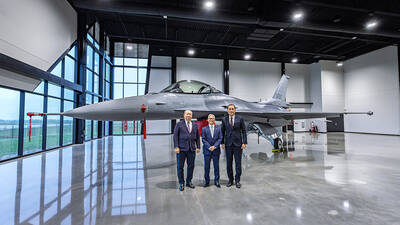
Taiwanese officials were shown the first of 66 F-16V fighter jets purchased by Taiwan from the United States, the Ministry of National Defense said yesterday, adding the aircraft has completed an initial flight test and is expected to be delivered later this year. A delegation led by Deputy Minister of National Defense Hsu Szu-chien (徐斯儉) visited Lockheed Martin’s F-16 C/D Block 70 (also known as F-16V) assembly line in South Carolina on March 16 to view the aircraft. The jet will undergo a final acceptance flight in the US before being delivered to Taiwan, the


 RSS
RSS