


The Equal Rights Referendum Group yesterday submitted to the Central Election Commission the signatures it has gathered for two referendum questions that, if approved by the commission, would be tied to the Nov. 24 nine-in-one local elections.
The two referendum proposals are on gender equality education and same-sex marriage, said Social Democratic Party (SDP) member Miao Po-ya (苗博雅), who is the group’s convener.
The same-sex marriage referendum proposal received more than 550,000 signatures, while the gender equality education referendum proposal received more than 450,000, Miao said.

Photo: CNA
However, due to time constraints, the group was only able to submit 500,000 and 400,000 signatures respectively, Miao added.
The referendum questions would be the greatest challenge ever for Taiwan’s same-sex movement, SDP member and Marriage Equality Platform convener Jennifer Lu (呂欣潔) said.
They would need at least 5 million to 7 million votes each to pass, Lu said.
“We hope to advance Taiwanese democratic values and allow those who love each other to form their own families, but we do not want the referendums to become a war between different sectors of society,” Lu said.
“We call on supporters to try to persuade their friends and family in the remaining 81 days until the election,” Lu said.
“Let us prove our worth and value, and choose what future for Taiwan we want with our votes in the referendum,” Lu added.
Veteran gay rights advocate Chi Chia-wei (祁家威) voiced support for the proposals, saying that they were short at least 220,000 signatures because of those who have committed suicide due to discrimination against the LGBT community.
Anti-LGBT referendum questions are “sugar-coated poison,” Chi said, adding the language of the questions is paradoxical.
The Happiness of the Next Generation Alliance anti-same-sex marriage group on Tuesday last week submitted three referendum proposals to the commission after collecting more than 600,000 signatures for each.
The three referendum proposals, if passed, would ask voters if the definition of marriage should be restricted to a union between a man and a woman; if same-sex education should be confined to high-school levels and beyond; and whether the right of same-sex couples to live together should be protected through ways that do not require amending the Civil Code.
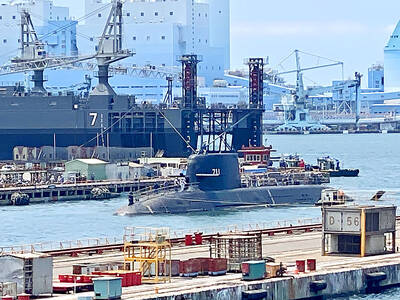
AGING: While Japan has 22 submarines, Taiwan only operates four, two of which were commissioned by the US in 1945 and 1946, and transferred to Taiwan in 1973 Taiwan would need at least 12 submarines to reach modern fleet capabilities, CSBC Corp, Taiwan chairman Chen Cheng-hung (陳政宏) said in an interview broadcast on Friday, citing a US assessment. CSBC is testing the nation’s first indigenous defense submarine, the Hai Kun (海鯤, Narwhal), which is scheduled to be delivered to the navy next month or in July. The Hai Kun has completed torpedo-firing tests and is scheduled to undergo overnight sea trials, Chen said on an SET TV military affairs program. Taiwan would require at least 12 submarines to establish a modern submarine force after assessing the nation’s operational environment and defense

A white king snake that frightened passengers and caused a stir on a Taipei MRT train on Friday evening has been claimed by its owner, who would be fined, Taipei Rapid Transit Corp (TRTC) said yesterday. A person on Threads posted that he thought he was lucky to find an empty row of seats on Friday after boarding a train on the Bannan (Blue) Line, only to spot a white snake with black stripes after sitting down. Startled, he jumped up, he wrote, describing the encounter as “terrifying.” “Taipei’s rat control plan: Release snakes on the metro,” one person wrote in reply, referring
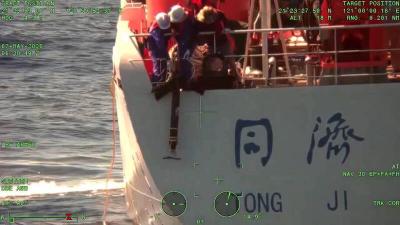
The coast guard today said that it had disrupted "illegal" operations by a Chinese research ship in waters close to the nation and driven it away, part of what Taipei sees a provocative pattern of China's stepped up maritime activities. The coast guard said that it on Thursday last week detected the Chinese ship Tongji (同濟號), which was commissioned only last year, 29 nautical miles (54km) southeast of the southern tip of Taiwan, although just outside restricted waters. The ship was observed lowering ropes into the water, suspected to be the deployment of scientific instruments for "illegal" survey operations, and the coast
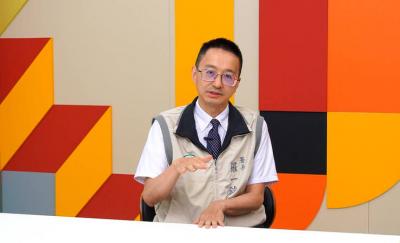
Taiwan’s two cases of hantavirus so far this year are on par with previous years’ case numbers, and the government is coordinating rat extermination work, so there should not be any outbreaks, Centers for Disease Control (CDC) Director-General Philip Lo (羅一鈞) said today in an interview with the Liberty Times (the Taipei Times’ sister newspaper). An increase in rat sightings in Taipei and New Taipei City has raised concerns about the spread of hantavirus, as rats can carry the disease. In January, a man in his 70s who lived in Taipei’s Daan District (大安) tested positive posthumously for hantavirus, Taiwan’s


 RSS
RSS