


Taiwanese kite maker Feng Tsan-huang (馮燦煌) has performed across the nation as well as overseas using his stunt kites, customized kites and the famous “bicycle kite,” and he hopes to one day turn kite-flying into a theatrical performance.
Feng, 57, grew up in Yilan County’s Wujie Township (五結).
When he was seven years old, he asked his father and great-uncle to teach him how to fly kites, Feng said.

Photo: Chang Yi-chen, Taipei Times
As soon as he was on holiday, he would run to an empty field with his kite, he said.
“My kite always flew higher than other people’s,” he said. “[I] felt a great sense of accomplishment.”
Whenever the weather is good, Feng still brings his kite outside, he said.
He enjoys the feeling of vastness and relaxation when he flies a kite, Feng said.
Looking back at his kite business of more than 30 years, Feng said that when he first began, he made less than NT$5,000 per year.
After he patented the stunt kites he had developed, orders begin to come in one after another, Feng said, adding that his studio grew into a kite factory with dozens of employees.
In 2002, Feng attended a kite festival in China and gave the hosts a set of stunt kites as a gift, Feng said.
However, Chinese businesspeople copied his kites and sold them back to Taiwan, Feng said, adding that Chinese suppliers soon replaced local manufacturers.
“At the time, wages and materials in China were cheaper than in Taiwan,” Feng said. “All the orders went to China.”
Unable to compete with Chinese suppliers, Feng closed his factory and moved toward producing custom-made kites.
From asymmetrically shaped kites to the world’s only bicycle kite, the products became his source of price, Feng said.
“Anything the client wants, I can make,” Feng said. “And it can fly high and far.”
There are many secrets to how the bicycle-shaped kite can fly and have its pedals spin at the same time, Feng said, adding that although many people around the world have tried to copy his work, they have all fallen short.
However, with the rise of e-commerce in China over the past few years, counterfeits of his designs have started to be sold on Taobao.com, Feng said.
“As a creator, how can I not be angry seeing my creations constantly being counterfeited?” Feng said.
Feng said that although many people have asked for the bicycle kite, he has kept the kite for performance purposes only, despite experiencing setbacks because of the counterfeits.
Revealing the secret would make it worthless, Feng said, adding that once a skill is sold, it is lost.
He has always wanted to turn kite-flying into a theatrical performance, Feng said.
“A few people controlling a few kites and forming shapes in the sky or moving and performing to music — how beautiful is that image,” Feng said, adding that he hopes to fulfill his dream one day.

Taipei has once again made it to the top 100 in Oxford Economics’ Global Cities Index 2025 report, moving up five places from last year to 60. The annual index, which was published last month, evaluated 1,000 of the most populated metropolises based on five indices — economics, human capital, quality of life, environment and governance. New York maintained its top spot this year, placing first in the economics index thanks to the strength of its vibrant financial industry and economic stability. Taipei ranked 263rd in economics, 44th in human capital, 15th in quality of life, 284th for environment and 75th in governance,

The Sports Administration yesterday demanded an apology from the national table tennis association for barring 17-year-old Yeh Yi-tian (葉伊恬) from competing in the upcoming World Table Tennis (WTT) United States Smash tournament in Las Vegas this July. The sports agency said in a statement that the Chinese Taipei Table Tennis Association (CTTTA) must explain to the public why it withdrew Yeh from the WTT tournament in Las Vegas. The sports agency said it contacted the association to express its disapproval of the decision-making process after receiving a complaint from Yeh’s coach, Chuang
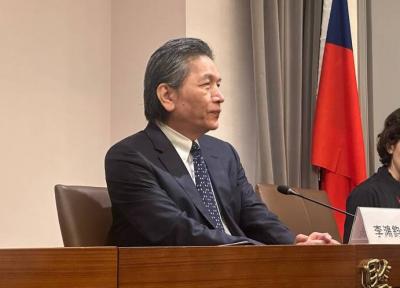
Control Yuan Secretary-General Lee Chun-yi (李俊俋) tendered his resignation last night, admitting that he had misused a government vehicle, as reported by media. His resignation was immediately accepted by the Control Yuan. In a statement explaining why he had resigned, Lee apologized for using a Control Yuan vehicle to transport his dog to a pet grooming salon on May 20. The issue first came to light late last month, when TVBS News reported that Lee had instructed his driver to take the dog to the salon. The news channel broadcast photos that it said were taken by an unnamed whistle-blower, which purportedly showed the
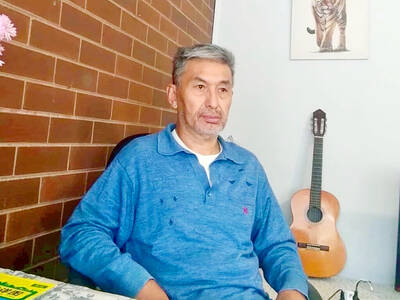
A former officer in China’s People’s Liberation Army (PLA) who witnessed the aftermath of the 1989 Tiananmen Square massacre has warned that Taiwan could face a similar fate if China attempts to unify the country by force. Li Xiaoming (李曉明), who was deployed to Beijing as a junior officer during the crackdown, said Taiwanese people should study the massacre carefully, because it offers a glimpse of what Beijing is willing to do to suppress dissent. “What happened in Tiananmen Square could happen in Taiwan too,” Li told CNA in a May 22 interview, ahead of the massacre’s 36th anniversary. “If Taiwanese students or


 RSS
RSS