


The Ministry of National Defense (MND) yesterday said that a flotilla of Chinese military vessels had passed through the Taiwan Strait earlier in the day, heading southward along China’s east coast, after conducting a military exercise near the Japanese island of Miyakojima.
A destroyer, a supply ship and an escort vessel from China’s South China Sea fleet passed through the Miyako Strait — which lies between Miyakojima and Okinawa — into the Taiwan Strait, the ministry said.
The flotilla was traveling west of the median line in the Taiwan Strait and was expected to leave Taiwan’s air defense identification zone by last night, the ministry said, adding that it was closely following the ships’ movement.
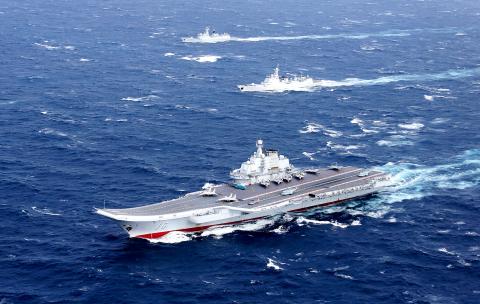
Photo: Reuters
The three vessels were returning from an annual naval and air exercise that was conducted on Thursday in an area southeast of Miyakojima, which is about 300km east of Taiwan, the ministry said.
The exercise included drills involving fighter aircraft, early warning and air surveillance aircraft and Xian H-6 bombers, the ministry said.
It said there was no imminent threat to Taiwan, but the nation would continue to keep a close eye on China’s military actions and it is prepared to respond if necessary.
In December last year, China’s first aircraft carrier, the Liaoning, and a flotilla of escort vessels sailed close to Taiwan’s east coast on its way to the South China Sea to conduct training exercises.
On the return leg in January, the flotilla entered Taiwan’s air defense identification zone from the southwest and remained west of the median line of the Taiwan Strait, sailing north to its base in northeastern China.
In response to reporters’ queries, Taiwanese military expert Erich Shih (施孝瑋) said it was difficult to determine whether the aim was to intimidate Taiwan.
China was more likely was trying to gain maritime navigation experience with its military vessels, he said, adding that the targets of the exercises could also have been Japanese or US military bases in the region.
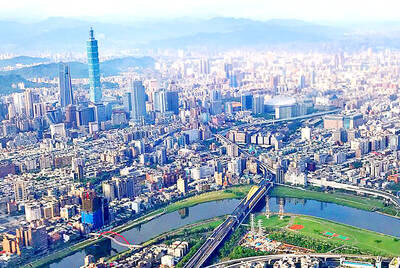
Taipei has once again made it to the top 100 in Oxford Economics’ Global Cities Index 2025 report, moving up five places from last year to 60. The annual index, which was published last month, evaluated 1,000 of the most populated metropolises based on five indices — economics, human capital, quality of life, environment and governance. New York maintained its top spot this year, placing first in the economics index thanks to the strength of its vibrant financial industry and economic stability. Taipei ranked 263rd in economics, 44th in human capital, 15th in quality of life, 284th for environment and 75th in governance,

The Sports Administration yesterday demanded an apology from the national table tennis association for barring 17-year-old Yeh Yi-tian (葉伊恬) from competing in the upcoming World Table Tennis (WTT) United States Smash tournament in Las Vegas this July. The sports agency said in a statement that the Chinese Taipei Table Tennis Association (CTTTA) must explain to the public why it withdrew Yeh from the WTT tournament in Las Vegas. The sports agency said it contacted the association to express its disapproval of the decision-making process after receiving a complaint from Yeh’s coach, Chuang
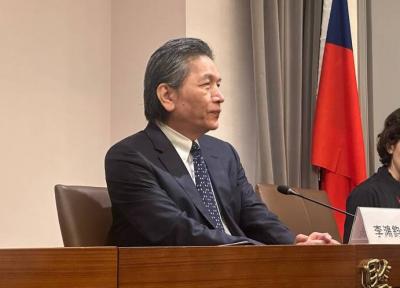
Control Yuan Secretary-General Lee Chun-yi (李俊俋) tendered his resignation last night, admitting that he had misused a government vehicle, as reported by media. His resignation was immediately accepted by the Control Yuan. In a statement explaining why he had resigned, Lee apologized for using a Control Yuan vehicle to transport his dog to a pet grooming salon on May 20. The issue first came to light late last month, when TVBS News reported that Lee had instructed his driver to take the dog to the salon. The news channel broadcast photos that it said were taken by an unnamed whistle-blower, which purportedly showed the
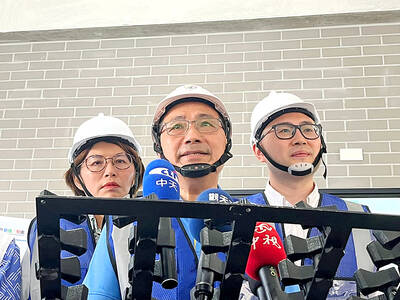
The New Taipei City Government would assist relatives of those killed or injured in last month’s car-ramming incident in Sansia District (三峽) to secure compensation, Mayor Hou You-yi (侯友宜) said yesterday, two days after the driver died in a hospital. “The city government will do its best to help the relatives of the car crash incident seek compensation,” Hou said. The mayor also said that the city’s Legal Affairs, Education and Social Welfare departments have established a joint mechanism to “provide coordinated assistance” to victims and their families. Three people were killed and 12 injured when a car plowed into schoolchildren and their


 RSS
RSS