


Family members of Republic of China Air Force staff sergeant Tsai Hsueh-liang (蔡學良), who died of a gunshot wound to the head at a firing range in 2008, yesterday presented new evidence and demanded that authorities carry out ballistics testing to determine the real cause of death.
Tsai’s mother, Yu Jui-ming (尤瑞敏), said she is requesting further investigation, because the new evidence contradicted the military’s initial finding, which said Tsai committed suicide.
Over the past seven years of judicial proceedings and relentless efforts by Tsai’s family to seek justice, the Ministry of National Defense has insisted the death was a suicide, with Tsai pulling the trigger of a T65K2 rifle after turning the weapon on himself.
With lawyers and other family members at her side at yesterday’s news briefing, Yu pointed to medical reports and photographs, which showed that Tsai’s fatal head wound was inconsistent with a shot from a T65K2 rifle, and more likely the result of a round fired from a handgun.
Citing inconsistencies in the military coroner’s report, Yu said she was sure her son did not kill himself, but believed he was murdered by a fellow officer bearing a grudge, shot at close range in the head by a handgun.
“We demand that the judiciary and the defense ministry conduct forensic ballistics testing with a T65K2 rifle and recreate the crime scene, so it can be determined how Tsai died and what really happened,” Yu said.
Despite her repeated demands over past years, the ministry has refused to perform ballistics testing on the T65K2 rifle, Yu said, which she said pointed to a possible cover-up by the military to hastily close the case.
Yu got some consolation last month when a court reversed a lower court’s decision by ruling against the military, attributing it to a case of “accidental death,” and ordered the air force to pay Tsai’s family NT$1.48 million (US$48,106) in compensation.
However, she said that her son’s life was too precious to her, and that the compensation does not even cover the travel and various other expenses in her efforts to seek justice.
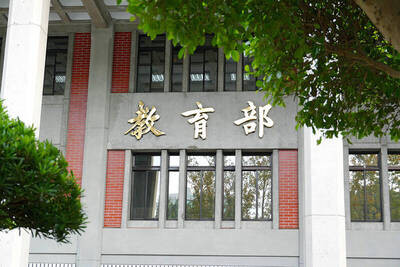
The Ministry of Education (MOE) is to launch a new program to encourage international students to stay in Taiwan and explore job opportunities here after graduation, Deputy Minister of Education Yeh Ping-cheng (葉丙成) said on Friday. The government would provide full scholarships for international students to further their studies for two years in Taiwan, so those who want to pursue a master’s degree can consider applying for the program, he said. The fields included are science, technology, engineering, mathematics, semiconductors and finance, Yeh added. The program, called “Intense 2+2,” would also assist international students who completed the two years of further studies in

Former president Tsai Ing-wen (蔡英文) departed for Europe on Friday night, with planned stops in Lithuania and Denmark. Tsai arrived at Taiwan Taoyuan International Airport on Friday night, but did not speak to reporters before departing. Tsai wrote on social media later that the purpose of the trip was to reaffirm the commitment of Taiwanese to working with democratic allies to promote regional security and stability, upholding freedom and democracy, and defending their homeland. She also expressed hope that through joint efforts, Taiwan and Europe would continue to be partners building up economic resilience on the global stage. The former president was to first
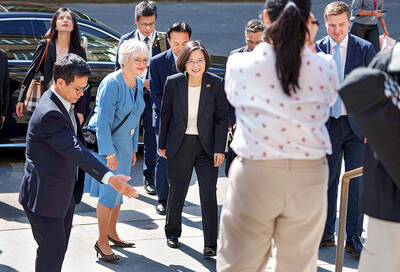
Former president Tsai Ing-wen (蔡英文) on Monday called for greater cooperation between Taiwan, Lithuania and the EU to counter threats to information security, including attacks on undersea cables and other critical infrastructure. In a speech at Vilnius University in the Lithuanian capital, Tsai highlighted recent incidents in which vital undersea cables — essential for cross-border data transmission — were severed in the Taiwan Strait and the Baltic Sea over the past year. Taiwanese authorities suspect Chinese sabotage in the incidents near Taiwan’s waters, while EU leaders have said Russia is the likely culprit behind similar breaches in the Baltic. “Taiwan and our European
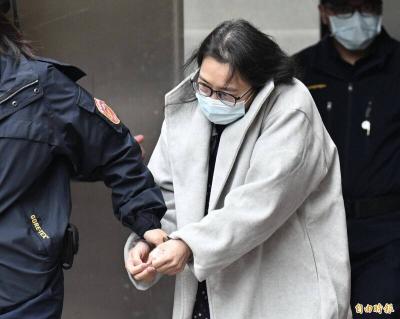
The Taipei District Court sentenced babysitters Liu Tsai-hsuan (劉彩萱) and Liu Jou-lin (劉若琳) to life and 18 years in prison respectively today for causing the death of a one-year-old boy in December 2023. The Taipei District Prosecutors’ Office said that Liu Tsai-hsuan was entrusted with the care of a one-year-old boy, nicknamed Kai Kai (剴剴), in August 2023 by the Child Welfare League Foundation. From Sept. 1 to Dec. 23 that year, she and her sister Liu Jou-lin allegedly committed acts of abuse against the boy, who was rushed to the hospital with severe injuries on Dec. 24, 2023, but did not


 RSS
RSS