


Chinese Nationalist Party (KMT) supporters voiced strong opposition to the party considering non-local candidates to run for Keelung mayor after it dropped Keelung City Council Speaker Huang Ching-tai (黃景泰) as its candidate in the Nov. 29 elections.
They said the party should promote KMT members from the Keelung area, who have greater empathy with the region.
The KMT revoked Huang’s candidature on July 6 after he was embroiled in an alleged bribery case, leaving it scrambling for a replacement.
National Security Council (NSC) advisor Hsieh Li-kung (謝立功) and KMT Organization and Development Committee director Su Chun-pin (蘇俊賓) have reportedly been mentioned as possible candidates.
Keelung is a relatively closed electoral district compared with New Taipei City and Taipei, and parachuting candidates from another area would not win the hearts of local voters, a leading local party member said on condition of anonymity.
Former NSC deputy secretary-general Yang Yung-ming (楊永明) discovered this the hard way and backed out when he realized the difficulty of being accepted by the populace, the party member said.
Hsieh’s ties to Keelung — he studied for a masters’ degree at National Taiwan Ocean University — would not enough for him to be accepted, the party member said, adding that Su had no ties to the port city at all.
“Chances of winning the election by sending in someone with little to no ties with the city are slim,” the party member said.
Integration of local support is key to winning the city, he said.
Sources say the Lin faction in Keelung, headed by former Keelung mayor Lin Shui-mu (林水木), was only willing to support KMT Legislator Hsieh Kuo-liang (謝國樑) as a replacement candidate.
However, Hsieh has turned down a nomination offer from the party and President Ma Ying-jeou (馬英九), who also serves as KMT chairman, citing family objections.
Lin Shui-mu’s son, Lin Pei-hsiang (林沛祥), who ran against Huang in the party primaries, said Keelung has a high level of autonomy and backs its own people, as evidenced by the high support for Hsieh Kuo-liang, a Keeling native, compared with Hsieh Li-kung.
The KMT should adapt to the situation and select someone from the region to run in Keelung, Lin Pei-hsiang said.
KMT spokesman Chen Yi-hsin (陳以信) yesterday said the party would continue its efforts to cement solidarity in local areas and do its best to find a suitable candidate.

FUKUOKA SITUATION: Japanese media reported that the pathogen is expected to be identified by the summer, while the CDC downplayed the idea that it was hMPV A “mysterious cold-like illness” reported in Japan’s Fukuoka Prefecture does not seem to be a new disease, but Japanese authorities have been asked about the situation, the Centers for Disease Control (CDC) said yesterday. The Fukuoka Prefectural Medical Association on Wednesday told a news conference that a “mystery cold” that has become a hot topic on social media is “highly likely to be caused by some kind of viral infection,” Japan’s KBC News reported. “Many people are experiencing symptoms starting with a sore throat, followed by a runny nose, phlegm and a severe cough,” KBC News reported, citing association officials. Health authorities are

Nvidia Corp CEO Jensen Huang (黃仁勳) arrived in Taiwan yesterday ahead of upcoming AI and technology events, saying he plans to meet with clients and Taiwan Semiconductor Manufacturing Co Chairman C.C. Wei (魏哲家) during his visit. After landing at Taipei Songshan Airport, Huang posed for photos with fans and handed out Yakult drinks to reporters and supporters waiting at the scene, saying he has “a lot to do” during the trip. Asked about reports that Nvidia’s planned headquarters site in Taipei’s Beitou Shilin Technology Park could break ground on May 27, Huang said that if the company holds an event, he would

The Ministry of Finance this afternoon announced the winning numbers for the March-April uniform invoice lottery. The winning number for the NT$10 million (US$318,060) special prize is 19531471, and the winning number for the NT$2 million grand prize is 85941329. Three numbers were drawn for the NT$200,000 first prize: 07225810, 20231230 and 83518781. Those with receipts matching the last seven digits of any of the first-prize numbers will win the NT$40,000 second prize, while those matching the last six digits will win the NT$10,000 third prize. Those whose receipts match the last five digits of the first-prize numbers can claim the NT$4,000 fourth prize,
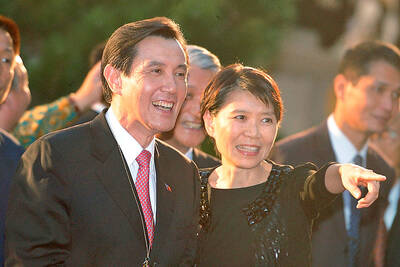
Former president Ma Ying-jeou (馬英九) yesterday expressed “shock and regret” over a statement issued by his wife without his consent, and rejected her assertion that his eldest sister, Ma Yi-nan (馬以南), would manage his medical care or act as his spokesperson amid an ongoing embezzlement probe into his foundation. Ma Ying-jeou in a statement said he was shocked by a statement by his wife, Chou Mei-ching (周美青), regarding his affairs. Ma Yi-nan “must not” be in charge of his healthcare and other personal affairs, nor can she be allowed to represent the Ma family, the former president said. He said he was also


 RSS
RSS